[ad_1]
If all goes in accordance with NASA’s plans, 2026 will lastly be the yr that astronauts as soon as once more launch to the moon.
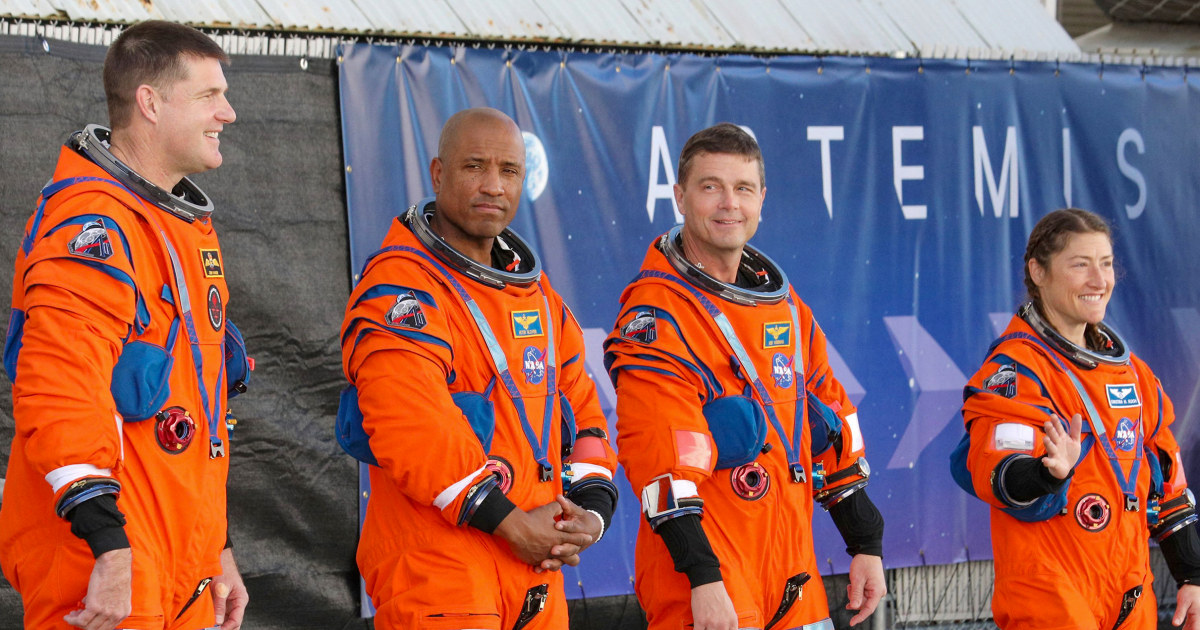
In a matter of months, 4 astronauts are poised to fly across the moon on a roughly 10-day mission — the closest people may have gotten in additional than half a century.
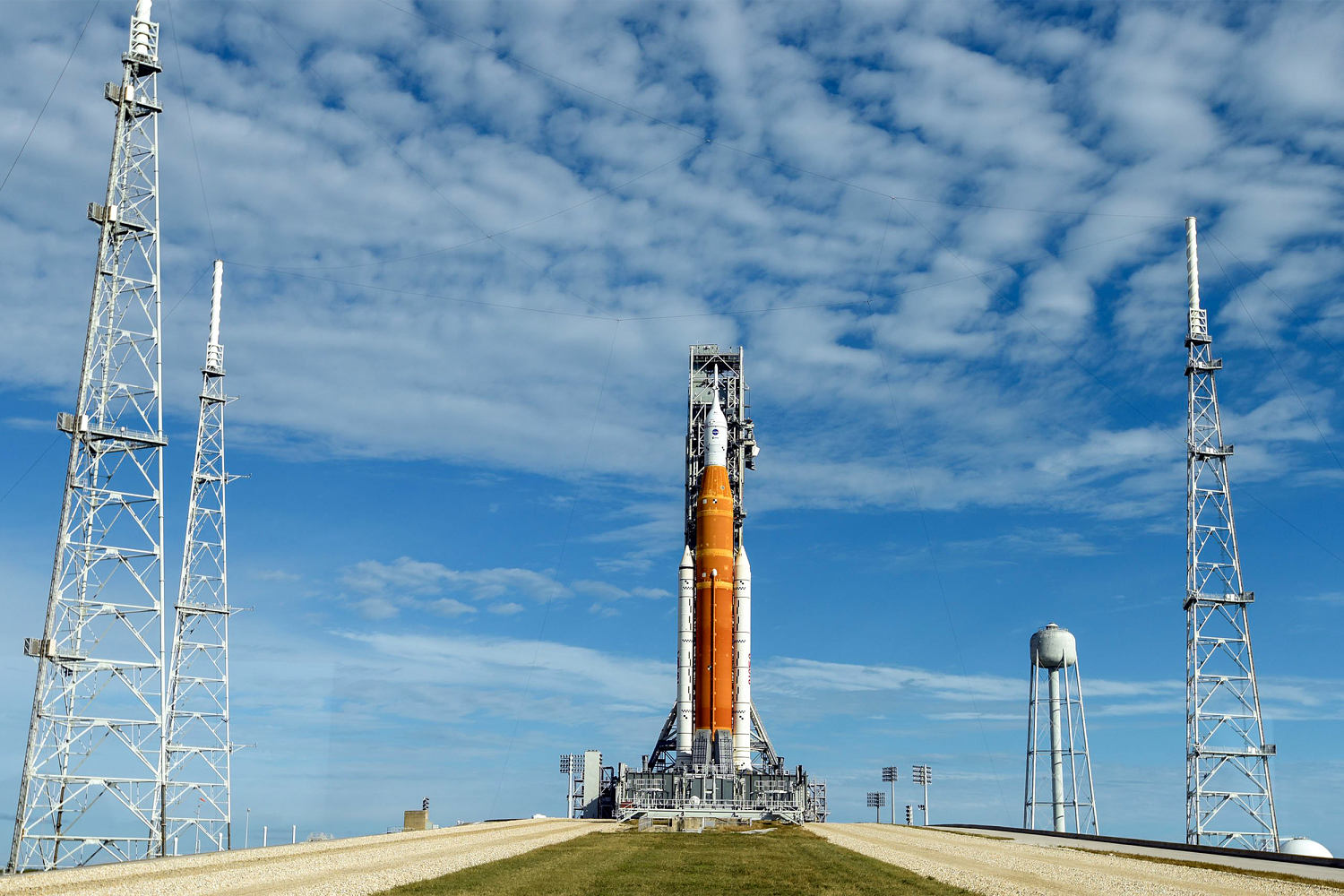
The flight, often known as Artemis II, might carry off as early as February and can be a long-awaited bounce begin to America’s lagging return-to-the-moon program. The mission will function an important take a look at of NASA’s next-generation Area Launch System rocket and Orion spacecraft, which have been in growth for greater than a decade and confronted years of setbacks and extreme finances overruns. The system has by no means carried a crew earlier than.
Returning to the moon has been a precedence for President Donald Trump since his first time period, and the present administration has positioned renewed emphasis on dominating the intensifying area race between the U.S. and China. Chinese language officers have pledged to land their very own astronauts on the lunar floor by 2030.
Past the geopolitical implications, the Artemis II mission is designed to usher in a brand new period of area exploration, with the purpose of finally establishing bases for long-duration stays on the moon earlier than astronauts sometime enterprise on to Mars.
“Throughout the subsequent three years, we’re going to land American astronauts once more on the moon, however this time with the infrastructure to remain,” Jared Isaacman, NASA’s new administrator, informed NBC Information in an interview final week after he was sworn in.
For some scientists, the joy round returning to the moon stems from the prospect of investigating enduring mysteries in regards to the moon’s formation and evolution — similar to violent collisions within the nascent photo voltaic system that created it and the place its water originated — which got here into focus throughout the Apollo program within the Sixties and Nineteen Seventies.
“As you’ll be able to think about, lunar scientists have had numerous pent up questions for many years,” stated Brett Denevi, a planetary scientist on the Johns Hopkins College Utilized Physics Laboratory in Laurel, Maryland.
Answering a few of these questions might make clear related processes that occurred throughout our planet’s formation, in accordance with Denevi.
“Earth is sort of a horrible record-keeper,” she stated. “With plate tectonics, climate — this stuff have simply completely erased its very earliest historical past. However on the moon, you’ve this terrain that fashioned about 4.5 billion years in the past, and it’s simply sitting there on the floor for us to discover.”
Though the Artemis II mission received’t land on the lunar floor, it would take a look at numerous applied sciences, docking maneuvers and life-support programs — first in Earth orbit after which in orbit across the moon — that shall be important for future missions.
NASA beforehand launched the Area Launch System rocket and Orion capsule on an uncrewed take a look at flight across the moon — the Artemis I mission — for 3 1/2 weeks in 2022.
[ad_2]