[ad_1]
President Trump ordered the discharge of 172 million barrels of oil from america’ Strategic Petroleum Reserve on Wednesday, after oil costs rocketed to their highest ranges in years amid the U.S.’s warfare with Iran.
The releases will begin subsequent week and take about 120 days, Power Secretary Christopher Wright mentioned Wednesday in a assertion. The transfer is a part of a coordinated launch by the Worldwide Power Company, whose 32 member nations — largely U.S. allies — introduced earlier Wednesday they’d let 400 million barrels of oil movement out of their emergency reserves.
Wright mentioned the U.S. plans to replenish the reserve with 200 million barrels of oil “throughout the subsequent yr.” Mr. Trump informed reporters late Wednesday that after the reserve is tapped, “we’ll fill it up.”
“For 47 years, Iran and its terrorist proxies have been intent on killing People. They’ve manipulated and threatened the vitality safety of America and its allies,” Wright mentioned. “Below President Trump, these days are coming to an finish.”
The benchmark U.S. crude oil worth, West Texas Intermediate, was buying and selling at simply over $92 per barrel as of Wednesday night at 8:15 p.m. ET. Costs had climbed about 7.2% over the course of the day and had been largely unchanged following the announcement of a Strategic Petroleum Reserve launch, which was extensively anticipated.
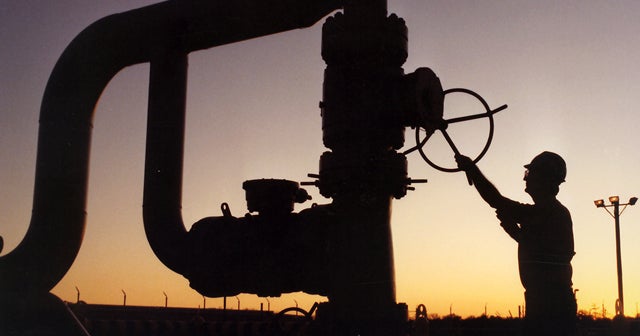
The Strategic Petroleum Reserve — saved in huge underground caverns in Texas and Louisiana — held about 415 million barrels as of final week, in response to authorities figures. In whole, the IEA says its members have greater than 1.2 billion barrels of their reserves.
The IEA’s reserve system was arrange within the Seventies, within the wake of an oil embargo by Arab states that choked off shipments to the U.S. and a few of its allies. The U.S. and different member nations have tapped their reserves periodically to cope with worth shocks, most just lately in 2022, when Russia’s invasion of Ukraine triggered vitality costs to spike.
Oil costs shot up after the U.S. and Israel started conducting army strikes on Iran virtually two weeks in the past, and have remained elevated ever since attributable to fears about main provide shortfalls.
Industrial site visitors by the Strait of Hormuz, a key oil chokepoint between Iran and the Arabian Peninsula, has successfully come to a standstill, amid worries that tankers could possibly be struck. The waterway carries round 20% of the world’s oil, or 15 million barrels per day, and as site visitors out of the Persian Gulf will get blocked, some oil producers have lower manufacturing.
Mr. Trump has sought to unfreeze ship site visitors, promising insurance coverage protection for oil tankers and repeatedly threatening Iran with extreme strikes if it tries to dam the Strait of Hormuz. Iran signaled this week it could attempt to deploy naval mines within the strait, CBS Information reported, main Mr. Trump to threaten “army penalties…at a degree by no means seen earlier than.” The president additionally informed CBS Information on Monday he was “enthusiastic about taking [the strait] over.”
However with few ships nonetheless transiting the strait, tapping the Strategic Petroleum Reserve is one choice in Mr. Trump’s arsenal to cope with shortages and excessive costs.
It is unclear how a lot of an impression the releases can have. Specialists informed CBS Information earlier this week that taking oil out of the Strategic Petroleum Reserve is not going to repair the underlying provide problem that’s inflicting costs to spike.
“The SPR may help, however it’s not a silver bullet, and it isn’t going to remove all of the stress on shopper costs,” mentioned Nicholas Mulder, professor of historical past at Cornell College, who research the financial impacts of wars and sanctions. “The warfare is driving up costs on the world market, and there is not a straightforward manner out.”
[ad_2]