Authorities in Scotland have arrested 43 individuals during a month-long operation targeting ‘county lines’ drug networks. Officers seized drugs valued at £900,000, including crack cocaine, heroin, and ketamine. The effort also protected 38 vulnerable individuals exploited by crime groups originating from England.
Raids Target Highlands Drug Trade
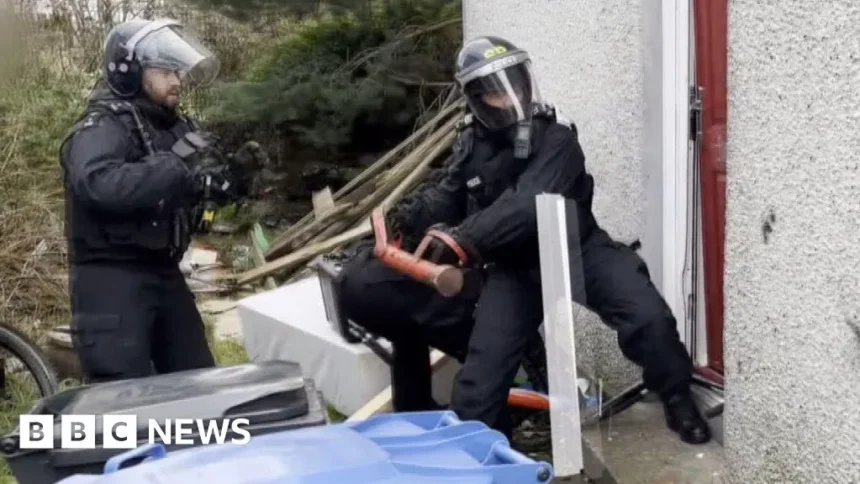
The operation featured Operation Silentridge in Inverness, focusing on disrupting gangs from Liverpool, London, and the Midlands. Detectives conducted over 50 raids across Scotland, with teams in protective gear breaching barricaded properties.
In one Inverness raid near the city center, officers spent about 30 seconds forcing entry through a reinforced ground-floor door secured with wood planks and bricks. They encountered a man from London but found no drugs, allowing him to leave. Officers noted that such fortifications protect against rival gangs as well as law enforcement.
Another search uncovered white powder suspected to be cocaine, cannabis, scales, cash, and a mobile phone. A detective indicated the phone would undergo analysis for ties to organized crime.
County Lines Model and Local Impact
County lines involve urban gangs using dedicated phone lines to supply drugs to rural or smaller communities. Ch Insp Craig Still, area commander for Inverness, highlighted the influx of groups from across the UK.
“They target Inverness due to the limited local experience with substance abuse,” Still stated. “These groups bring violence, weapons, intimidation, and exploit children. As the endpoint, Inverness offers them a foothold to distribute drugs locally.”
Police identified 12 crime groups operating in Inverness, a city of under 50,000, supplying crack, heroin, and ketamine.
Operation Silentridge Results
In Inverness alone, 32 properties were raided, leading to 16 arrests, seven charged with drug supply. Seizures included heroin, cocaine, cannabis, over £13,000 in cash, 22 mobile phones (three linked to county lines), two machetes, and a lock knife.
During a Merkinch raid, three officers hammered for nearly a minute to breach a barricaded cottage door using bed slats. They found a distressed local man but no drugs. Family members later discussed his mental health challenges, and officers planned a follow-up welfare check.
Protecting the Vulnerable
Ch Insp Still emphasized risks to those with mental health issues, addictions, abuse histories, or youth. “Gangs groom vulnerable, lonely individuals, who view them positively at first,” he said. “But conflicts arise when forced to aid rival lines, leading to violence.”
Of the 38 safeguarded individuals referred to support services, nine were children. Four received Home Office referrals for potential human trafficking or modern slavery.
Lesley Gordon from Action for Children called youth involvement “child abuse.” She added: “Criminal exploitation like county lines devastates children, families, and communities. Our services across Scotland and the UK partner with police to aid victims.”
Assistant Chief Constable Stuart Houston, head of organized crime and counter-terrorism, declared: “Organized criminals prioritize power and money over lives harmed. This activity is not tolerated in Scotland.”
He urged public vigilance: “Trust your instincts and report suspicions. Even minor details can protect communities.”