[ad_1]
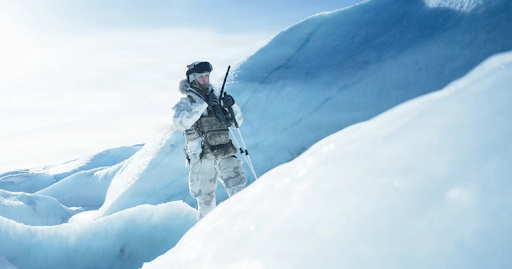
U.S. forces this week wrapped up their participation in an annual Arctic coaching train that for the primary time was held in each Alaska and Greenland. Arctic Edge, which started in 2018, consists of coaching to answer threats that Russia — and more and more China — might pose to the U.S.
The portion in Greenland was coordinated with Denmark and concerned each U.S. and Danish particular forces. The long-planned train occurred regardless of President Trump’s repeated threats this 12 months to take management of Greenland, which is an autonomous territory of Denmark.
Based on NORAD and U.S. Northern Command, which ran the train, Denmark hosted the U.S. in Greenland for coaching centered on working within the Arctic. Each different 12 months, Arctic Edge takes place within the winter and this 12 months’s was the primary lately to happen within the useless of winter.
Protection Visible Data Distribution Service 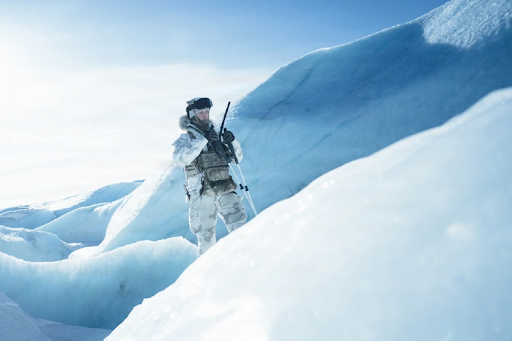
“Half of the battle in exercising within the wintertime within the Arctic is just surviving,” Royal Canadian Air Power Lt. Gen. Iain Huddleston, the deputy commander of NORAD, instructed reporters earlier this week.
The general lesson of the train is the navy should put together models for the Arctic earlier than they get there, in line with U.S. Air Power Lt. Gen. Robert Davis, who’s the top of U.S. Alaska Command, the Alaskan NORAD area, and commander of the eleventh Air Power.
Through the coaching train, in line with Davis, there are routinely plane which are broken and require extra upkeep due to the shortage of familiarity with practices distinctive to the acute chilly, like warming up hydraulic methods beforehand. Some service members attempt to open the window on an plane too quickly, and the window cracks.
“Now you may’t use the plane till you substitute the window — so, a few examples of simply a few of the sensible challenges of not working on a routine foundation, after which impulsively arising into the Arctic and having to perform a little discovery studying,” Davis stated.
Huddleston and Davis stated the train didn’t have a theoretical adversary however had parts to defend towards weapons, just like the cruise missiles that solely sure nations, like Russia and China, might doubtlessly use to threaten the U.S.
“We haven’t any intelligence that might recommend that we’re truly vulnerable to them launching cruise missiles towards Alaska,” Davis stated. “However, we really feel like we should be adequately ready to take the navy capabilities that the U.S. authorities has given to us from a defensive perspective and ensure that we will put them collectively.”
A smaller weapon of accelerating concern to the navy is the drone. Within the train, the navy practiced responding to a drone incursion at Fort Greely in Alaska.
Based on Davis, they examined eventualities together with a single drone that may simply be surveilling the set up in addition to a small swarm of about six drones, to see if the completely different methods Fort Greely has have been capable of detect and talk data to the Military troopers.
“Not one of the drones have been fully undetected,” Davis stated, including that there are a number of varieties of sensors and at the least certainly one of them detected every of the drone, and not one of the methods have been negatively impacted by the temperature, which may plummet to -40 levels fahrenheit.
The U.S. forces did take down one drone, in line with Davis, however used a counter-unmanned aerial system that throws a web over the drone and lowers it to the bottom intact so the united statescan examine it.
As a result of the counter-drone methods at Fort Greely are largely electronics based mostly and do not essentially require batteries, which may drain rapidly within the chilly, the temperatures “did not actually have an effect on them in a adverse means, which is nice,” Davis stated.
He stated the velocity at which business and business firms are modifying and altering drone expertise makes it “actually troublesome” for the formal applications throughout the navy to maintain up. That is a priority the Pentagon is confronting all through the armed forces, not simply within the Arctic.
[ad_2]