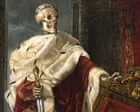
A towering skeleton draped in an ermine cloak and crowned with jagged iron stands triumphantly, one foot on a globe, toppling a royal throne with a flick of its bony wrist. This striking 1887 work, Mors Imperator (“Death is the Ruler”), by German artist Hermione von Preuschen, symbolizes the fleeting nature of fame and power.
Rejection Sparks Outrage
Authorities rejected the painting for the Berlin Academy of the Arts’ annual exhibition, fearing it mocked the aging Emperor Wilhelm I, who had just turned 90. Over a century later, the 2.5-meter by 1.3-meter canvas returns to Berlin. From Sunday through mid-November, it graces the Alte Nationalgalerie, a state institution, for the first time.
The controversy highlights sensitivities in autocratic regimes toward art’s potential hidden meanings. Exhibition curator analysis confirms no intent to depict the emperor as the skeleton, nor did he perceive it that way.
Artist’s Bold Vision
Born in Darmstadt in 1854, von Preuschen excelled as a poet, traveler, and painter of grand historical still lifes. At the 1896 International Women’s Congress in Berlin, she passionately advocated for women’s access to art academies.
“Hermione von Preuschen was bold, confident, and an early champion of female emancipation,” states art historian Birgit Verwiebe. “She lacked political leanings or anti-monarchical views, hailing from nobility herself.”
Studies reveal no hidden kaiser references. The throne’s coat of arms echoes French royal designs, while the gem-studded crown tumbling below mirrors a Louvre artifact.
Planned Masterpiece Cycle
Originally, Mors Imperator launched a 10-painting series on life, death, and love, paired opposite Regina Vitae (Queen of Life). The counterpart missed the deadline.
Devastated at 33, von Preuschen appealed directly to Emperor Wilhelm I. His secretary responded that the monarch approved the theme, leaving aesthetics to judges. The academy then cited poor artistic merit, calling it “the inartistic expression of a skewed thought.”
Pop-Up Triumph and Legacy
Von Preuschen fired back by publishing a letter in a Berlin paper and renting a Leipziger Strasse shop. She unveiled the painting dramatically from behind curtains, charging the equivalent of €8 today. The exhibit buzzed through society, catapulting her to fame.
Sold to a Swiss buyer in 1892, the work resurfaced after her 1918 death when daughters donated her estate to a Berlin neighborhood museum. A 2013 retrospective there showed a copy; now, the original loans to the Alte Nationalgalerie.
“Von Preuschen was intelligent, educated, and deeply emotional, wrestling life’s profound questions,” Verwiebe notes. “Mors Imperator sprang from her heart.”
Its message—that death trumps earthly power—proved prophetic. Wilhelm I died on March 9, 1888, ushering Germany’s “Year of the Three Emperors” as son Frederick III succumbed to throat cancer after 99 days.