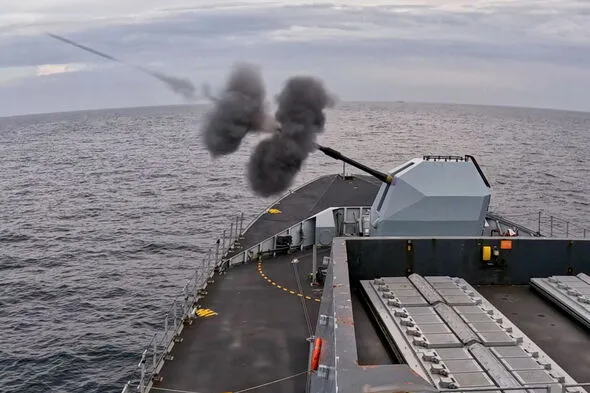
Britain spearheads international discussions on a two-phase strategy to clear and reopen the Strait of Hormuz after hostilities end. Defence officials outline a plan deploying Royal Navy ships fitted with torpedo-shaped mine-hunting drones to remove Iranian explosives from the vital waterway linking the Persian Gulf to the Gulf of Oman.
Two-Phase Reopening Operation
In the initial phase, these drone-equipped vessels sweep the strait for ordnance. Once cleared, a multinational convoy using both manned and unmanned ships escorts merchant traffic through the chokepoint, restoring essential global trade routes.
Senior Defence Meeting
Air Chief Marshal Sir Richard Knighton, Chief of the Defence Staff, led a Sunday gathering of top officials from France, Germany, Italy, the Netherlands, Japan, and Canada to refine these plans.
Cyprus Base Treaty Under Scrutiny
Cypriot President Nikos Christodoulides urges Prime Minister Keir Starmer to revise the 1960 defence treaty, deemed insufficient amid current threats. This follows an Iranian drone strike near the perimeter of the UK’s key overseas base. Royal Artillery units, including a Starstreak-armed Stormer air defence battery, unload from a C-17 aircraft to bolster defences.
Proposed Security Conference
Britain proposes hosting an international conference in Portsmouth or London to coordinate the Hormuz coalition. Officials aim to reopen the strait “as soon as conditions allow.” Sir Richard Knighton stresses U.S. participation due to its regional expertise and intelligence capabilities. British planners recently visited U.S. Central Command in Tampa, Florida, for initial talks.