President Donald Trump has postponed planned strikes on Iran’s energy infrastructure by 10 days, setting the new deadline for April 6 at 8pm Eastern Time. He states that peace negotiations are progressing “very well,” despite Iranian officials dismissing the US proposal as “one-sided and unfair.” Pakistan facilitates message exchanges between Washington and Tehran, while Turkiye and Egypt back mediation initiatives to avert broader regional escalation.
Military Actions in Iran
US and Israeli forces maintain airstrikes on Iranian urban centers, with the death toll exceeding 1,900. Tehran responds by launching missiles and drones toward Israel and Gulf nations, including Kuwait, the United Arab Emirates, Saudi Arabia, and Jordan.
Israel conducts extensive strikes on key infrastructure deep within Tehran early Friday.
Diplomatic Push
Mediators explore in-person discussions between US and Iranian representatives, potentially occurring this weekend in Pakistan, according to Egyptian and Pakistani officials. Iran outlines five firm demands, encompassing war reparations and full control over the Strait of Hormuz—conditions deemed unacceptable by the White House.
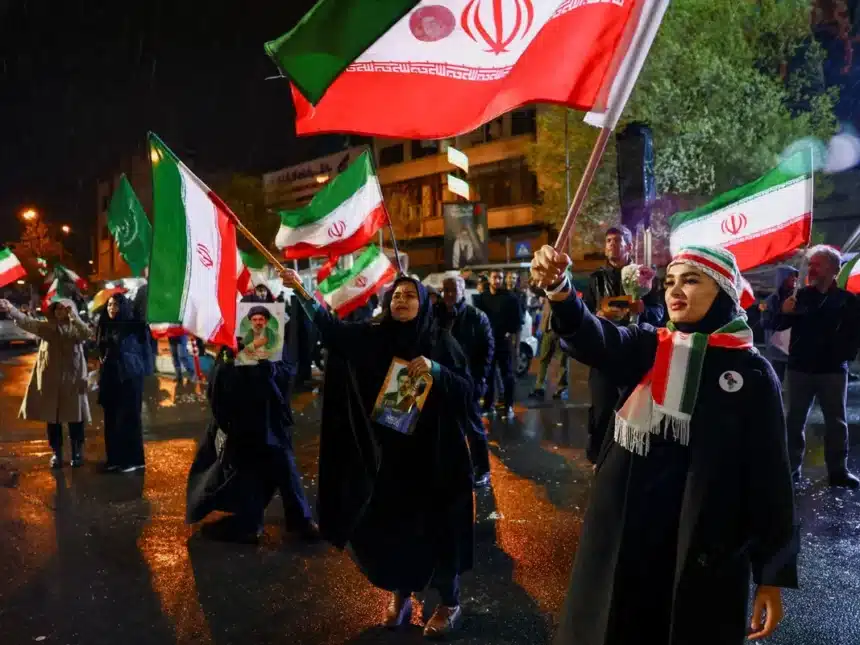
Residents in Tehran prioritize the persistent bombardments over reported negotiation gains, interpreting ongoing attacks as evidence of Washington’s lack of commitment to a resolution.
Gulf Region Under Fire
Gulf countries endure frequent Iranian missile and drone assaults. In the UAE, debris from an intercepted projectile in Abu Dhabi claims two lives—one Indian and one Pakistani citizen—and injures three others, including at least one Indian.
Kuwait’s National Guard routinely downs incoming threats, triggering regular air raid sirens and blasts.
US Challenges
The conflict strains American munitions stockpiles, prompting considerations to shift air defense interceptors originally allocated for Ukraine to the Middle East. Qatar’s Prime Minister and Foreign Minister, Sheikh Mohammed bin Abdulrahman bin Jassim Al Thani, confers with US Secretary of Defense Pete Hegseth in Washington, DC, on security collaboration and defense plans.
A recent poll reveals 64 percent disapproval of Trump’s war management, with 36 percent approval, amid surging fuel costs fueling public discontent. Many Americans increasingly rely on social media algorithms for war updates, exploring diverse perspectives beyond traditional broadcasts.
Israeli Operations
Israel’s military requests additional personnel for southern Lebanon, where troops battle Hezbollah to secure a buffer zone. Opposition leader and former Prime Minister Yair Lapid criticizes the government for plunging the nation into a multi-front war lacking strategy and sufficient forces, labeling it a “security disaster.” Two Israeli soldiers die in southern Lebanon during recent occupation efforts.
Broader Regional Effects
Israeli strikes hit Beirut’s southern suburbs early Friday, per Lebanese reports. US forces target Iraq’s Habbaniyah base in Anbar province, resulting in five to seven Iraqi soldier deaths and 23 injuries.
The Strait of Hormuz closure slashes Iraq’s oil exports by over 70 percent. Lebanon’s fatalities from Israeli operations climb to 1,116. Prime Minister Nawaf Salam alerts the United Nations to the potential Israeli annexation of territory south of the Litani River.
Global Oil Market Response
The World Bank commits to substantial financial aid for emerging economies impacted by the war. A vessel delivering over 700,000 barrels of Russian crude docks in the Philippines following its national emergency declaration.
ACLED analyst Pearl Pandya notes that South Asian nations depend heavily on the area and seek to prevent an Iranian regime collapse or Gulf economic turmoil.