Orchids as Ecosystem Health Indicators
Orchids captivate with their vibrant blooms and rarity, yet they offer vital insights into global ecosystem stability. These plants highlight hidden declines in species reproduction driven by falling numbers of pollinators like bees, flies, and wasps. Pollination failure poses a stealthy threat, often invisible until ecosystems falter, affecting biodiversity, resilience, and food production.
Orchids serve as early warning signals due to their specialized biology. Many depend on a single pollinator or a limited few, using precise scents, colors, and shapes to attract them. Some mimic female insect pheromones to lure males, while others bloom only when their pollinators are active. This specificity leaves them vulnerable to shifts in climate, land use, or pollinator behavior.
Unlocking Data from Herbarium Specimens
Tracking long-term pollination trends proves challenging, especially outside agriculture, with few studies spanning decades. While Europe and North America report pollinator losses, Australia lacked comparable data until recent analysis.
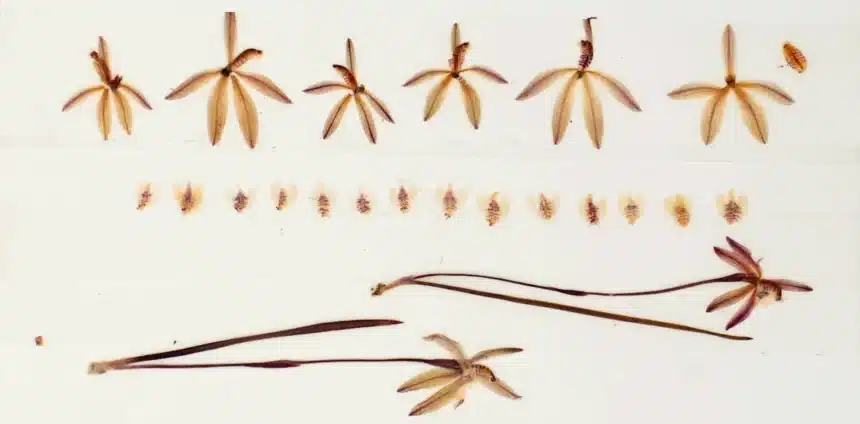
Researchers examined over 10,000 preserved orchid flowers from Australian herbaria, treating them as ecological archives. Pollinators leave visible traces by removing pollen packets, measurable even on dried specimens. Results show pollination services have plummeted more than 60% since the 1970s. Declines correlate with intensified land use and rising temperatures.
A Worldwide Trend
This pattern extends globally. A 2010 study of South African orchids documented long-term pollen removal drops. Analysis of specimens at the Royal Botanic Gardens, Kew, revealed declines in African and American orchids, especially those with deceptive or specialized strategies. European species showed varied results by pollinator type.
These findings align with widespread pollen limitation, where insufficient pollination hampers plant reproduction.
Value of Historical Collections
Herbaria provide irreplaceable records of environmental shifts, surpassing short-term field observations. Orchid populations may linger without reproduction, but decline looms. Broader application across Australia’s orchids could enable early detection of pollination crises continent-wide.
Orchids currently signal ongoing pressure on pollination, persisting for decades.









.jpg "No One Is aware of What ‘Terminally On-line’ Means Anymore")