The Australian government plans to bank billions in extra revenue from elevated oil and gas prices, driven by the war against Iran, rather than increasing spending. This strategy aims to curb inflationary pressures that could prompt another interest rate hike by the Reserve Bank.
Savings Outpace New Expenditures
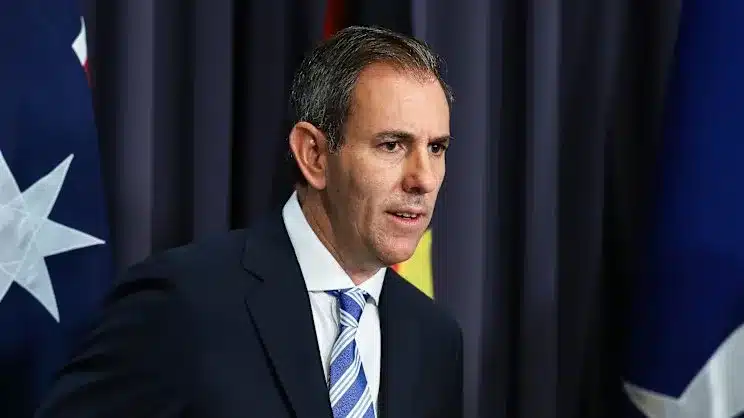
Treasurer Jim Chalmers and Finance Minister Katy Gallagher prioritize fiscal restraint in next week’s budget, featuring greater savings than additional outlays. Private forecasts project a windfall of $15 billion to $30 billion from this financial year through 2027-28 due to higher commodity prices and inflation linked to the conflict.
Chalmers notes that revenues will strengthen short-term but decline as the war and global economy stabilize. Officials intend to direct all surplus funds toward shrinking the budget deficit, projected to narrow slightly from $36.8 billion this year to $34.3 billion in 2026-27.
Key Savings Measures
A $38 billion savings package over four years stems from NDIS reforms and the elimination of supplementary support for seniors’ private health insurance. These measures, set to dominate the May 12 budget announcements, will bolster the fiscal position while funding priorities like defense, welfare, petrol excise reductions, and natural disaster response.
Government spending reaches 26.9 percent of GDP this year—the highest outside the pandemic since 1986-87—and is forecast to stay below 27 percent. Gallagher emphasizes fiscal responsibility: “We are making sure every dollar we save helps fund the services Australians rely on now and into the future.” She adds, “Finding savings gets harder every year, but that hasn’t stopped us doing the responsible thing, as we have done in every budget update since the 2022 election.”
Opposition Challenges Government Approach
Shadow Treasurer Tim Wilson plans to criticize post-2022 budget policies in a Monday speech to the Australian Chamber of Commerce and Industry. He argues that these decisions have raised average tax rates for workers, fueled inflation, and necessitated Reserve Bank rate hikes costing borrowers an extra $24,000 annually.
Wilson accuses the government of fostering dependency to maintain power. He advocates for policies supporting “self-starters who aspire to own a home and having a family while running their own business.” His vision includes: “Australia needs a budget that builds an economy that rewards contribution, restores integrity, and expands opportunity. We need a budget that restores living standards by backing self-starters and small business. We need a budget that restores Australia’s security to re-industrialise through domestic industry and defence.”
Reserve Bank Rate Decision Looms
The Reserve Bank begins its two-day meeting Monday, with markets pricing a 75 percent chance of a third consecutive rate hike. A 0.25 percentage point increase would lift the cash rate to 4.35 percent, adding $300 monthly to repayments on a $600,000 home loan since early February.
The March board vote split 5-4 to raise rates to 4.1 percent, primarily over timing, according to Governor Michele Bullock. AMP Deputy Chief Economist Diana Mousina anticipates a Tuesday hike but cautions: “The risk of another rate hike is that it would take interest rates back to their post-Covid highs and could weaken private sector growth at a time it was improving.” She notes fuel price rises equate to a 0.25 percent rate impact, urging the board to balance inflation risks against growth slowdowns.
Budget details and macroeconomic projections will brief the bank, including war-driven oil price effects. Mid-March Treasury analysis indicated a $US100 barrel oil peak would boost inflation by 0.75 percent and trim growth by 0.2 points. Brent crude has exceeded $US100 since April 22 and is projected to persist into late 2026.
The Bank of England modeled $US100-$US130 oil pushing UK rates to 5.25 percent, risking recession and 6 percent unemployment, though it held rates steady alongside US, EU, Canadian, and Japanese central banks amid shared concerns over inflation and growth.