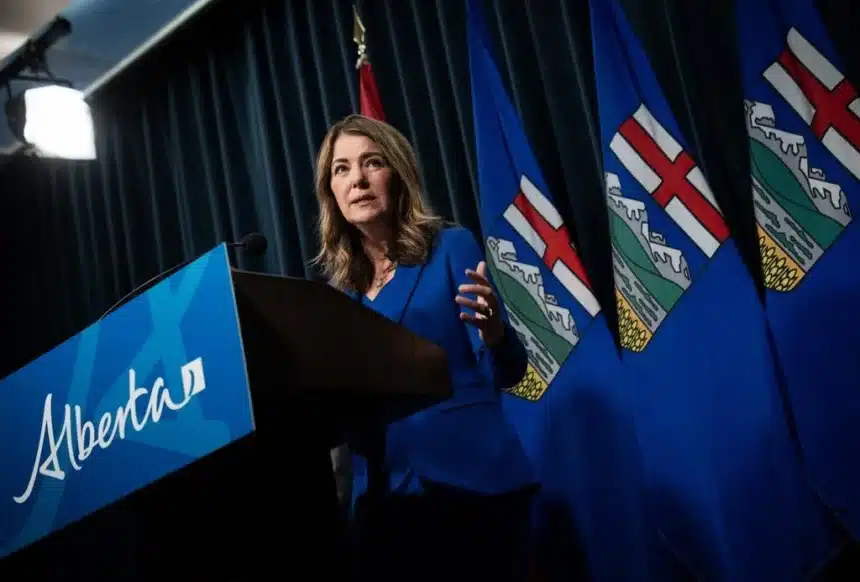
Alberta Premier Danielle Smith believes a finalized energy agreement with the federal government, featuring a new West Coast oil pipeline, could curb separatist movements in her province and encourage further accommodations from Ottawa on key issues.
Energy Talks Signal Path to Unity
Energy disputes have long strained relations between Alberta and the federal government. Smith commended Prime Minister Mark Carney for advancing a solution. “I hope that we’ll be able to announce that we’ve come to an agreement very soon, and that will start paving the way to show Albertans that Canada can work,” she stated in a recent interview. “That’s what I think we have to do. We can’t just tell them, we actually have to show them.”
Smith stressed that energy represents just one priority. An October referendum will seek Albertans’ views on immigration policy and other federal matters. She highlighted Mitch Sylvestre, leader of a recent Alberta independence petition submitted to Elections Alberta—a gun shop owner who opposes the federal firearms ban and buyback program affecting certain sports rifles.
“We have to find a way to accommodate that Alberta sees the world a little bit differently,” Smith said. “And I hope that the prime minister does that, because that will go a long way towards showing what cooperative federalism looks like in practice.”
Tackling Separatism with Jobs and Revenue
Approving a new pipeline could significantly dampen separatist urges, Smith noted. “A lot gets solved when people have a well-paying job” and governments boost services through energy export revenues, she explained. “There’s no question that’s a huge chunk—I think that (separatist urge) certainly comes down.”
Starting with energy could unlock accommodations on other fronts, promoting decentralized decision-making tailored to regional priorities while uniting on national challenges. This strategy might also ease tensions in Quebec, where frustrations with past federal attitudes mirror Alberta’s, and address similar issues across provinces.
“I think Quebecers are just as frustrated with the attitude that has come out of Ottawa in the last 10 years,” Smith observed, noting a shift under Carney. “We have to heal this divide that we have. That’s what I’m working towards.”
Pipeline Plans Advance Without Government Buyout
Following a recent meeting with Carney in Ottawa, Smith anticipates finalizing last year’s energy memorandum soon. Her government targets a pipeline application to the federal Major Projects Office by June, proposing multiple routes from Alberta oilsands to the West Coast—not limited to northern British Columbia, despite local opposition.
“We have five ports that we’re looking at,” she said, including options to twin the Trans Mountain Pipeline to Metro Vancouver. Priorities include community support, minimal congestion, and navigation ease.
The focus remains restoring private sector confidence for energy projects. Smith ruled out provincial or federal purchase, akin to the prior Trans Mountain acquisition. Instead, the Alberta Indigenous Opportunities Corporation could provide loan guarantees for First Nations equity stakes. “We’re prepared to put that on the table,” she affirmed.
A model like LNG Canada, backed by domestic and foreign firms, offers a blueprint. “We can’t have a country where the only major projects that get built are if they’re nationalized or if the government pays for them,” Smith emphasized. “We have to get the private sector to have confidence again.”
While appreciating U.S. President Donald Trump’s recent pipeline permit approvals boosting Alberta-to-U.S. exports, Smith prioritizes West Coast access for market diversification and national unity.