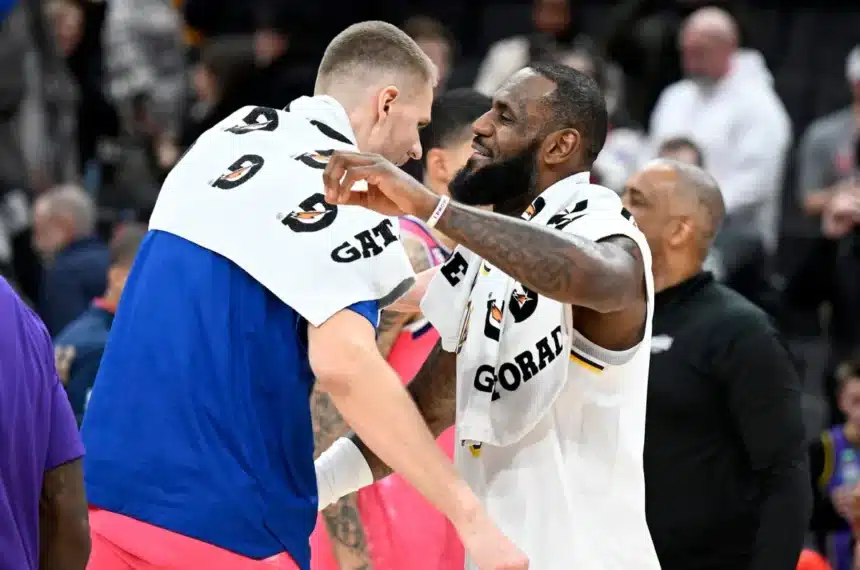
The potential move of NBA superstar LeBron James to the Golden State Warriors has reportedly been complicated by the team’s recent decision to re-sign Kristaps Porzingis. This move significantly impacts the Warriors’ financial flexibility, potentially closing the door on their ability to acquire James during the offseason.
Warriors’ Financial Constraints After Porzingis Extension
Speculation has been rife regarding LeBron James’ next team, with many suggesting he might depart the Los Angeles Lakers. Among the rumored destinations, the Golden State Warriors, led by James’ longtime rival Stephen Curry, have been frequently mentioned. The Warriors were reportedly interested in pairing the two legendary players in the latter stages of their careers. However, the recent commitment to Kristaps Porzingis appears to have derailed these plans.
Porzingis, despite playing only 15 games for the Warriors last season, has signed a new two-year contract worth $40 million, which includes a player option for the second year. This deal has significant financial implications for Golden State’s offseason strategy.
Impact on Mid-Level Exception and Salary Cap
According to financial analyst Bobby Marks, the Porzingis extension likely prevents the Warriors from utilizing the $15 million non-taxpayer mid-level exception. This exception is a crucial tool for teams looking to add significant talent without exceeding the salary cap too drastically.
Marks explained on X (formerly Twitter) that the Porzingis deal places the Warriors at $27 million below the first salary cap apron, even before accounting for a potential new contract for Draymond Green. He further noted that while teams can exceed the apron to re-sign their own players, using more than $6.1 million of the mid-level exception would result in the team being hard-capped at the first apron.
In essence, the Warriors’ decision to commit substantial funds to Porzingis signals a shift away from the financial maneuverability needed to sign a player of LeBron James’ caliber, especially when considering other roster needs.
The Anthony Davis Factor and Roster Building Challenges
A significant part of the reported allure for LeBron James to join the Warriors was the prospect of reuniting with Anthony Davis. Davis, famously traded from the Lakers to the Dallas Mavericks for Luka Doncic, has since been traded to the Washington Wizards. With the Wizards in a rebuilding phase, their ability to contend for an NBA title is questionable, making Davis’s availability and desire to move a complex issue.
Even if the Warriors were to pursue a trade for Davis, perhaps in exchange for a package centered around Jimmy Butler, the financial hurdles remain immense. If Golden State were to use the mid-level exception to sign James, their total salary would approach $193 million. This figure, combined with the potential hard cap at approximately $209 million, leaves very little room for maneuver.
This scenario, even without considering Draymond Green’s situation, would likely leave the Warriors with only 10 players on their roster. The complexity escalates when factoring in Green, who has opted out of his $27.7 million player option. If Green were to re-sign, the Warriors would need to fill at least four more roster spots to meet the NBA’s minimum of 14 players, with only about $16 million remaining. This would necessitate substantial salary sacrifices from both Green and James, making a move highly improbable.
Draymond Green’s Decision and Future Outlook
Draymond Green’s decision regarding his player option is a critical piece of the puzzle. His opt-out creates flexibility but also necessitates a new negotiation, which could further strain the Warriors’ salary cap. Reports suggested that Green’s decision was part of a larger strategy by the Warriors to potentially acquire both LeBron James and Anthony Davis. However, the financial realities, particularly after the Porzingis deal, cast serious doubt on this ambitious plan.
The path for the Golden State Warriors to sign LeBron James appears increasingly narrow. The financial commitments made, particularly the extension for Kristaps Porzingis, have significantly limited their options. Unless both James and Green are willing to accept substantially reduced contracts, the dream of seeing the two NBA legends team up in the Bay Area seems unlikely to materialize for the upcoming season.
Conclusion
The Golden State Warriors’ offseason aspirations, particularly regarding the potential acquisition of LeBron James, have been significantly impacted by their financial decisions. The re-signing of Kristaps Porzingis, while strengthening the team’s frontcourt, has created salary cap constraints that make acquiring James a formidable challenge. The team’s ability to navigate these financial complexities, alongside the decisions of key players like Draymond Green, will ultimately determine their roster for the upcoming NBA season.