Ukraine has intensified its campaign to disrupt Russia’s war effort by launching a series of strategic strikes against critical military infrastructure. These operations, occurring on June 29 and into June 30, targeted vital transportation links, drone command centers, and fuel facilities, aiming to degrade Russia’s capacity to sustain its invasion. The Ukrainian General Staff reported successful hits on key locations essential for moving troops, weaponry, and supplies.
Targeting Key Transportation Arteries
Among the significant targets were two strategically important bridges. One road bridge near Azov in occupied Zaporizhzhia and a railway bridge near Ichki in occupied Crimea were struck. Both crossings are reportedly crucial for Russian forces, facilitating the movement of personnel, ammunition, and military equipment towards the front lines. While the full extent of the damage is still under assessment, Ukrainian officials indicated these strikes are part of a broader strategy to cripple Russia’s military logistics network.
Disrupting Command and Control
Beyond transportation, Ukrainian forces also focused on Russian drone command posts and observation points. Strikes were reported in several areas, including Belgorod, Donetsk, and occupied Zaporizhzhia. A specific command and observation post near Staromlynivka in the Donetsk region was also hit. These actions underscore Ukraine’s evolving strategy to extend the conflict beyond the immediate frontline, striking at the infrastructure that underpins Russia’s offensive capabilities.
Attacking Fuel and Energy Infrastructure
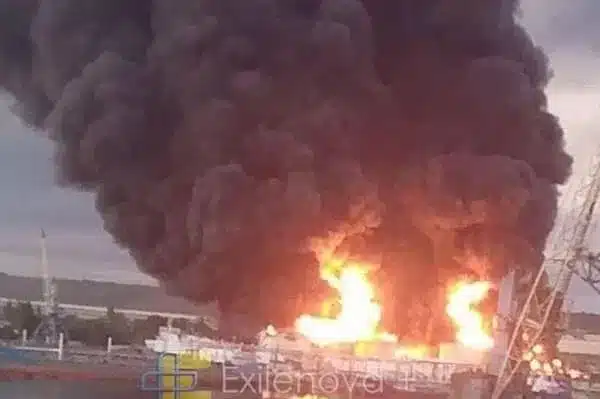
The campaign has also prominently featured attacks on energy facilities, which are seen as directly supporting Russia’s military operations. This strategy follows a recent confirmation of significant damage to the Slavyansky oil refinery in Russia’s Krasnodar region, attributed to a Ukrainian drone attack. Ukrainian assessments indicate that four large fuel storage tanks, with a combined capacity of 35,000 cubic meters, were destroyed, and an additional nine tanks sustained damage. A processing unit at the refinery was also reportedly impacted.
The Slavyansky refinery is a key component of Russia’s domestic fuel production and its military supply chain. Its disruption is a significant blow to Moscow’s ability to maintain its offensive operations. Local residents reported hearing multiple explosions around the refinery, which preceded a large fire. President Volodymyr Zelensky commended the operation, highlighting the precision of the Ukrainian forces. Ukraine’s Security Service stated that the refinery strike was part of an ongoing, extensive campaign targeting Russian military and economic infrastructure, aimed at diminishing Moscow’s financial and logistical support for the war.
A Growing Challenge for the Kremlin
These coordinated attacks present a mounting challenge for the Kremlin. While Russian forces continue ground operations along various sectors of the front, Ukraine’s strategy increasingly targets the support systems enabling these advances. By focusing on fuel supplies, transport routes, and command structures, Kyiv aims to compel Russia to divert resources towards defending its rear areas, thereby straining its military machine and potentially hindering its offensive momentum.
The Ukrainian General Staff has affirmed its commitment to continuing operations designed to reduce Russia’s capacity to wage war. The message conveyed by these strikes is clear: the battlefield is no longer confined to the traditional front lines. Russia must now contend with threats deep within its territory and occupied zones, impacting its ability to project power and sustain its military objectives.
Strategic Implications of the Strikes
The effectiveness of Ukraine’s strategy lies in its multi-faceted approach. By targeting bridges, Russia’s ability to move troops and equipment is directly hampered, potentially slowing down reinforcements and resupply efforts. The destruction or damage to fuel depots and refineries directly impacts the operational range and endurance of Russian armored vehicles, aircraft, and other fuel-dependent military assets. Furthermore, striking drone command centers and observation posts degrades Russia’s intelligence-gathering capabilities and its ability to coordinate complex operations, particularly with unmanned aerial vehicles, which have played a significant role in the conflict.
This campaign of attrition against logistical and support infrastructure forces a strategic dilemma for Russia. It must either allocate more resources to protecting these vital assets, potentially weakening its frontline defenses, or risk continued disruption that could cripple its operational tempo. The psychological impact on Russian forces, facing threats to their supply lines and command structures, could also be considerable, potentially affecting morale and unit cohesion.
Looking Ahead: Sustained Pressure
Ukraine’s commitment to this strategy suggests a long-term approach to degrading Russia’s military capabilities. By consistently targeting the sinews of the invasion – its logistics, fuel, and command networks – Kyiv aims to create a cumulative effect that will eventually make sustained offensive operations untenable for Moscow. The success of these recent strikes indicates a growing capability within Ukraine to project force deep into Russian-controlled territory and Russia itself, posing a persistent and evolving threat to the Kremlin’s war machine.
The ongoing efforts to disrupt Russian logistics are crucial for Ukraine’s defense and its eventual counter-offensive capabilities. By weakening the enemy’s ability to fight, Ukraine seeks to preserve its own forces, minimize casualties, and create more favorable conditions for regaining occupied territories. The strategic targeting of infrastructure demonstrates a sophisticated understanding of modern warfare, where the rear areas and support networks are as critical as the front lines.