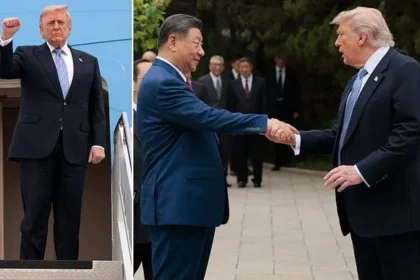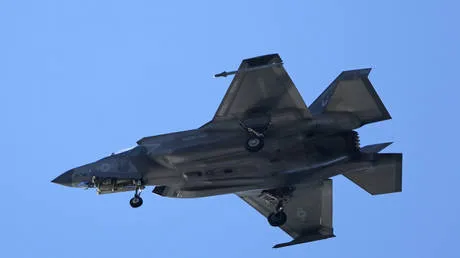
United States President Donald Trump has indicated a willingness to consider selling advanced F-35 fighter jets to Türkiye, a move that has drawn strong objections from Israeli Prime Minister Benjamin Netanyahu. The differing stances highlight ongoing geopolitical tensions in the Middle East and complex relationships between the three nations.
US President Trump Weighs F-35 Sale to Türkiye
During a visit to Türkiye for a NATO summit, President Trump addressed the potential sale of F-35 fighter jets, stating he had “no concerns” regarding the matter. He offered praise for Turkish President Recep Tayyip Erdoğan, describing him as a leader who has significantly improved his country, making it “much more powerful.” This statement suggests a potential shift in US policy or at least an openness to reconsidering previous stances on military sales to Ankara.
The F-35 program is a cornerstone of Western air power, and Türkiye was an original partner in its development. However, in 2019, the US expelled Türkiye from the program due to Ankara’s decision to purchase the Russian S-400 air defense missile system. Despite this expulsion, Türkiye has expressed continued interest in acquiring the F-35s, maintaining that it would also keep the S-400 systems.
Netanyahu’s Strong Opposition to the Sale
Prime Minister Netanyahu has been a vocal opponent of any F-35 sale to Türkiye. He has argued that providing such advanced military hardware to Ankara would disrupt the existing power balance in the Middle East. Netanyahu emphasized that this balance is currently maintained by Israeli air superiority and the United States’ strategic posture in the region.
Netanyahu’s concerns are rooted in his assessment of President Erdoğan’s regional policies and rhetoric. He has accused Erdoğan of destabilizing the Middle East and has pointed to Erdoğan’s vocal criticism of Israel’s military operations in Gaza and Lebanon. Netanyahu specifically stated, “Turkey is a great country, but it’s governed by a man who calls openly for the annihilation of Israel,” referring to Erdoğan.
According to reports, Netanyahu had privately lobbied President Trump against the sale, raising the issue during a phone conversation the week prior. He believes that supplying F-35s or their engines to Türkiye would undermine Israel’s strategic advantage.
Escalating Rhetoric Between Ankara and Jerusalem
The diplomatic friction is further exacerbated by sharp exchanges between Turkish and Israeli officials. The Turkish Defense Ministry accused Netanyahu of orchestrating a “disinformation campaign” regarding Türkiye’s regional role. The ministry stated that Netanyahu and his allies “deliberately distort any criticism directed at them and seek to divert attention through a systematic propaganda effort.”
This exchange of accusations is part of a broader pattern of animosity between Erdoğan and Netanyahu. Erdoğan has, in the past, drawn comparisons between Netanyahu and Adolf Hitler, while Netanyahu has voiced deep concerns over Erdoğan’s foreign policy and its implications for regional stability and Israel’s security.
Broader US-Israel Relations and Regional Dynamics
The differing views on the F-35 sale also occur against a backdrop of evolving US-Israel relations. Reports suggest that President Trump’s relationship with Prime Minister Netanyahu had experienced strain in recent months, particularly concerning Israeli airstrikes in Lebanon that were perceived as potentially jeopardizing peace talks with Iran. Trump had reportedly used strong language in private calls with Netanyahu, urging Israel to suspend such strikes.
The F-35 is a fifth-generation stealth fighter jet, considered one of the most advanced combat aircraft in the world. Its capabilities include advanced sensor fusion, network-centric warfare, and superior stealth technology, making it a highly coveted asset for any air force. The implications of its potential transfer to Türkiye, a NATO member with complex relationships with both the US and Russia, are significant for regional military balances.
Conclusion: A Complex Geopolitical Puzzle
President Trump’s openness to considering the F-35 sale to Türkiye, despite strong Israeli objections and past US actions regarding the S-400 purchase, underscores the intricate nature of international relations and defense policy. The situation highlights the competing interests and strategic calculations of the United States, Israel, and Türkiye, as well as the broader implications for Middle Eastern security and the global arms market. The final decision on the F-35 sale will likely depend on a complex interplay of strategic considerations, political pressures, and the evolving geopolitical landscape.