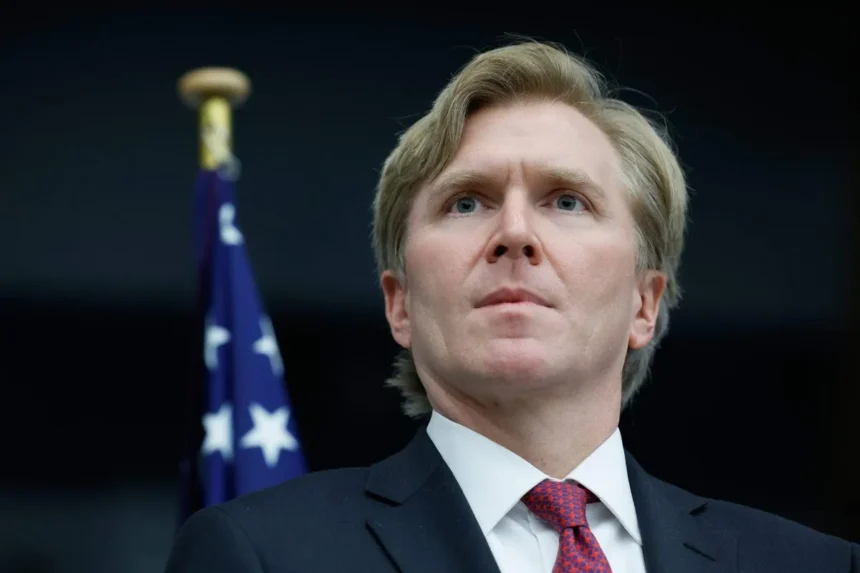
A former high-ranking U.S. defense official has publicly challenged the concept of a unified “middle powers” strategy, asserting that it represents a flawed understanding of international relations and serves as a mere distraction from more practical geopolitical considerations. The critique, delivered via a series of posts on the social media platform X (formerly Twitter) on Tuesday, came from Elbridge Colby, who served as the U.S. Undersecretary of Defense for Policy during the Trump administration.
Critique of the ‘Middle Powers’ Concept
Colby argued that the notion of middle powers coalescing into a coherent bloc is based on an inaccurate view of how nations interact on the global stage. He characterized his own perspective, and that of the U.S. from his viewpoint, as “flexible realists.” This approach, he explained, involves analyzing the international landscape through a lens of tangible factors such as national interests, geographical positioning, economic strength, and military capabilities. “From our point of view, a collective middle powers strategy is based on a faulty understanding of international relations,” Colby stated. “We are flexible realists. So, we view the international scene through the prism of interest, geography, economics, military power, etc. ‘Middle powers’ don’t have a coherent basis for alignment.”
He further contended that the idea of countries turning away from purchasing American military equipment due to perceived frustrations with the United States is both unrealistic and inaccurate. “There is a lot of commentary that, due to alleged frustrations with the United States, the American defense industrial base will lose out on the market for weaponry. But this is neither feasible nor accurate,” Colby wrote. He emphasized that access to the U.S. defense industry should be viewed as a “privilege, not a right,” suggesting that American military technology and products are not commodities available to all without condition.
Context: The Rise of ‘Middle Powers’ Discourse
Colby’s remarks arrive amidst a growing international discussion about the role and potential influence of “middle powers” – nations that are neither global superpowers nor minor states. This discourse has been notably advanced by figures such as Mark Carney, the former Governor of the Bank of England and Bank of Canada, who has frequently spoken about the importance of these countries collaborating to advance their collective interests.
Earlier this year, at the World Economic Forum in Davos, Carney articulated a vision where middle powers must unite to avoid being marginalized by increasingly volatile global superpowers. “Our view is the middle powers must act together because if we’re not at the table, we’re on the menu,” Carney said on January 20. He contrasted this with the position of great powers, stating, “But I’d also say that great powers can afford, for now, to go it alone. They have the market size, the military capacity and the leverage to dictate terms. Middle powers do not.”
Carney revisited the theme of middle powers in Australia in March, highlighting their underestimated strength. “Middle powers have more power than many realize,” he remarked on March 4. These sentiments suggest a strategic imperative for nations of intermediate size and influence to forge common ground and exert greater influence in international affairs, particularly in areas where the traditional superpowers may be preoccupied or their actions create instability.
Canadian Engagement with the ‘Middle Powers’ Idea
The concept of middle powers finding new avenues for cooperation has also resonated within Canadian diplomatic circles. David Lametti, Canada’s Ambassador to the United Nations, indicated