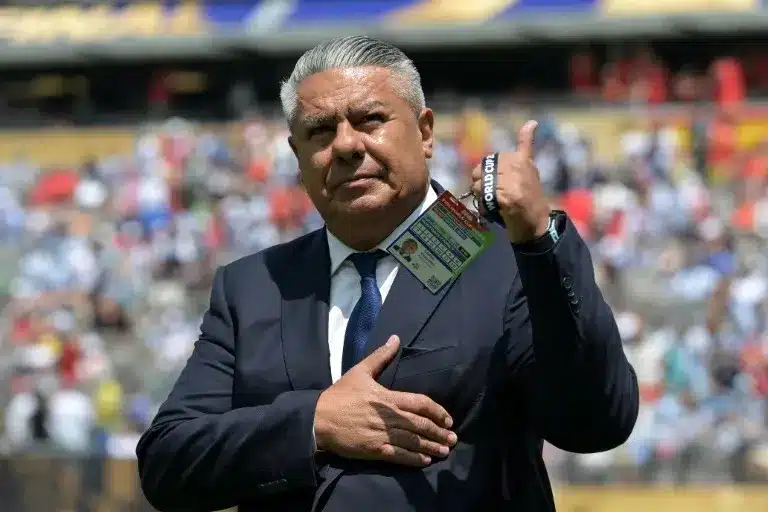
The Argentine Football Association (AFA) has issued a strong denial regarding reports that its president, Claudio Tapia, and treasurer, Pablo Toviggino, were detained or questioned by U.S. authorities upon their departure from the United States following the World Cup final. The AFA statement aimed to clarify the situation after media outlets circulated claims of the officials being held at New York’s John F. Kennedy International Airport.
AFA Addresses Detention Reports
According to the AFA, the allegations of detention and seizure of electronic devices are entirely unfounded. Reports suggested that Tapia and Toviggino were summoned to court concerning the AFA’s international contracts. However, the association categorically refuted these claims, labeling them as “absolutely false” and “all lies.” An unnamed source within the AFA reinforced this denial when speaking to news agencies.
While the AFA has dismissed the specific reports concerning its top officials, the organization did acknowledge the existence of a U.S. investigation targeting a third party with connections to the association. This individual has reportedly been issued a summons to appear before a grand jury. The purpose of this grand jury appearance is to provide documents and communications potentially related to various individuals, including officials within the AFA.
Background of Investigations
The Argentine Football Association, under the leadership of Claudio Tapia since 2017, has been involved in several ongoing investigations within Argentina. These domestic probes reportedly focus on allegations of money laundering and tax evasion. The AFA’s operational and financial dealings have come under scrutiny in recent times.
The political climate in Argentina may also be a factor in the heightened attention surrounding the AFA. Claudio Tapia has reportedly experienced strained relations with the current administration led by President Javier Milei. A significant point of contention appears to be Tapia’s opposition to President Milei’s proposals for the privatization of football clubs throughout the country. This stance places Tapia and the AFA at odds with the government’s economic and structural reform agenda.
U.S. Authorities’ Stance
When approached for comment regarding the alleged detention and the ongoing investigation, the Federal Bureau of Investigation (FBI) declined to provide any statement. This lack of comment is standard procedure for the agency when dealing with active or potential investigations.
Details of the Third-Party Summons
The AFA’s concession regarding a U.S. investigation pertains to a summons issued by a district court in Florida. This legal document targets an unspecified “third party.” The AFA confirmed that this individual is required to present themselves before a grand jury. The scope of the requested information includes any documents and communications that might pertain to various individuals, including those holding official positions within the Argentine Football Association. The exact nature of the third party’s connection to the AFA and the specific focus of the grand jury’s inquiry remain undisclosed.
Claudio Tapia’s Leadership
Claudio Tapia has been at the helm of the AFA since 2017. His tenure has seen the association navigate various challenges, both domestically and internationally. His leadership style and decisions have often been subjects of public and media discussion, particularly in light of the association’s financial and administrative investigations.
The AFA’s role in Argentine society extends beyond mere sports governance; it is deeply intertwined with national identity and culture. The association’s financial health and operational integrity are therefore matters of significant public interest. The ongoing investigations, both within Argentina and the acknowledged U.S. inquiry, highlight the complexities and scrutiny the AFA faces.
Conclusion
In summary, the Argentine Football Association has vehemently denied reports of its president and treasurer being detained in the United States. While affirming that its top officials were not held, the AFA acknowledged a U.S. investigation into a third party connected to the organization, who has been summoned to appear before a grand jury. This situation unfolds against a backdrop of domestic investigations into the AFA and a reportedly tense relationship between its leadership and the Argentine government, particularly concerning the future of football club ownership in the country.