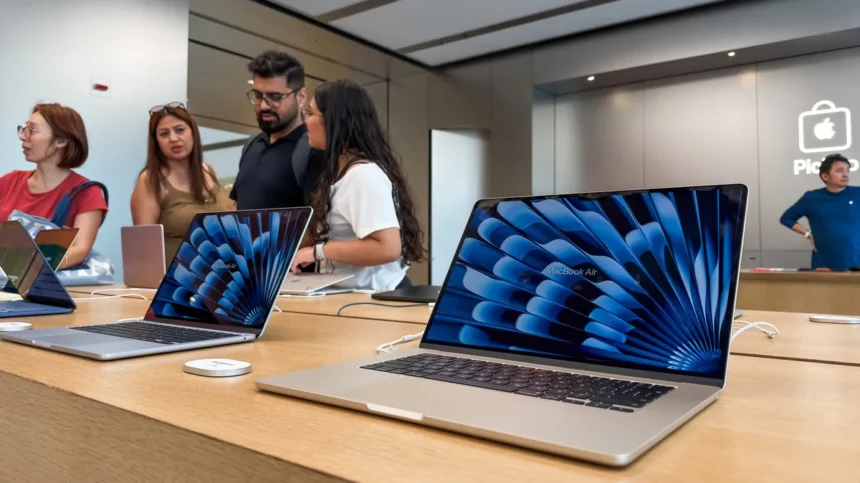
Determining the expected lifespan of a new MacBook involves considering several factors, from software support and hardware capabilities to Apple’s own service policies. While there isn’t a single definitive answer, understanding these elements can help users estimate how long their Apple laptop will remain functional and relevant for their needs. The longevity of a MacBook is influenced by its initial configuration, how it’s used, and the ongoing availability of operating system updates and hardware support.
Understanding macOS Support as a Primary Indicator
One of the most straightforward ways to gauge a MacBook’s potential lifespan is by tracking its eligibility for macOS updates. Apple typically releases a major new version of its operating system annually, and with each release, older hardware may be phased out due to insufficient processing power or lack of compatibility with new security features. This practice is common across the tech industry, as companies focus testing and development on more recent hardware.
Historically, MacBooks have received substantial software support. For instance, macOS Sonoma, currently the oldest supported version, is compatible with MacBooks dating back to 2018 models. Looking ahead, macOS 27 Golden Gate, anticipated in fall 2026, is designed to work with all Macs equipped with Apple’s own silicon chips, the earliest of which are the M1 MacBook Air and MacBook Pro models from 2020. This suggests that Apple silicon MacBooks could see extended software support.
Beyond major OS releases, Apple also provides security patches for the two preceding macOS versions. Currently, this means that even older MacBooks still receiving security updates can run versions as recent as macOS Sonoma. By analyzing these trends, it’s reasonable to estimate that most MacBooks can expect approximately eight years of first-party software support: about six years of receiving the latest macOS features and an additional two years of critical security updates. Once a MacBook falls outside this support window, it remains usable, but operating on an unsupported OS can eventually lead to issues with third-party application compatibility, as newer software often requires more recent operating system versions.
Hardware Limitations and Usage Patterns
Beyond software obsolescence, a MacBook’s practical lifespan is dictated by its internal hardware and how well it meets the user’s demands. The intended use of the laptop plays a crucial role. For individuals primarily engaged in light tasks such as web browsing, document creation, and video conferencing, even a base model MacBook should perform adequately until it loses OS support. However, users with more demanding workflows, like video editing or 3D rendering, will likely experience hardware bottlenecks sooner and may benefit from upgrading more frequently to leverage the latest performance improvements.
Modern MacBooks offer limited user-upgradability, making the initial configuration critical. Key components like the processor, RAM, and storage should be carefully considered at the time of purchase to ensure they align with future needs. Insufficient RAM, for example, can significantly hamper multitasking capabilities and the performance of demanding applications. While storage can be supplemented with external drives or cloud services, insufficient RAM or a weak processor can become a performance bottleneck that cannot be easily resolved post-purchase.
The battery is another component that degrades over time. Modern MacBook batteries are typically rated for around 1,000 charge cycles before their capacity significantly diminishes. For users who frequently work away from a power source, a noticeable decline in battery life after reaching this cycle count can impact usability and necessitate a battery replacement or a new device.
Apple’s Product Support Lifecycle: Vintage and Obsolete Status
Apple categorizes older products into ‘vintage’ and ‘obsolete’ statuses, which affects hardware repair and service availability. A product is considered ‘vintage’ if it was discontinued more than five years but less than seven years ago. During this period, authorized repair providers, including Apple Stores, can still service these devices, provided the necessary parts are available. The newest vintage MacBook, as of recent information, is the 2020 Intel MacBook Air.
Products become ‘obsolete’ when they have been discontinued for more than seven years. For these devices, Apple generally ceases hardware support, with limited exceptions for certain battery replacements. If an obsolete MacBook requires a hardware repair, users must seek out third-party repair shops, which may not always use genuine Apple parts. The most recent MacBook models classified as obsolete are typically from around 2017, such as certain MacBook Pro models.
While a MacBook doesn’t require immediate replacement upon entering the ‘vintage’ category, reaching ‘obsolete’ status is a strong signal to consider an upgrade. By this point, the device is likely no longer eligible for the latest macOS updates, and hardware failures become more challenging and expensive to address due to limited repair options.
Considering the Transition to Apple Silicon
The ongoing transition from Intel processors to Apple’s own silicon (M-series chips) is a significant factor for current MacBook owners. macOS 27 Golden Gate is slated to be the first version that does not support Intel-based Macs. Consequently, MacBook users with Intel processors should anticipate an upgrade in the near future, as even essential security support for these models is expected to conclude around 2028. Apple silicon processors offer substantial performance and efficiency gains over their Intel predecessors, meaning users on older Intel models may not be experiencing the full potential of the macOS ecosystem.
As Apple’s entire lineup shifts to Apple silicon, it’s plausible that future macOS versions might support a wider range of hardware for longer periods, given the more unified architecture. Ultimately, the user experience is paramount. If a MacBook becomes a source of frustration due to persistent issues like a malfunctioning charging port, sticky keys, constant storage management, or other usability problems, it may be time to consider an upgrade. While minor annoyances can be tolerated, a device that hinders productivity and requires constant troubleshooting signals the end of its practical lifespan.
Conclusion: Making an Informed Upgrade Decision
The lifespan of a MacBook is a multifaceted consideration. While Apple’s software support generally extends for about eight years, hardware capabilities and Apple’s service policies also play critical roles. For basic tasks, a MacBook might remain functional for many years, but demanding applications and workflows necessitate keeping an eye on hardware performance. The transition to Apple silicon also marks a turning point for Intel-based models. By evaluating these factors—software updates, hardware performance relative to your needs, battery health, and Apple’s support status—users can make a well-informed decision about when to upgrade their MacBook to ensure continued productivity and a positive computing experience.