A significant Royal Commission is set to scrutinize the role of recent protests, including controversial demonstrations at the Sydney Opera House and outside the NSW parliament, in the escalation of anti-Semitism within Australia. The inquiry, formally known as the Royal Commission on Anti-Semitism and Social Cohesion, will delve into how these public gatherings may have contributed to a climate of hatred, particularly in the lead-up to a deadly attack on a Jewish community event in Bondi Beach on December 14 last year.
Examining Protest Impact on Social Cohesion
The commission’s focus extends to the events that transpired shortly after the October 7, 2023, Hamas attacks in Israel, which resulted in over 1200 fatalities. A notable protest held at the Sydney Opera House, attended by approximately 1000 individuals, drew criticism for alleged flag burning and the chanting of anti-Israel slogans. This demonstration, organized by the Palestinian Action Group, occurred in response to the escalating conflict in the Middle East.
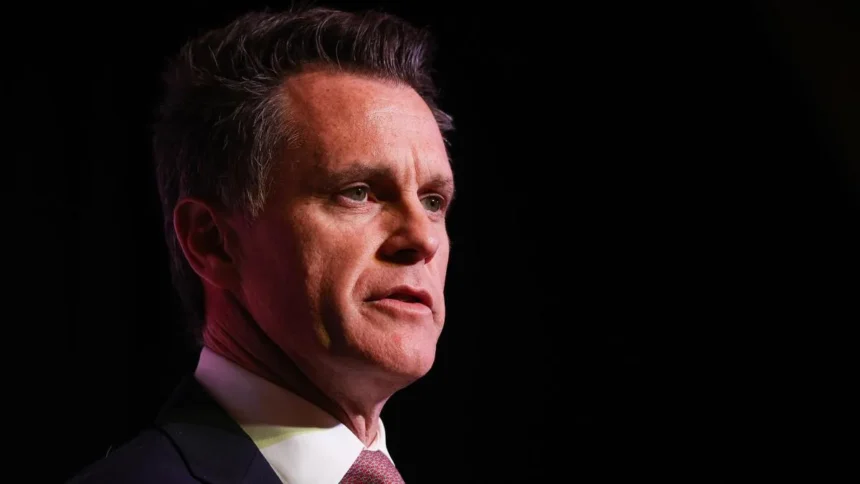
The timing and nature of this protest became particularly sensitive as it coincided with a decision by NSW Premier Chris Minns to illuminate the Sydney Opera House sails in blue and white, symbolizing solidarity with the Jewish community. Premier Minns stated at the time that this gesture was intended to express empathy for Jewish communities across NSW, emphasizing the government’s unequivocal stance against the “indiscriminate slaughter” in Israel.
During the Opera House protest, participants were observed displaying Palestinian flags and, according to reports, burning an Israeli flag while vocalizing sentiments that ranged from justifications of resistance to explicitly anti-Semitic chants. Premier Minns later described the celebration of the events in the Middle East at the protest as “abhorrent” and affirmed his support for lighting the Opera House sails, stating, “I’d do it again.” He stressed the importance of sending a clear message that terrorism would never be endorsed.
Commissioner Virginia Bell highlighted that a key objective of the commission’s hearings is to assess police responses to anti-Semitic incidents during protests. “The right to engage in peaceful protest is a fundamental attribute of democratic life,” Commissioner Bell stated. “The commission’s focus in this hearing block will be on whether there are opportunities to improve the way police respond to anti-Semitic conduct in protest settings.”
Neo-Nazi Demonstration at NSW Parliament
A separate, highly concerning incident under scrutiny involves a demonstration by approximately 60 neo-Nazis outside the NSW parliament on November 8, 2025. This group, identified as the National Socialist Network (NSN), staged a 30-minute protest during which they displayed a banner reading “abolish the Jewish lobby” and chanted slogans reminiscent of the Hitler Youth, including phrases like “the Jewish lobby is destroying our nation.”
This protest also occurred in the context of new hate speech laws that had come into effect on August 15 of the same year. NSW Police Commissioner Mal Lanyon acknowledged a “communication error” within the police force that led to neither law enforcement nor government officials being aware of the neo-Nazi gathering beforehand. He noted that the protest’s stated purpose was to oppose Jewish lobby groups and the recently enacted hate speech legislation.
Premier Minns condemned the neo-Nazi demonstration, labeling it “shameful” and “despicable, hateful” conduct that promotes racism and division. He pledged that such activities would not be tolerated and that increased police resources would be dedicated to preventing similar future occurrences.
Community and Law Enforcement Perspectives
Alex Ryvchin, co-chief executive officer of the Executive Council of Australian Jewry, characterized the neo-Nazi protesters as “evil” and suggested they exploit existing societal grievances and prejudices. He emphasized the need for robust legislative tools to empower law enforcement and security agencies to monitor, disrupt, and prevent violent extremist activities.
The Royal Commission will meticulously examine both the Sydney Opera House and NSW parliament protests, along with the corresponding police responses. These investigations are scheduled to commence on August 4.
Broader Scope of the Inquiry
Following the examination of these specific incidents, the commission will dedicate a subsequent hearing block, beginning August 5, to exploring pathways of anti-Semitic radicalization within Australia. “We will also explore the effectiveness of current government, law enforcement and community responses, with a focus on prevention, early intervention and deradicalization,” Commissioner Bell elaborated.
The inquiry aims to provide a comprehensive understanding of the factors contributing to rising anti-Semitism and to identify strategies for fostering greater social cohesion and mitigating hate-motivated conduct across the nation. The commission’s findings are expected to inform policy and operational improvements for law enforcement and government bodies.