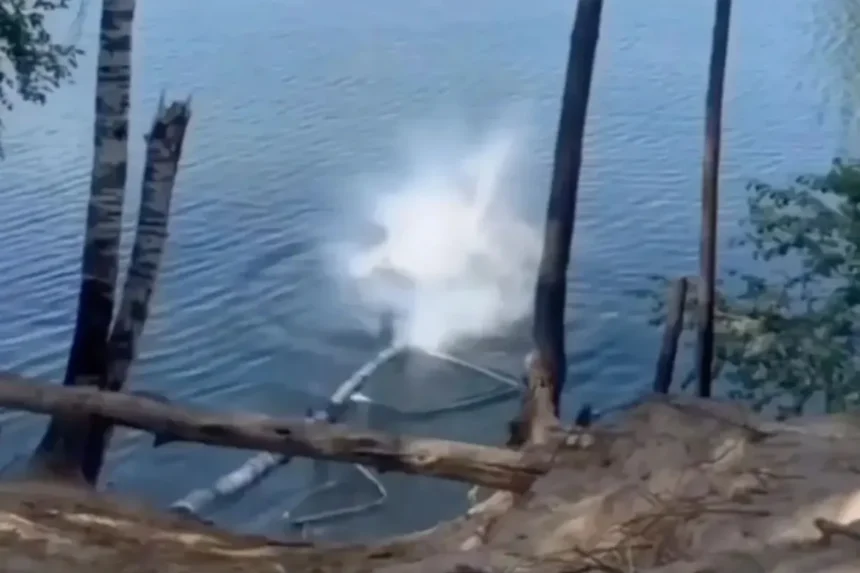
A tourist attempting a do-it-yourself bungee jump suffered serious injuries when a tree toppled onto him after he plunged into a flooded quarry. The alarming incident, captured on video, occurred when a birch tree, to which the bungee rope was secured, collapsed into the water, striking the man on the head. Bystanders witnessed the event and rushed to his aid, subsequently calling emergency services.
DIY Bungee Jump Incident Details
The footage shows the Russian tourist dangling from a long rope tied to the tree, which overlooked a quarry. After releasing himself, he descended into the water below, landing with an awkward impact. Shortly after he resurfaced, the tree began to fall. Screams from onlookers can be heard as the large tree hurtled towards the man, who was still in the water and seemingly unaware of the impending danger. The tree then crashed down, hitting him directly on the head.
Witnesses immediately reacted, pulling the man from the water. Paramedics arrived at the scene to provide initial treatment before transporting him to a local hospital. Reports indicate that despite sustaining multiple injuries, the man remained conscious throughout the ordeal. He is currently in intensive care in a serious condition.
Analysis of the Incident
According to local reports from Nizhny Novgorod, the man misjudged his jump, leading to an awkward landing in the water. The force of his swing and the subsequent landing likely contributed to the instability of the tree. The report stated, “The tree collapsed from the bank where the swinging rope had been secured, pinning him in the water.”
This incident has raised significant concerns among local residents. They have pointed out that the quarry lake is a popular spot for such unregulated activities, often carried out without any proper safety measures or supervision. The lack of official safety protocols at a location frequently used for risky stunts has become a focal point of discussion following the accident.
Risks of Unregulated Adventure Activities
The dangers associated with unsupervised and improvised adventure activities like DIY bungee jumping are starkly highlighted by this event. Unlike professionally managed operations, these informal setups often lack:
- Expert Supervision: No trained professionals to assess risks or manage the activity.
- Proper Equipment: Ropes and harnesses may be inadequate, worn, or incorrectly secured.
- Safety Checks: No rigorous testing of equipment or the environment before use.
- Emergency Protocols: Absence of plans or resources to handle accidents or injuries.
The incident serves as a critical reminder of the importance of adhering to safety standards in any high-risk recreational pursuit. While the thrill of adventure is appealing, prioritizing safety through professional guidance and established protocols is paramount to prevent severe injuries or fatalities.
Comparison to Other Bungee Jump Incidents
This unfortunate event echoes other tragic incidents in the world of bungee jumping, underscoring the inherent risks when safety procedures are compromised. In a separate incident in Brazil, a young woman tragically lost her life after falling more than 130 feet during a bungee jump. Reports indicated that the safety rope had not been attached to her harness by the staff managing the jump. The aspiring teacher was pronounced dead at the scene. Video footage from that event captured bystanders shouting about the missing rope just as she was released. The staff involved allegedly attempted to flee the area but were apprehended by authorities shortly after.
Conclusion
The severe injury sustained by the Russian tourist during his DIY bungee jump is a stark illustration of the perils involved in unregulated extreme sports. The toppling tree, a consequence of the activity’s setup and execution, resulted in a critical injury. This incident, coupled with past tragedies stemming from safety failures, emphasizes the non-negotiable need for professional oversight, appropriate equipment, and strict adherence to safety protocols in all adventure sports to ensure participant well-being.