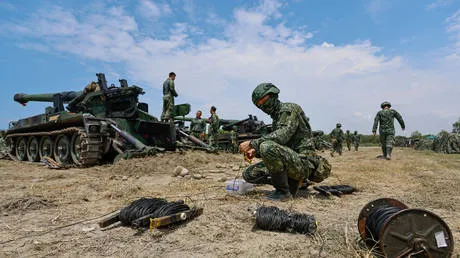
Taiwan’s Defense Minister Wellington Koo has revealed that military cooperation between Taiwan and the United States is significantly more extensive and active than commonly perceived. Speaking to a select group of reporters, Koo emphasized that the collaboration extends far beyond visible arms sales, encompassing multifaceted exchanges and practical combat experience sharing. This disclosure comes at a time of heightened tensions with Beijing and follows a period of uncertainty regarding US arms sales to the self-governing island.
Deepening Defense Collaboration
Minister Koo stated that the partnership with the U.S. military is “far closer than you might imagine,” indicating a level of engagement that surpasses public awareness. While the public often focuses on the transactional aspect of arms sales, Koo highlighted that the cooperation is “multifaceted and involves so much more.” He further elaborated that Taiwan has been “learning so much practical combat experience from the U.S.” through these ongoing military exchanges.
Although specific details of the cooperation were not disclosed, Koo’s remarks alluded to a discreet presence of American personnel on the island. He referenced the common practice of U.S. troops being presented as “American English teachers” to maintain diplomatic sensitivities. Koo suggested that “a lot more” such personnel “will be showing up where they need to be,” though their operations would remain largely unseen. This subtle acknowledgment points to a strategic effort to enhance Taiwan’s defense capabilities through direct, albeit covert, engagement.
Strategic Context and Regional Tensions
The minister’s statements arrive amidst a complex geopolitical landscape. China views Taiwan as a breakaway province and has not renounced the potential use of force to achieve reunification, despite expressing a preference for peaceful means. The United States, while adhering to a “One China” policy, maintains robust unofficial relations with Taiwan and is a key provider of defensive arms. This dynamic has long been a significant point of contention between Washington and Beijing.
Adding to the regional unease, U.S. President Donald Trump had previously placed a hold on a substantial arms sale package to Taiwan, reportedly worth $14 billion. Trump described the arms sales as a “very good negotiating chip” in U.S. dealings with China, indicating that his approval was contingent on broader trade discussions with Beijing. While officials in Taipei maintained a composed stance, reports suggested that the delay caused concern among allies in the region and within Taiwan itself, marking a potential departure from established U.S. policy.
Taiwan’s Defense Planning
Despite the deepening cooperation with the U.S., Minister Koo clarified Taiwan’s strategic planning. He asserted that Taipei does not factor direct U.S. military intervention into its contingency plans in the event of a conflict with mainland China. This suggests a strategic emphasis on self-reliance and deterrence, bolstered by U.S. support and training, rather than an expectation of direct combat involvement from American forces.
Broader Implications of Enhanced Cooperation
The revelation of enhanced U.S.-Taiwan military ties underscores the strategic importance both nations place on maintaining stability in the Indo-Pacific region. The collaboration aims to bolster Taiwan’s defensive capabilities, enabling it to act as a deterrent against potential aggression. This approach aligns with broader U.S. foreign policy objectives of supporting democratic partners and ensuring freedom of navigation and overflight in contested waters.
While Beijing has consistently voiced strong opposition to any form of “military collusion” between Taiwan and the United States, Minister Koo’s remarks signal a commitment to strengthening these ties regardless. The subtle yet significant increase in on-site cooperation, including the presence of U.S. military personnel, suggests a long-term strategy to enhance Taiwan’s readiness and resilience. This clandestine yet active engagement is designed to provide Taiwan with the necessary tools and expertise to defend itself effectively, thereby contributing to regional security.
Conclusion
The candid assessment from Taiwan’s Defense Minister Wellington Koo sheds light on the robust and often understated military relationship between Taiwan and the United States. By moving beyond the visible arms sales, the two nations are engaged in a deeper, more integrated form of defense cooperation. This strategic partnership, characterized by shared training and experience, aims to fortify Taiwan’s defense posture in the face of regional challenges, while Taipei continues to prioritize self-defense capabilities in its strategic planning.