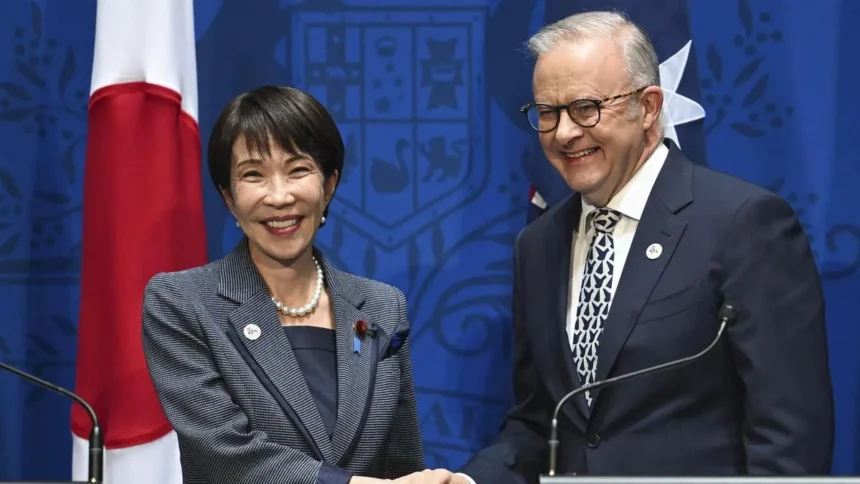
Senior opposition figures have formally requested the Australian Federal Police (AFP) investigate the potential unlawful disclosure of confidential correspondence between the Japanese Prime Minister’s office and Australian Prime Minister Anthony Albanese. The move follows controversy surrounding remarks made by Mr. Albanese on a podcast and the subsequent leak of sensitive diplomatic communications to the media.
Opposition’s Concerns Over Diplomatic Leak
Shadow Minister for Defence, James Paterson, and former Liberal Party deputy leader, Ted O’Brien, have written to AFP Commissioner Krissy Barrett. They are seeking an investigation into how confidential diplomatic correspondence, specifically a note from the Japanese government to the Department of Prime Minister and Cabinet, was allegedly leaked to Australian news outlets. The opposition MPs argue that such a deliberate leak could constitute a criminal offense under Australian law.
In their letter, obtained by The West Australian, Paterson and O’Brien emphasized the critical importance of maintaining trust with bilateral partners. They stated that unauthorized disclosure of sensitive communications could severely damage Australia’s national interest if it appears the government does not take such breaches seriously. “It is critically important that Australia’s bilateral partners believe that their confidential correspondence will be handled appropriately by the Australian government,” the letter read.
The opposition’s referral specifically cites concerns that the leak might violate Division 122 of the Commonwealth Criminal Code, which deals with offenses related to the handling of official information. They are seeking to understand if the correspondence was provided to the media without authorization.
The Podcast Controversy and Diplomatic Note
The referral stems from an incident in July when Prime Minister Albanese appeared on the “Deep Bush” podcast. During the episode, he reportedly made comments about pop star Kylie Minogue and joined in on jokes referencing Japanese leader Sanae Takaichi, specifically concerning “smuggling” prized crown melons into the country. These remarks subsequently drew criticism.
Following media reports in Australia about Mr. Albanese’s comments, a diplomatic cable dated July 13 was reportedly sent by the Japanese government. This note, addressed to the Department of Prime Minister and Cabinet, “noted” the “sensationalised reporting in the Australian media.” According to reports, Tokyo’s assessment was that there was no “ill intention” behind Mr. Albanese’s podcast appearance. The communication also reportedly indicated an undertaking to take “no action” regarding the incident, suggesting that a public response from Japan would not benefit the Albanese Government as it would allow the Australian media to move past the story.
A separate report mentioned a letter from the Japanese Prime Minister to Mr. Albanese expressing gratitude for Australia’s friendship following a recent earthquake, highlighting the broader context of bilateral relations.
Parliamentary Scrutiny and Government Response
The issue was raised in Parliament, with Senator James Paterson questioning Foreign Affairs Minister Penny Wong. He asked whether the government knew how the sensitive diplomatic correspondence was obtained by the media. Senator Wong stated she had seen public reports but did not know what correspondence was being referred to.
Senator Paterson pressed further, inquiring if the government would investigate the leak of confidential correspondence from Japan. Minister Wong reiterated the strong and trusting relationship between Australia and Japan. However, Senator Paterson accused the government of risking a critical bilateral relationship in an attempt to manage the fallout from the Prime Minister’s “melon mess,” suggesting it would be simpler for Mr. Albanese to apologize.
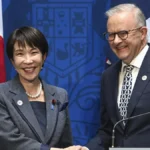
In the House of Representatives, Liberal MP Mary Aldred asked Mr. Albanese directly if he would apologize to the Japanese leader for his “disrespectful behaviour” on the podcast. Mr. Albanese rejected the assertion, stating that he and Ms. Takaichi were “friends.” He pointed to her recent visit to Canberra and the gift of melons as evidence of their positive relationship, asserting that Australia and Japan’s strategic partnership was stronger than ever.
Broader Implications and International Reporting
The controversy, which has generated headlines in Australia for weeks, has also begun to attract attention in Japan. The Asahi Shimbun newspaper reportedly published an article addressing the Australian Prime Minister’s alleged sexually suggestive remarks concerning the melons gifted by Ms. Takaichi.
Several government ministers, including Agriculture Minister Julie Collins and Environment Minister Murray Watt, have been tasked with defending the Prime Minister’s actions. When questioned about the remarks and a gesture made by Mr. Albanese during the podcast, ministers maintained that the Prime Minister’s participation had been misinterpreted. They emphasized that any inference of inappropriate intent was not what the Prime Minister intended.
Journalists also questioned Minister Watt on why the Prime Minister did not challenge a crude joke made by the podcast host, which compared Ms. Takaichi’s gifted melons to those of a well-known celebrity. Minister Watt reiterated that the Prime Minister’s actions and statements were being misinterpreted.
Conclusion
The referral to the AFP underscores the seriousness with which the opposition views the alleged leak of sensitive diplomatic communications. The ongoing debate highlights the delicate balance between political commentary, international relations, and the handling of confidential government information. The Prime Minister maintains his remarks were misinterpreted, while the opposition calls for accountability and an investigation into the breach of diplomatic protocol.