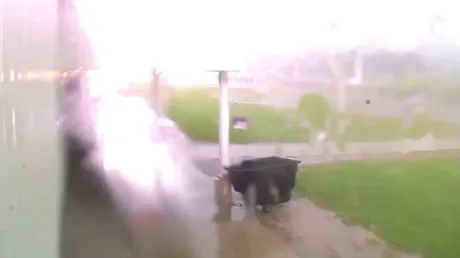
A powerful lightning strike at the Grafton Correctional Institution in Ohio on Tuesday evening injured 16 inmates as severe storms, including potential derecho conditions, swept across the US Midwest. One inmate sustained serious injuries, while four others remained hospitalized as of Wednesday, according to state officials. No prison staff members were reported injured.
Prison Incident Amid Widespread Storm Damage
The incident occurred as a group of incarcerated individuals were returning from their evening meal when the lightning struck the facility. The Ohio Department of Rehabilitation and Correction (ODRC) confirmed that all 16 affected inmates were initially transported to external hospitals for evaluation and treatment. One inmate required transport via air ambulance due to the severity of their condition. Governor Mike DeWine provided an update on Wednesday, stating that four inmates were still hospitalized, with one listed in serious condition.
The lightning strike at the prison was part of a larger weather system that brought a variety of hazardous conditions to the Midwest. Residents experienced tornadoes, intense flash flooding, high winds, and widespread power outages. The scale and intensity of the storm system led preliminary data from the US weather service’s Storm Prediction Center to suggest it could be classified as a derecho – a rare, extensive, and long-lived windstorm characterized by a fast-moving line of thunderstorms.
Broader Impact of Midwest Storms
The severe weather system was not confined to the prison; it caused significant damage and tragic fatalities across multiple states. At least three deaths were attributed to the storms. In Ohio, Governor DeWine reported that one resident died during a medical emergency. First responders were unable to reach the individual in time due to the severe flash flooding that hampered their efforts.
Further west, in Indiana, a four-year-old boy lost his life when a tree fell onto a home. Another fatality occurred in Portage, Indiana, where a house explosion led to a death. Authorities were investigating the explosion as potentially weather-related, according to reports from the Associated Press.
The storms also demonstrated the destructive power of high winds. Video footage captured on Ohio highways showed the immense force of the wind, with one clip from the Ohio Department of Transportation illustrating a moving car being flipped over on a freeway in Columbus. Such events underscore the dangerous conditions faced by residents and travelers across the affected regions.
Understanding Derechos and Severe Thunderstorms
The term ‘derecho’ describes a specific type of severe weather event. Unlike typical thunderstorms that can produce localized damage, a derecho is a widespread, long-lived, and often devastating windstorm associated with a band of rapidly moving thunderstorms. These events can span hundreds of miles and produce wind gusts comparable to those of a weak tornado, but over a much larger area. The damage path is typically straight-line, but the sheer force and extent can be catastrophic.
The conditions observed across the Midwest, including powerful winds exceeding 100 mph in some areas, align with characteristics of a derecho. Meteorologists continue to analyze the data to confirm the classification and understand the meteorological factors that contributed to such an intense system. The combination of high winds, heavy rain, and lightning created a dangerous environment, leading to the widespread disruptions and tragic outcomes reported.
Response and Recovery Efforts
Emergency services across the affected states worked to respond to the numerous incidents caused by the storms. The challenges posed by widespread power outages and damaged infrastructure complicated rescue and recovery operations. Officials urged residents to exercise caution, stay informed about weather alerts, and avoid unnecessary travel until conditions improved and assessments of damage could be completed.
The incident at Grafton Correctional Institution highlights the vulnerability of all infrastructure, including correctional facilities, to extreme weather events. The swift response in transporting injured inmates to medical facilities was crucial in managing the immediate aftermath. Ongoing assessments of storm damage will inform long-term recovery efforts and infrastructure resilience planning in the affected communities.