A high-stakes aerial duel is unfolding above Sudan, largely unnoticed by the global community. In the skies over the war-torn nation, advanced Turkish drones are reportedly intercepting and destroying Chinese-made unmanned aerial vehicles (UAVs) operated by paramilitary forces. This technological clash, occurring amidst a brutal civil conflict, highlights the evolving nature of modern warfare and the significant financial investment involved in drone technology.
The Aerial Contest Above Sudan
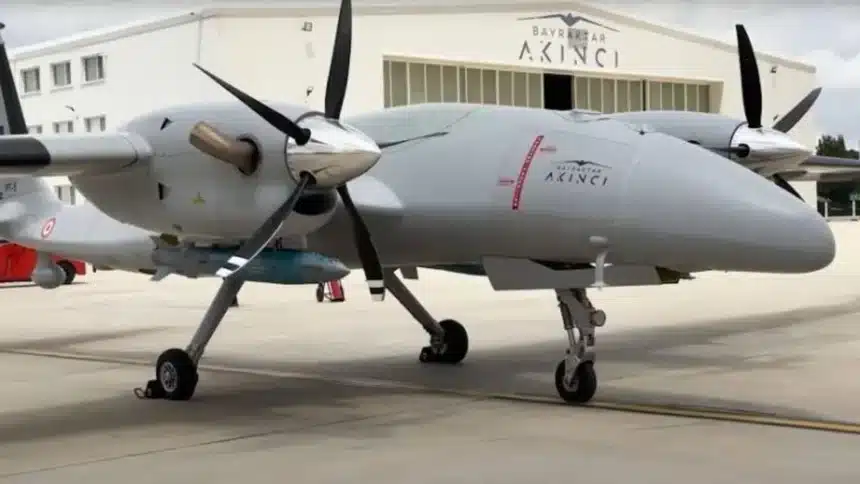
Since April 2023, Sudan has been embroiled in a devastating civil war, primarily between the Sudanese Armed Forces (SAF) and the Rapid Support Forces (RSF). While ground battles rage, a more discreet conflict has taken shape in the air. Reports indicate that the Turkish-built Bayraktar Akıncı, a formidable combat drone, has been actively engaging and neutralizing Chinese CH-95 drones flown by the RSF.
Footage circulating online, purportedly from the Akıncı’s perspective, appears to show an engagement where the Turkish drone targets a CH-95. This incident is part of a growing pattern of losses for the CH-95 and its variants. Since late June 2026, at least six Chinese-made drones of this family have reportedly been destroyed, with several attributed to the Akıncı’s capabilities. The CH-95 is a medium-altitude, long-endurance drone designed for reconnaissance, electronic warfare, and strike missions. It typically weighs between 650 to 1,000 kilograms, can carry a payload of up to 170 kilograms, and has an operational endurance exceeding 12 hours, with a ceiling above 7,000 meters.
A Stark Contrast in Technology and Cost
The Bayraktar Akıncı drone represents a significant step up in scale and capability. With a maximum takeoff weight of around 6,000 kilograms, it can carry a payload of up to 1,350 kilograms and boasts an endurance of over 24 hours. Its service ceiling reaches approximately 13,700 meters, and its impressive wingspan measures about 20 meters (66 feet).
The disparity in cost between these two aerial platforms is substantial. The Akıncı is estimated to cost around $25 million per unit, making it approximately twelve times more expensive than the CH-95, which is valued at close to $2 million, according to studies on military acquisitions. This considerable financial outlay underscores the strategic importance placed on advanced drone capabilities by the involved parties.
The Human and Financial Toll of Drone Warfare
The drone engagements in Sudan are not just a technological arms race; they carry a heavy price in terms of human lives and financial resources. The ongoing conflict, which has seen eruptions like the Darfur conflict in 2003, is now significantly impacted by drone warfare.
United Nations officials have issued stark warnings about the escalating civilian casualties caused by armed drones in Sudan, particularly in contested regions like Kordofan. Volker Türk, the UN High Commissioner for Human Rights, stated that armed drones have become the primary cause of civilian deaths in the conflict. Between January and April 2026, drone strikes were responsible for at least 880 civilian fatalities, accounting for over 80% of all conflict-related deaths during that period. This grim statistic places the specific encounters between the Akıncı and CH-95 within a much larger and devastating drone war.
Akıncı’s Air-to-Air Capabilities
A key factor in the Akıncı’s effectiveness against the CH-95 is its ability to carry radar and air-to-air weaponry. This allows it to engage enemy aircraft directly, a capability that deviates from the typical role of armed drones primarily used against ground targets. The CH-95, designed for extended surveillance over vast areas, becomes a vulnerable target when faced with an adversary capable of aerial interception.
Reports from July detailed an Akıncı launching an air combat missile at a CH-95 northwest of El Obeid. In another instance, an Akıncı was reportedly involved in destroying a Chinese-made aircraft while it was on the ground, though this claim has not been independently verified by the involved forces. The presence of Chinese military equipment has been documented among RSF armaments, and while allegations of support from the United Arab Emirates through supply routes persist, such claims remain disputed, with the UAE consistently denying military assistance to either side.
Conclusion: A Widely Unreported Conflict
The aerial confrontations between Turkish and Chinese drones over Sudan represent a critical, yet often overlooked, dimension of the ongoing civil war. The deployment of advanced, expensive drone technology highlights the strategic calculations of the warring factions and their international backers. As the conflict continues, the skies above Sudan serve as a stark reminder of the devastating impact of modern warfare on civilian populations and the complex geopolitical dynamics at play in regions often absent from major global headlines.