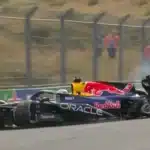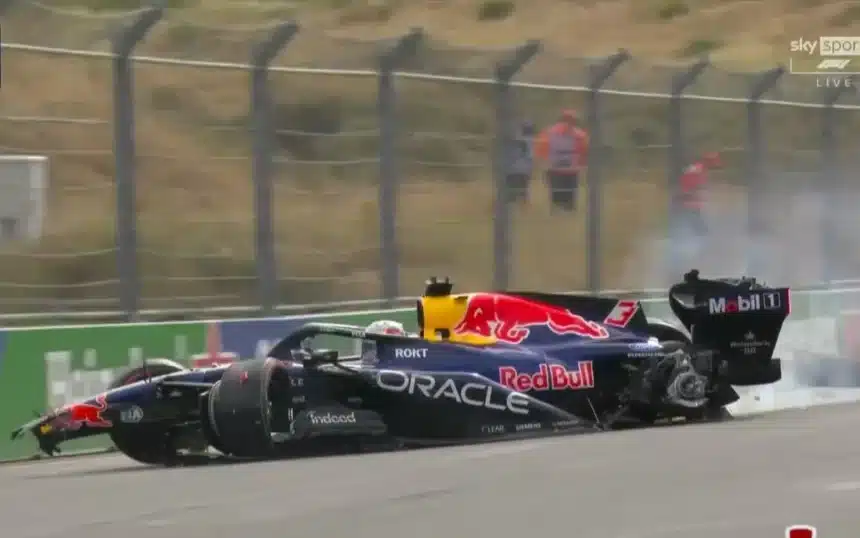
Max Verstappen’s hopes of winning his home Grand Prix were dramatically dashed on Sunday when he crashed out of the Dutch Formula 1 Grand Prix at Zandvoort. The incident occurred in challenging wet conditions, much to the disappointment of the passionate home crowd.
Verstappen’s Zandvoort Misfortune
The reigning world champion lost control of his Red Bull on the exit of the final corner. Touching the white line, his car slid wide before making contact with the outside wall and then ricocheting into the inside barrier. The impact left his car significantly damaged, forcing his immediate retirement from the race. Verstappen confirmed he was unharmed following the crash.
The challenging conditions at Zandvoort, particularly the dampness in the final sector, proved to be Verstappen’s undoing. This unexpected retirement marks a significant blow to his championship aspirations and is a particularly bitter pill for his loyal Dutch supporters to swallow.
Race Under Red Flag After Verstappen’s Crash
Following Verstappen’s incident, the race was brought to a halt under a red flag. This stoppage provided an opportunity for teams to carry out repairs and change tyres. The question arose whether any teams would opt for the hard tyre compound in an effort to complete the remainder of the race without further pit stops.
The red flag period also offered a chance for drivers and teams to reassess their strategies in the unpredictable weather. While most drivers navigated the treacherous conditions carefully, some incidents highlighted the risks involved.
Other Incidents and Incidents Under Investigation
Earlier in the race, Alex Albon expressed frustration with Esteban Ocon, describing Ocon’s overtaking maneuver under a yellow flag as “crazy.” Meanwhile, during a separate incident, Emerson Fittipaldi spun, and his teammate Nico Hulkenberg narrowly avoided a collision, demonstrating the precariousness of the track.
Reports indicated that one driver, Lindblad, was noted for a yellow flag infringement, suggesting that stewards were actively monitoring driving standards in the difficult conditions.
Race Start and Early Dynamics
The Dutch Grand Prix commenced with Lando Norris on pole position, having secured a strong qualifying performance. However, the start of the race saw George Russell experience a poor getaway, losing second place to Antonelli even before reaching the first corner.
Norris managed to maintain his lead initially, but one of the Red Bull cars briefly ran off track. Antonelli began to apply pressure to Norris early in the race, indicating a competitive battle for the lead.
Russell, despite his sluggish start, managed to hold off a charging Oscar Piastri through some aggressive driving. However, Piastri subsequently fell behind Charles Leclerc, further shuffling the order in the opening laps.
Strategic Considerations in Wet Conditions
The wet weather throughout the Dutch Grand Prix introduced a significant strategic element. Teams had to make critical decisions regarding tyre choices and pit stop timing, balancing the need for grip with the potential for changing track conditions.
The decision to pit or stay out, and which tyre compound to select, became paramount. The possibility of a long stint on hard tyres, or the risk of switching to intermediates or wets, added layers of complexity for race engineers and drivers alike.
Home Crowd’s Disappointment
The atmosphere at Zandvoort is always electric, fueled by the fervent support for their home hero, Max Verstappen. His crash and subsequent retirement cast a somber mood over the proceedings, extinguishing the hopes of a home victory for the thousands of fans in attendance.
The Dutch Grand Prix has historically been a highlight of the Formula 1 calendar, celebrated for its challenging circuit and passionate fanbase. Verstappen’s dominance in recent seasons had amplified the anticipation for this year’s event, making his early exit all the more poignant.
Looking Ahead: The 2026 Dutch GP Confirmed
Amidst the drama of the current race, it was also confirmed that the Dutch Grand Prix will continue to feature on the Formula 1 calendar, with the 2026 event already scheduled. This news provides a sense of continuity for the sport and its dedicated followers in the Netherlands, offering a future prospect for redemption and renewed excitement.
The unpredictable nature of motorsport was on full display at Zandvoort, reminding everyone that even the most dominant drivers can face unforeseen challenges. The focus now shifts to how the remaining drivers will navigate the rest of the race and who will ultimately emerge victorious from the challenging conditions.