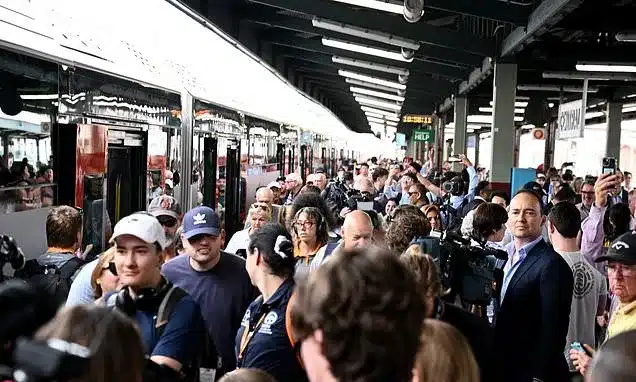
Australia’s approach to population growth and immigration has been characterized by a lack of cohesive policy, relying instead on a fragmented system of visa programs and consistently inaccurate forecasts. This has frequently led to infrastructure deficits as the nation grapples with population increases that outpace planning. Governments have often adjusted visa settings without establishing clear objectives for the nation’s size or growth rate, leaving essential services like housing, healthcare, education, and transportation as secondary considerations. This reactive, rather than proactive, policy-making has fueled a contentious and divisive public debate surrounding immigration.
A History of Inaccurate Population Projections
The current population of Australia stands at over 28 million, with an annual growth rate of approximately 1.5 percent. At this rate, projections suggest the population could reach 40 million by 2050, 50 million by 2065, and 60 million by 2077. However, historical data reveals a significant divergence between past forecasts and actual population figures, underscoring the challenges in long-term planning.
For instance, in 1998, the Australian Bureau of Statistics (ABS) projected that the population, then 18.5 million, would reach between 23.5 and 26.4 million by 2051. Current figures already exceed this projection by approximately two million people, with the year 2026 still some way off from 2051. This consistent underestimation highlights a systemic issue in forecasting, which has directly impacted the nation’s ability to prepare its infrastructure adequately.
The Infrastructure and Housing Deficit
The implications of these population trends and forecasting inaccuracies are profound, particularly concerning infrastructure and housing. Reaching a population of 40 million within the next two decades would necessitate a 44 percent expansion of national capacity. A population of 50 million would require an 80 percent scale-up, and 60 million would more than double the country’s current size.
Specifically, accommodating an additional 40 million people would require the construction of approximately 5 million new dwellings. A population of 50 million would demand 9 million more homes, and a population of 60 million would necessitate nearly 13 million new homes. These figures represent the baseline needed simply to house the projected growth and do not account for the existing backlog of housing needs, the replacement of aging stock, or the impact of shrinking household sizes, all of which would further increase the demand for new construction.
Beyond housing, the strain on other essential services is considerable. Increased population numbers translate to greater demand for hospital beds, more classrooms in schools, expanded water supply systems, and a more robust power grid. Furthermore, as Australia’s population ages, the demand for services like aged care will need to increase at a rate potentially faster than overall population growth.
Proposals for a More Rigorous Framework
Addressing these persistent failures requires a fundamental shift towards a more structured and transparent population policy. One proposed solution involves the Treasury’s Centre for Population publishing a comprehensive ‘Population Choices Paper’. This paper would move beyond a single, potentially unreliable central projection to map out various future scenarios based on different growth rates. Each scenario would detail the potential impacts on housing availability, the tax base, levels of congestion, and per capita Gross Domestic Product (GDP).
Crucially, such modeling should incorporate sensitivity analyses for varying fertility and mortality rates. Current assumptions, such as fertility rates dipping and then stabilizing, are merely projections and could prove inaccurate. Population growth is influenced by multiple factors beyond immigration, including natural increase.
Enhancing Accountability and Transparency
To ensure a more informed and accountable approach, it is suggested that the Centre for Population release a common demographic baseline before each federal election. Political parties could then present their preferred population targets, with the consequences of each target modeled against these identical assumptions. This would allow voters to clearly understand the projected outcomes of different immigration policies, such as impacts on housing, infrastructure, and the economy, rather than relying on broad claims about economic benefits.
This approach would compel advocates for higher immigration to address issues like housing shortages and congestion, while those favoring lower immigration would need to confront potential workforce shortages and the implications of an aging population on the tax base. Voters could then make more informed decisions based on a shared understanding of the potential futures presented.
Effective population management necessitates integrated action across different levels of government. While the Commonwealth government controls immigration rates, state governments hold significant power over housing and infrastructure development. Therefore, national cabinet should serve as the primary forum for debating and coordinating these interconnected issues.
Annual reporting on targeted versus actual growth, migration forecasts versus reality, and the delivery of promised infrastructure would be essential for accountability. Any significant failures in meeting these targets should be subject to public explanation. The ultimate aim is not to remove politics from the immigration debate but to foster an environment of honest and accountable political discourse regarding population policy.
Conclusion: Towards Honest and Accountable Population Policy
Australia requires a permanent and transparent system that enables governments to present distinct population choices. This system should empower voters to comprehend the consequences of these choices and ensure that the public service can effectively implement government decisions. By moving towards a framework of honest modeling, democratic selection, and competent delivery, Australia can begin to address the long-standing challenges associated with population growth and immigration.