The UK government has stated it will not provide a financial bailout for Jaguar Land Rover (JLR) as the automotive giant reportedly prepares to cut thousands of jobs. Business Secretary Jonathan Reynolds emphasized that while the government aims to mitigate job losses, it will not intervene financially to prevent redundancies if deemed necessary for the company’s competitiveness.
Government Stance on JLR Job Cuts
Reports indicate that JLR, the UK’s largest car manufacturer, is planning to reduce its workforce by approximately 4,000 employees, with a formal announcement expected soon. The company has confirmed it has initiated a voluntary redundancy program for salaried and management staff, offering them an opportunity to leave the business.
Jonathan Reynolds, the Business Secretary, confirmed he has been in contact with JLR’s Chief Executive Officer, PB Balaji, and plans to meet with the company’s leadership team imminently. Speaking about the situation, Reynolds acknowledged JLR’s significant role as a British success story and stated that workforce numbers naturally fluctuate with a company’s business cycle. He stressed the importance of ensuring the workforce aligns with the company’s need to remain competitive over the long term.
When questioned about potential government financial support to safeguard these jobs, Reynolds clarified the government’s position. “Not if it’s to bail people out,” he stated. However, he added that the government remains open to investing in long-term future initiatives, particularly when collaborating with industry partners on strategic projects.
Challenges Facing Jaguar Land Rover
JLR operates in a challenging global market, facing several significant headwinds. Its largest market, North America, has been impacted by trade policies, including a 10% tariff on vehicle imports. Furthermore, the company is still recovering from a major cyber attack that disrupted production last year.
Intensifying competition, particularly from Chinese manufacturers, presents another substantial hurdle. Brands like Jaecoo have seen their SUVs, sometimes referred to as “Temu Range Rovers,” gain significant traction and become best-sellers in the UK market, highlighting the evolving competitive landscape.
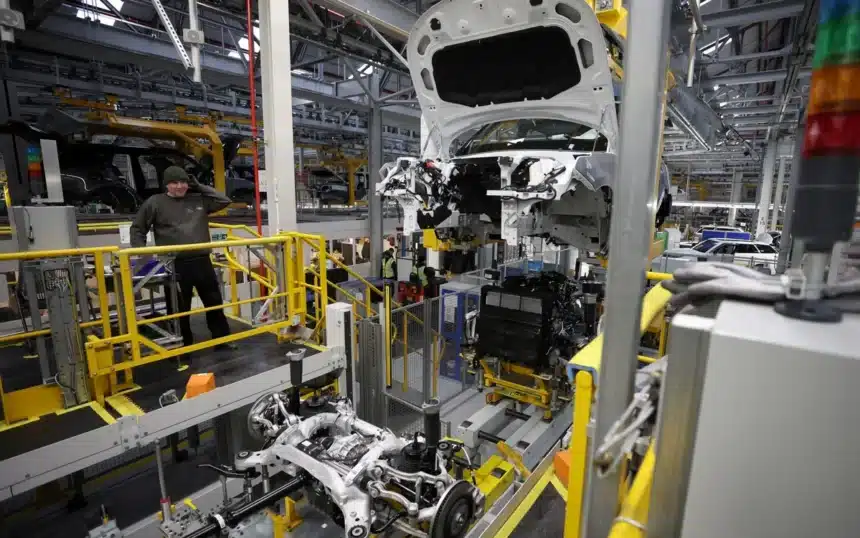
JLR employs around 30,000 people across the United Kingdom, with major manufacturing facilities located in Solihull, West Midlands, and Halewood, Merseyside. The company’s operations are deeply integrated into the UK’s industrial fabric.
JLR’s Cost-Saving Measures and Financial Performance
A spokesperson for JLR outlined the company’s strategic imperative to adapt to changing global market conditions. The company is targeting approximately £1.7 billion in savings over the next two years. This initiative requires further organizational streamlining, enhanced efficiency, and a focus on building greater business resilience.
The company has formally informed its employees and trade union representatives about the voluntary redundancy program. JLR has committed to sharing further details directly with its staff first, prioritizing internal communication.
Recent financial disclosures reveal the pressures JLR is experiencing. In the three months leading up to June 30, the company reported a 9.6% year-on-year decrease in revenues, reaching £6 billion. This decline was largely attributed to a 9.2% reduction in vehicle sales volumes.
The company has also faced operational disruptions. In March, JLR temporarily halted production of its Range Rover and Range Rover Sport models at the Solihull plant. This pause was a consequence of a significant fire at a component manufacturer’s facility in Norway, which supplied essential parts.
Looking Ahead
The situation at Jaguar Land Rover underscores the complex challenges facing traditional automotive manufacturers in the current economic climate. Factors such as global trade dynamics, technological shifts, intense competition, and the need for operational efficiency are forcing significant strategic adjustments. While the UK government has ruled out a direct bailout, its willingness to support long-term industrial investment suggests a continued, albeit indirect, engagement with the future of the automotive sector in the country. The success of JLR’s cost-saving measures and its ability to navigate market shifts will be critical in determining its future trajectory and the stability of its substantial UK workforce.