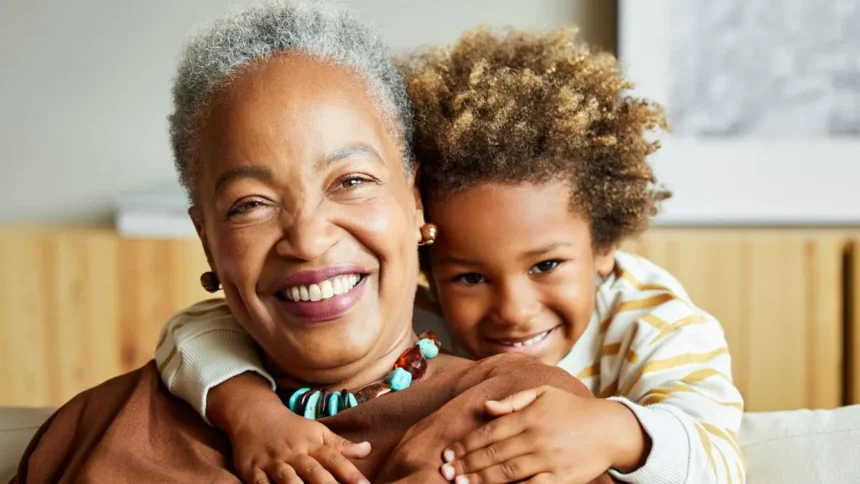
Grandparents often serve as a vital sanctuary for children, especially those who are highly sensitive and process the world with heightened emotional intensity. In today’s often overstimulating environment, the unique qualities of grandparents—such as ample time, attentive listening, and a relaxed approach—can create a profound sense of calm and security for these youngsters. Psychologist Carmen Barrio explains that while grandparents are an essential “safe haven,” it’s crucial to distinguish between providing a secure base and falling into the trap of overprotection.
The Grandparental Advantage: Time and Perspective
What makes the grandparent-grandchild relationship so special? Barrio highlights that many grandparents possess an invaluable asset: time. Their availability and a relational style unburdened by the daily pressures of parenting allow children to form a deep, distinct bond. When adults exude calm, genuine interest, and availability, children feel safe to express their emotions confidently. Grandparents also occupy a unique familial position. They hold family history and understand parents intimately but are typically removed from the immediate challenges of daily child-rearing. This distance grants them a more measured perspective, enabling them to act as a stabilizing influence for both the child and their parents.
Navigating the Line: Safe Space vs. Overprotection
A potential pitfall arises when a grandparent’s home becomes an overly isolated refuge, detached from real-world experiences. Barrio clarifies the critical difference between a safe environment and overprotection. A safe environment acts as a supportive launchpad, empowering children to explore the world with the assurance that adults are there if needed. Overprotection, conversely, involves preemptively shielding children from any experience that might evoke discomfort, difficulty, or frustration. The objective, Barrio emphasizes, is not to shield children from challenging emotions but to guide them in developing the skills to manage these feelings independently. Grandparents offer immense value by providing comfort without undertaking tasks the child is capable of doing themselves. A truly safe space doesn’t cocoon a child but offers a secure foundation for experimentation, learning from mistakes, and building self-efficacy.
The Impact of a Calmer Pace
Highly sensitive children can be particularly affected by hurried environments and overstimulation. The gentler pace often characteristic of grandparents can significantly benefit their nervous systems. Barrio notes that some children require more time to adapt, process information, or recover from intense situations. When grandparents offer a less demanding rhythm, free from the pressure of constant activity, they create essential moments of peace and connection. However, the key isn’t merely moving slowly but attuning to the individual child’s needs. While some children thrive on activity, others need frequent respite. Understanding the specific child is paramount.
Fostering Self-Regulation Through Trust
The emotionally available and unhurried presence of grandparents can indeed aid a child’s journey toward self-regulation, provided a strong bond of trust exists. Children learn to manage their emotions by observing and interacting with key adults. When a grandparent listens without immediate judgment, remains composed during emotional outbursts, and offers support without rushing to “fix” the problem, they are actively modeling emotional regulation. The goal is not to eliminate difficult feelings but to help children realize they possess the capacity to navigate them.
Key Attitudes for a Safe Haven
Creating a “safe haven” for a sensitive child hinges less on specific techniques and more on fundamental attitudes. Barrio identifies several crucial elements:
- Attentive Listening: Prioritizing understanding before offering solutions.
- Validating Feelings: Acknowledging emotions without minimizing or exaggerating them.
- Respecting Pace: Honoring the child’s natural tempo and processing time.
- Predictable Routines: Maintaining consistency during shared activities.
- Quiet Confidence: Demonstrating belief in the child’s ability to manage challenging moments.
Collaborative Support: Grandparents and Parents Working Together
The roles of grandparents and parents are complementary, each offering unique strengths in raising a sensitive child. Parents typically manage the primary responsibilities of setting boundaries, making crucial decisions, and overseeing daily life. When aligned, grandparents can contribute their time, life experience, and a different relational dynamic, thereby enriching the child’s support system. Open communication between parents and grandparents is vital to prevent conflicting messages that could confuse the child.
Practical Steps for Grandparental Support
The most effective support a grandparent can offer is to genuinely get to know the child as an individual, avoiding assumptions based on labels. Trusting in the child’s inherent capabilities and allowing them opportunities to try things is essential. True support means being a reliable safety net while children learn to navigate life’s hurdles, rather than removing every potential obstacle.
In essence, grandparents can provide an unparalleled emotional refuge for sensitive children by offering a blend of time, understanding, and a secure base from which to grow, all while carefully avoiding the pitfalls of overprotection.