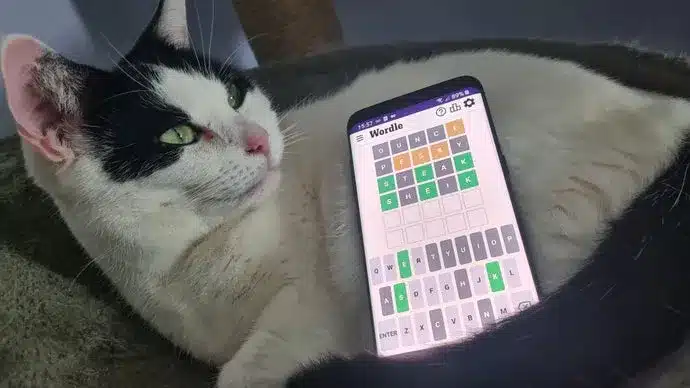
Players seeking assistance with the Wordle puzzle for Wednesday, September 16, 2026, can find hints and the final answer here. The popular daily word game challenges participants to guess a five-letter word within six attempts, using feedback from each guess to deduce the correct solution.
Today’s Wordle Hints
For those looking to maintain their winning streak, here are a few clues to guide you toward today’s Wordle answer:
- The word is generally described as light and airy.
- It begins with the letter ‘W’.
- It ends with the letter ‘Y’.
- There is only one vowel in the word.
- All five letters in the word are unique; there are no double letters.
A helpful starting word that reveals two yellow letters is “SNAIL”.
Wordle Answer for September 16, 2026
If you’ve tried the hints and are still stumped, or if you simply wish to confirm your guess, the answer to Wordle puzzle #1915 on September 16, 2026, is WISPY.
Meaning of ‘Wispy’
‘Wispy’ is an adjective typically used to describe something that is thin, light, and delicate, often in a way that suggests it might easily disappear. Examples include the wispy tendrils of smoke rising from a fire or the wispy clouds seen on a clear day.
Understanding Wordle’s Gameplay
Wordle’s premise is straightforward: guess a five-letter word in six tries. After each guess, the game provides feedback. Letters that are correctly placed turn green, letters that are present in the word but in the wrong position turn yellow, and letters not in the word at all turn gray. This system allows players to strategically narrow down the possibilities with each subsequent guess.
Sharing Wordle Results
Wordle offers a built-in feature to share your progress without revealing the answer to others. After completing or failing a puzzle, a statistics panel appears. Tapping the “SHARE” button copies a spoiler-free summary of your performance (represented by colored squares) to your clipboard. This can then be pasted into messages or social media updates. On mobile devices, users can also choose to share directly to other applications.
The Origins of Wordle
Wordle was initially created by software engineer Josh Wardle as a personal game for him and his partner. Its simple yet engaging nature led to its public release on the website Power Language in October 2021. The game rapidly gained popularity, attracting millions of daily players by the end of the year. Its viral success was significantly fueled by the ease with which players could share their spoiler-free results on platforms like Twitter. In January 2022, The New York Times acquired Wordle for a substantial sum.
Word Selection in Wordle
While players can input most five-letter English words as guesses, the daily answers are drawn from a curated list of more common words. This ensures that answers are generally recognizable and avoids extremely obscure terms. The New York Times occasionally modifies the answer list, sometimes omitting words that might be considered politically charged or sensitive in the context of current events. For instance, a word like “FETUS” was reportedly changed to “SHINE” around the time of significant news regarding reproductive rights in the United States, to avoid potential controversy. Similarly, words deemed inappropriate are excluded from the answer pool, though they may still be valid guesses.
Increasing Wordle’s Challenge
For players finding the standard game too easy, several options exist to increase the difficulty:
- Hard Mode: Accessible via the settings (cog icon), Hard Mode requires that any revealed letters (green or yellow) must be incorporated into all subsequent guesses. This prevents strategic use of words designed solely to test vowels or common letters.
- “Ultra-Hard” Rules: This unofficial but more stringent approach demands that every guess must be a potential answer, adhering strictly to all previously revealed clues. For example, if a letter is known to be in the wrong position, any subsequent guess cannot place it in that position.
Beyond these in-game adjustments, numerous Wordle-inspired games offer alternative challenges. These include Worldle (guessing countries by shape), Waffle (rearranging letters in a grid), Moviedle (guessing movies from short clips), and Quordle (solving four Wordle puzzles simultaneously).
For those interested in improving their Wordle strategy, resources such as lists of effective starting words and archives of past answers are available.