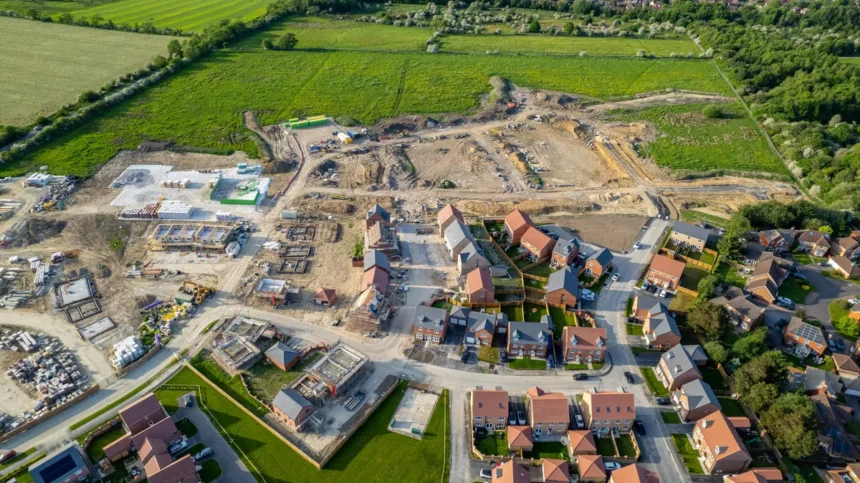
Pearcroft Homes, a company that positioned itself as the UK’s foremost developer of net-zero luxury residences, has officially entered liquidation. The firm, established in 2022 with a mission to construct sustainable homes and leave a positive environmental legacy, saw liquidators appointed on September 8, 2023. This development follows a winding-up petition initiated in April 2023 by Wolseley UK, a supplier of plumbing and heating materials. A high court order mandating the company’s closure was subsequently issued in October 2023 by District Judge Mantle.
Company’s Ambitious Claims and Operations
Pearcroft Homes actively promoted its credentials as a leader in carbon-neutral housing. The company asserted that its projects achieved an average carbon emission rate of -0.5 tonnes, signifying a carbon-negative impact. Its marketing materials highlighted a commitment to integrating high-quality construction materials with advanced sustainable technologies to create residences described as “eco-conscious havens.” The company’s website detailed its work for homeowners, landowners, and investors, emphasizing a positive contribution to local communities and the environment. Prospective residents were promised benefits such as improved air quality, integrated energy efficiency systems, and modern living luxuries.
The company’s social media presence ceased in August 2023, a period during which it was actively seeking investment opportunities. The official notice of liquidation, published in The Gazette, confirmed the appointment of Paraskevi Iacovou and Peter Kubik from UHY Hacker Young LLP as the appointed liquidators. Ms. Iacovou has issued a directive for creditors who have not yet formally submitted their debt claims to do so promptly. Contact details for submitting these proofs of debt are available via telephone at 020 7216 4600 or by email at a.mohsen@uhy-uk.com.
Understanding Company Liquidation and Administration
When a company enters liquidation, it signifies its inability to meet its financial obligations, including debts, expenses, and other liabilities. This process is a formal legal procedure designed to wind up the company’s affairs.
The Process of Administration
Administration is a distinct but related legal process under the Insolvency Act 1986. Its primary aim is to rescue an insolvent business, often due to cash flow issues, or to achieve other statutory objectives. Key aspects of administration include:
- Appointment of an Administrator: A licensed insolvency practitioner is appointed to manage the process. This appointment can be made by the company’s directors, a creditor, or the court.
- Statutory Moratorium: Upon entering administration, a legal freeze is imposed, preventing creditors from taking immediate enforcement actions. This provides the company with a period to restructure its finances.
- Continued Trading: While under administration, the company may continue to operate, but its day-to-day management is transferred to the appointed administrator.
- Proposal Formulation: Within an eight-week timeframe, administrators are tasked with developing proposals for the company’s future.
- Creditor Approval: These proposals are then put to a vote by the company’s creditors.
- Distribution of Assets: If the administration involves the sale of company assets, the proceeds, after deducting the costs of the administration process, are distributed to creditors according to a legally defined order of priority.
Outcomes of Administration
An administration period typically lasts for 12 months, unless an extension is granted by the court or creditors. At the conclusion of the administration process, a company can have several potential outcomes:
- Rescue and Return to Directors: The business may be deemed viable and returned to the control of its original directors.
- Entry into Liquidation: If rescue is not feasible, the company may proceed into liquidation to wind up its affairs.
- Dissolution: In some cases, the company may be formally dissolved, ceasing to exist as a legal entity.
The liquidation of Pearcroft Homes marks the end of a venture that aimed to combine luxury living with significant environmental responsibility, highlighting the challenges faced by businesses in the sustainable development sector.