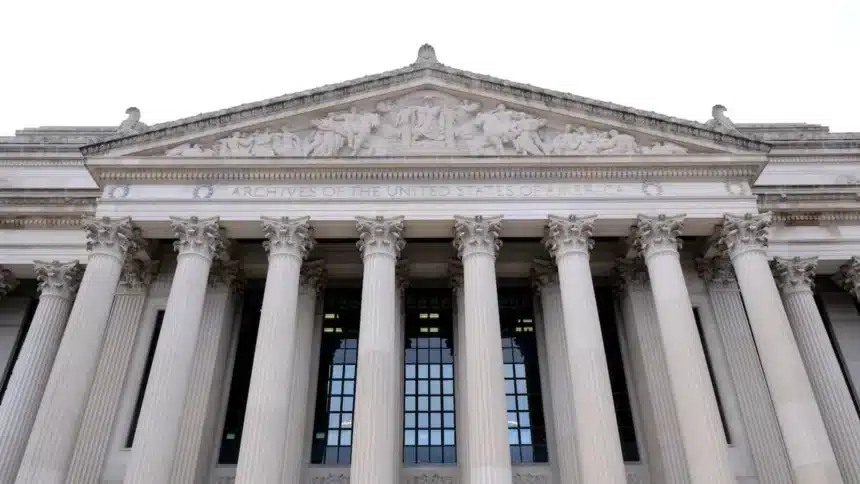
A recent change in Canadian citizenship law, enacted in December 2025, is creating significant backlogs and extending processing times at archives across the United States. Archivists are reporting a dramatic increase in requests for genealogical records from Americans seeking to establish Canadian ancestry and apply for citizenship under the new provisions of Bill C-3.
Bill C-3 and Its Unintended Consequences
Bill C-3, which took effect on December 15, 2025, allows individuals to claim Canadian citizenship if they can prove descent from a Canadian ancestor, even if that ancestor left Canada generations ago. This legislation was introduced following court rulings that deemed earlier restrictions, limiting citizenship to those born outside Canada to only the first generation, overly restrictive. The law has proven particularly popular among Americans, many of whom have ancestors who emigrated from Canada during periods of significant migration in the 19th and 20th centuries.
Immigration, Refugees and Citizenship Canada (IRCC) data indicates a substantial uptake. Between December 15, 2025, and June 30, 2026, 6,635 individuals received Canadian citizenship certificates under Bill C-3. Notably, more than half of these new citizens, totaling 3,510, were born in the United States. An additional 19,160 people received certificates through having a Canadian parent, with 9,150 of them being U.S. residents. These newly recognized citizens are now eligible to apply for Canadian passports and gain the right to live and work in Canada.
The surge in demand for citizenship certificates has led to a significant backlog at IRCC, currently standing at approximately 136,000 applications, with an estimated processing time of 33 months. This far exceeds the expectations of Immigration Minister Lena Metlege Diab, who had anticipated volumes in the tens of thousands over time rather than an immediate flood.
Small Archives Face Overwhelming Workload
Smaller archives, often staffed by a limited number of personnel, are feeling the pressure acutely. At the Diocese of Lafayette in Louisiana, associate archivist Stephanie Simon and her colleague Barbara Dejean have seen their workload skyrocket. They reported receiving over 450 requests for records, with an estimated 1,350 requests in total since Bill C-3’s implementation. What once took two to three days to process now requires 12 to 16 weeks, with new requests arriving as quickly as older ones are fulfilled.
“The same day that we mail out 40, 40 more come in the mail, so it’s not like we can make some headway on it. It’s just kind of keeping up with them,” Simon stated. The archive has been receiving requests from across the United States, reflecting the widespread interest in documenting Canadian ancestry.
Similarly, Mike Heithaus, a part-time archivist for the Diocese of Belleville in southern Illinois, experienced a significant increase in requests starting around May and June 2026. While he received 32 requests between June 1st and early September, this volume proved challenging for his limited hours, consuming most of his 10 to 15 hours per week. To manage the influx, the diocese increased Heithaus’s hours and more than tripled the fee for record requests, from $10 to $33 USD.
National Archives and Genealogical Societies Also Affected
The impact of Bill C-3 extends to larger institutions as well. While the U.S. National Archives and Records Administration (NARA) did not provide an interview, sources speaking anonymously indicated an increase in requests for documents that can establish Canadian ancestry, such as naturalization records, census data, and border-crossing records. Archivists at NARA are reportedly seeing a rise in inquiries related to Canadian dual citizenship, alongside similar increases for other countries like Italy and Germany.
The sheer volume of these requests has created backlogs and extended processing times, leading one source to describe the situation as “untenable” and “unstable,” where assisting prospective dual citizens has become a primary focus of their work.
Anderson Smith, an archivist at the Acadian Archives at the University of Maine at Fort Kent, noted a dramatic jump in requests for Canadian citizenship documentation, from one each in 2024 and 2025 to 72 in 2026. However, a subsequent change in IRCC regulations in June 2026, requiring original or certified copies of documents, led to a decrease in their specific requests. The archive is now assisting requesters in finding original sources or the institutions that can provide certified copies.
Genealogical societies are also feeling the strain. Normand Deragon, president of the American French Genealogical Society in Woonsocket, Rhode Island, estimates his all-volunteer organization has processed around 200 requests since Bill C-3 took effect, with an additional 150 pending. “We’re an all-volunteer organization, nobody gets paid,” Deragon explained. “Our libraries open only two days a week, so you can see how it would be easy for us to get backlogged. But we do the best we can. We’re cranking them out as quickly as we can.”
Conclusion
The ripple effects of Canada’s updated citizenship law are clearly being felt across various archival institutions in the United States. From small diocesan archives to larger national bodies and genealogical societies, archivists are grappling with unprecedented demand for historical records. This surge, driven by a desire to reclaim ancestral ties and secure Canadian citizenship, highlights the complex interplay between immigration policy, historical documentation, and the dedicated work of preserving and providing access to vital records.