[ad_1]

By PAUL WISEMAN, Related Press Economics Author
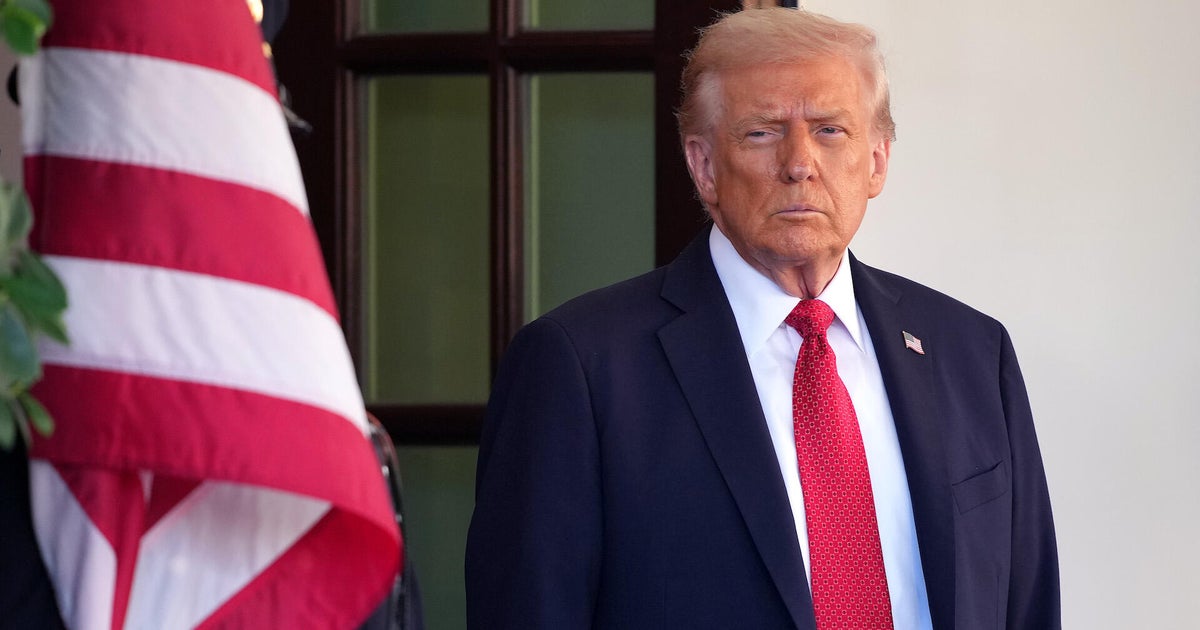
WASHINGTON (AP) — President Donald Trump has warned that america can be rendered “defenseless’’ and presumably “diminished to nearly Third World standing” if the Supreme Courtroom strikes down the tariffs he imposed this 12 months on practically each nation on earth.
The justices sounded skeptical throughout oral arguments Wednesday of his sweeping claims of authority to impose tariffs as he sees match.
The reality, although, is that Trump will nonetheless have loads of choices to maintain taxing imports aggressively even when the courtroom guidelines in opposition to him. He can re-use tariff powers he deployed in his first time period and might attain for others, together with one which dates again to the Nice Despair.
“It’s arduous to see any pathway right here the place tariffs finish,” mentioned Georgetown commerce legislation professor Kathleen Claussen. “I’m fairly satisfied he may rebuild the tariff panorama he has now utilizing different authorities.”
At Wednesday’s listening to, in reality, lawyer Neal Katyal, representing small companies suing to get the tariffs struck down, argued that Trump didn’t want the boundless authority he’s claimed to impose tariffs below 1977 Worldwide Emergency Financial Powers Act (IEEPA). That’s as a result of Congress delegated tariff energy to the White Home in a number of different statutes — although it rigorously restricted the methods the president may use the authority.
“Congress is aware of precisely how you can delegate its tariff powers,” Katyal mentioned.
Tariffs have develop into a cornerstone of Trump’s overseas coverage in his second time period, with double-digit “reciprocal” tariffs imposed on most nations, which he has justified by declaring America’s longstanding commerce deficits a nationwide emergency.
The typical U.S. tariff has gone from 2.5% when Trump returned to the White Home in January to 17.9%, the best since 1934, in keeping with calculations by Yale College’s Finances Lab.
The president acted alone although the U.S. Structure particularly offers the ability to tax – and impose tariffs – to Congress.
Nonetheless, Trump “could have different instruments that may trigger ache,’’ mentioned Stratos Pahis of Brooklyn Regulation Faculty. Right here’s a take a look at a few of his choices:
Countering unfair commerce practices
The USA has lengthy had a useful cudgel to wallop nations it accuses of partaking in “unjustifiable,” “unreasonable” or “discriminatory” commerce practices. That’s Part 301 of the Commerce Act of 1974.
And Trump has made aggressive use of it himself — particularly in opposition to China. In his first time period, he cited Part 301 to impose sweeping tariffs on Chinese language imports in a dispute over the sharp-elbowed ways that Beijing was utilizing to problem America’s technological dominance. The U.S. can also be utilizing 301 powers to counter what it calls unfair Chinese language practices within the shipbuilding trade.
“You’ve had Part 301 tariffs in place in opposition to China for years,” mentioned Ryan Majerus, a associate at King & Spalding and a commerce official in Trump’s first administration and in Biden’s.
There are not any limits on the dimensions of Part 301 tariffs. They expire after 4 years however might be prolonged.
However the administration’s commerce consultant should conduct an investigation and usually maintain a public listening to earlier than imposing 301 tariffs.
John Veroneau, common counsel for the U.S. commerce consultant within the George W. Bush administration, mentioned Part 301 is beneficial in taking over China. However it has drawbacks in relation to coping with the smaller nations that Trump has hammered with reciprocal tariffs.
“Endeavor dozens and dozens of 301 investigations of all of these nations is a laborious course of,” Veroneau mentioned.
Concentrating on commerce deficits
In putting down Trump’s reciprocal tariffs in Could, the U.S. Courtroom of Worldwide Commerce dominated that the president couldn’t use emergency powers to fight commerce deficits.
That’s partly as a result of Congress had particularly given the White Home restricted authority to deal with the issue in one other statute: Part 122, additionally of the Commerce Act of 1974. That enables the president to impose tariffs of as much as 15% for as much as 150 days in response to unbalanced commerce. The administration doesn’t even should conduct an investigation beforehand.
However Part 122 authority has by no means been used to use tariffs, and there’s some uncertainty about how it will work.
Defending nationwide safety
In each of his phrases, Trump has made aggressive use of his energy — below Part 232 of Commerce Enlargement Act of 1962 — to impose tariffs on imports that he deems a risk to nationwide safety.
In 2018, he slapped tariffs on overseas metal and aluminum, levies he’s expanded since returning to the White Home. He additionally plastered Part 232 tariffs on autos, auto elements, copper, lumber.
In September, the president even levied Part 232 tariffs on kitchen cupboards, rest room vanities and upholstered furnishings. “Although folks would possibly roll their eyes” on the notion that imported furnishings poses a risk to nationwide safety, Veroneau mentioned, “it’s troublesome to get courts to second-guess a willpower by a president on a nationwide safety matter.”
Part 232 tariffs will not be restricted by legislation however do require an investigation by the U.S. Commerce Division. It’s the administration itself that does the investigating – additionally true for Part 301 instances — “so that they have quite a lot of management over the result,” Veroneau mentioned.
Reviving Despair-era tariffs
Practically a century in the past, with the U.S. and world economies in collapse, Congress handed the Tariff Act of 1930, imposing hefty taxes on imports. Generally known as the Smoot-Hawley tariffs (for his or her congressional sponsors), these levies have been extensively condemned by economists and historians for limiting world commerce and making the Nice Despair worse. Additionally they bought a memorable popular culture shoutout within the 1986 film “Ferris Bueller’s Day Off.”
Part 338 of the legislation authorizes the president to impose tariffs of as much as 50% on imports from nations which have discriminated in opposition to U.S. companies. No investigation is required, and there’s no restrict on how lengthy the tariffs can keep in place.
These tariffs have by no means been imposed — U.S. commerce negotiators historically have favored Part 301 sanctions as a substitute — although america used the specter of them as a bargaining chip in commerce talks within the Nineteen Thirties.
In September, Treasury Secretary Scott Bessent advised Reuters that the administration was contemplating Part 338 as a Plan B if the Supreme Courtroom dominated in opposition to Trump’s use of emergency powers tariffs.
The Smoot-Hawley laws has a foul fame, Veroneau mentioned, however Trump would possibly discover it interesting. “To be the primary president to ever use it may have some cache.”
Related Press Employees Author Lindsay Whitehurst contributed to this story.
[ad_2]