[ad_1]
Reporting Highlights
- Highly effective Buddies: Nicely-placed allies, from U.S. senators to county officers, give ranchers leverage in opposition to regulators. They’ve generally pushed for fewer penalties for rule breakers.
- Chilling Regulators: A number of present or former BLM and Forest Service workers advised us that ranchers’ influential allies make enforcement of grazing rules politically fraught.
- The Most Influential Ally: Trump is rising help for ranching and appointing people sympathetic to the business, together with some who’ve sued over the enforcement of grazing rules.
These highlights had been written by the reporters and editors who labored on this story.
In late 2019, a pair of Montana ranchers bought in bother with the Forest Service, which oversees the federal lands the place they’d a allow to graze their cattle. Company workers had discovered their cattle wandering in unauthorized places 4 instances throughout September of that 12 months. The company additionally discovered a few of their fences in disrepair and their salt licks — which give cattle with important minerals — too near creeks and comes, drawing the animals into these habitats.
After repeated calls, texts and letters, the Forest Service despatched the ranchers a “discover of noncompliance,” in response to paperwork obtained through public data requests. The company asserted that the ranchers had engaged in “a willful and intentional violation” of their allow and warned that future violations may result in its revocation.
The ranchers had been hardly the biggest or most politically influential amongst those that graze livestock on public lands. However they quickly had assist from well-placed individuals as they pushed again, hoping to get the warning rescinded based mostly on their perception that they’d been handled unfairly.
“The Forest Service must work with us and perceive that grazing on the Forest isn’t black and white,” the ranchers wrote to the company. The company’s performing district ranger, for his half, mentioned his workers had “gone above and past” to assist the ranchers adjust to the foundations.
With help from a former Forest Service worker, the ranchers contacted their congressional representatives in early 2020. Staffers for then-Rep. Greg Gianforte and Sen. Steve Daines, each Republicans, leapt into motion, kicking off greater than a 12 months of back-and-forth between the senator’s workplace and Forest Service officers.
“Once they hear one thing they don’t like,” they run to the forest supervisor and the senator’s workplace “to get what they need,” a Forest Service official wrote in a 2021 e mail to colleagues.
Public lands ranching is among the largest land makes use of in lots of Western states like Montana, the place there are extra cattle than individuals. Politicians have proven themselves remarkably conscious of requests for assist from grazing permittees, even these of modest means.
Ranchers who’ve been cited for violations or who resist rules have known as on pro-grazing legal professionals, commerce group lobbyists and sympathetic politicians, from county commissioners to state legislators and U.S. senators like Daines. These allies — a few of whom now maintain positions within the Trump administration — have pushed for looser environmental guidelines and, in some circumstances, fewer penalties for rule breakers.
A number of present or former Bureau of Land Administration and Forest Service workers advised ProPublica and Excessive Nation Information that ranchers’ highly effective allies can pose a critical impediment to enforcement of grazing rules. When pushback comes, regulators generally cave.
“If we do something anti-grazing, there’s not less than a good probability of politicians being concerned,” mentioned one BLM worker who requested anonymity on account of a worry of retaliation from the administration. “We wish to keep away from that, so we don’t do something that might deliver that about.”

Mary Jo Rugwell, a former director of the BLM’s Wyoming state workplace, mentioned {that a} majority of ranchers within the public lands grazing system “do issues the way in which they need to be performed.” However some are “really problematic” — they break the foundations and “go above and round you to attempt to get what they need or suppose they deserve.” Ranching pursuits “will be very carefully tied to of us which can be in energy,” she added.
Since 2020, members of Congress on each side of the aisle have written to the BLM and Forest Service about grazing points greater than 20 instances, in response to logs of company communications obtained by ProPublica and Excessive Nation Information through public data requests. Along with Daines and Gianforte, these members embody Rep. Paul Gosar, R-Ariz.; former Rep. Yvette Herrell, R-N.M.; former Sen. Dianne Feinstein, D-Calif.; Sen. Mike Lee, R-Utah, and others. Their communications addressed such points as “Request for Flexibility with Grazing Permits” and “Public Lands Rule Influence on Ranchers and Rural Communities.”
Rick Danvir, who was a longtime wildlife supervisor on a big ranch in Utah, mentioned strain on the BLM comes not simply from ranchers and their allies, but additionally from litigious environmental organizations against public lands grazing. “Everyone seems to be all the time kicking them,” he mentioned of the company. “I didn’t really feel just like the BLM was out to select on individuals,” he added. However the company, cautious of being taken to courtroom, usually leads to a defensive crouch.
Within the Montana dispute, Daines’ workplace, from March 2020 via February 2021, despatched a stream of emails to Forest Service officers concerning the problem, together with calls for for detailed details about the company’s interactions with the ranchers. In April 2021, a Daines staffer confirmed up unannounced at a gathering between the ranchers and the Forest Service, solely to be turned away as a result of the Forest Service didn’t have the suitable official current to cope with a legislative staffer. However interventions by Daines’ workplace apparently made an affect.
It’s common for individuals regulated by the federal government to achieve out to their elected representatives, and “constituent providers” are a giant a part of each senator’s and Home member’s official duties. However native Forest Service officers concerned within the dispute famous that the strain from exterior political forces was main them to present the ranchers particular therapy.
“If this problem was solely between the [ranger district] and the permittee, we must always administer the allow and finish the dialogue there,” wrote one Forest Service official in 2020. “Sadly, we now have regional, state and nationwide oversight from others that deters us from administering the allow like we’d for others. It is extremely unfair to the highest notch operators that decision/coordinate/handle persistently. However, what the [ranchers] understand as choosing on them, for political causes, has turn into a mandate that we make lodging exterior the phrases of a mediated allow. So be it.”
One other company official wrote, “It leaves a bitter style to suppose I’m anticipated to carry all different permittees to the phrases of their permits/forest plan/forest handbook … but be advised to repeatedly let it go together with one other.”

By June 2020, the performing district ranger expressed willingness to “reduce [the ranchers] some slack” if it could enhance relations. In December 2020, the company discovered the ranchers had been as soon as once more violating the phrases of their allow, citing proof of overgrazing that would result in declining vegetation and soil well being, however determined to not problem one other formal discover of noncompliance. By late 2022, the company famous the Montana ranchers had been in violation of their allow for 4 consecutive years and warranted one more discover of noncompliance. Company workers, nonetheless, had been cautious of the battle that might doubtless ensue.
Though the Forest Service discovered that the ranchers’ grazing land confirmed widespread indicators of overuse, the company declined to formally advocate one other quotation in its year-end report for 2022, in response to company data.
As one company official wrote in the course of the yearslong squabble, “the drama continues.”
A spokesperson for Daines, in a press release, mentioned that the senator “advocates tirelessly on behalf of his constituents to federal businesses” and “was glad to have the ability to advocate” for the ranchers on this case. The Forest Service, the ranchers and Gianforte’s workplace didn’t reply to requests for remark.
Buddies in Excessive Locations


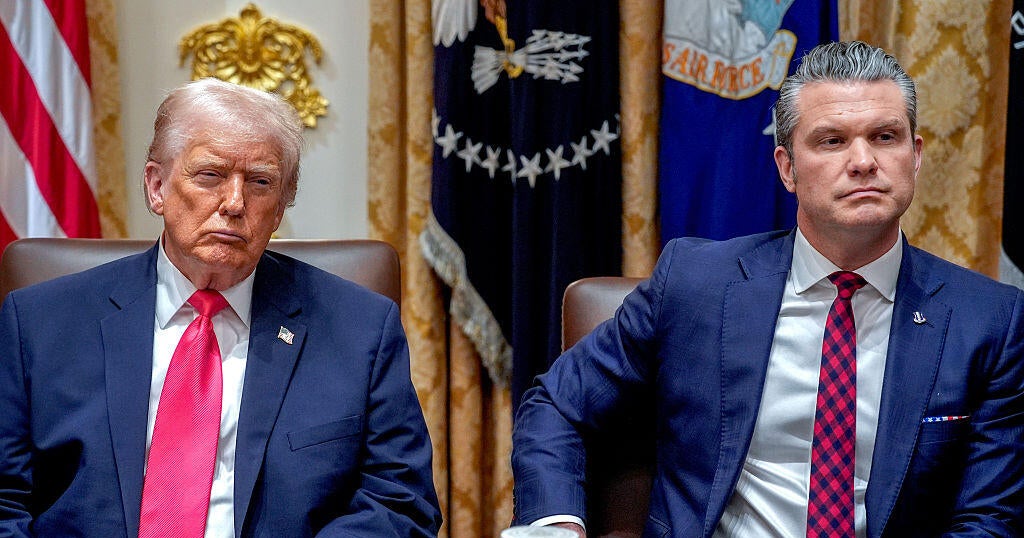
The second Trump administration is shaping as much as be one other highly effective ally for ranchers who’ve argued in opposition to what they see as authorities overreach.
The administration appointed Karen Budd-Falen, a self-described “cowboy lawyer,” to a high-level submit on the U.S. Division of the Inside. Budd-Falen comes from a distinguished ranching household and owns a stake in a Wyoming cattle ranch, in response to her most up-to-date monetary disclosure launched by the Inside Division. She additionally has an extended historical past of suing the federal authorities over the enforcement of grazing rules. In certainly one of her best-known circumstances, she used the anti-corruption RICO regulation — usually used to focus on organized crime — to sue particular person BLM staffers over their enforcement of grazing rules. (The case made it to the Supreme Court docket, the place Budd-Falen misplaced in 2007.) She additionally represented a company of New Mexico farmers and stockmen in a authorized submitting supporting Utah’s failed 2024 lawsuit to take management of hundreds of thousands of acres of federal land inside its borders.
President Donald Trump nominated Michael Boren, a tech entrepreneur and rancher, as undersecretary of agriculture for pure assets and surroundings on the U.S. Division of Agriculture, a submit overseeing the Forest Service. Boren has a contentious historical past with the Forest Service, which manages a nationwide recreation space that surrounds his 480-acre ranch in Idaho. Amongst different points, an organization he managed acquired a cease-and-desist letter from the company in 2024 for allegedly clearing nationwide forest land and constructing a personal cabin on it. He was confirmed to his USDA place in October.
The brand new administration has additionally wasted no time in dismantling Biden-era reforms designed to strengthen environmental protections for public rangelands.
In September, the Trump administration proposed rescinding the Public Lands Rule. The rule, finalized in Could 2024, sought to put the safety and restoration of wildlife habitat and clear water on equal footing with makes use of akin to oil drilling, mining and grazing on federal land. It might have allowed people, organizations, tribes and state businesses to lease BLM land for conservation functions and sought to strengthen the BLM course of for analyzing the affect of grazing and different financial actions on the surroundings.
Beneath the Biden administration, the BLM additionally issued a memo prioritizing environmental overview for grazing lands that had been environmentally degraded or in delicate wildlife habitat. The Trump administration successfully nullified that memo this 12 months.
The Inside Division and BLM mentioned in a press release that “any coverage choices are made in accordance with federal regulation and are designed to stability financial alternative with conservation duties throughout the nation’s public lands.”


The administration can also be enterprise a broad effort to reopen vacant federal grazing lands to ranchers as a part of its drive to place “grazing as a central ingredient of federal land administration.” The administration says there are 24 million acres of vacant grazing land nationwide. Many of those vacant grazing allotments are briefly with out livestock as a result of they wanted time to get better from wildfire, didn’t have sufficient water or forage to help cattle, or had been awaiting elimination of invasive species.
Nonetheless, in Could, Forest Service Chief Tom Schultz gave workers about two weeks to compile lists of unused grazing allotments that might be rapidly refilled with livestock, in response to inner communications obtained by ProPublica and Excessive Nation Information through public data requests. Such insurance policies cater to grazing permittee advocates just like the Public Lands Council, which in a 2024 coverage paper known as on federal businesses to swiftly fill vacant allotments. The council didn’t reply to requests for remark.
“Vacant grazing allotments have all the time been open and obtainable to permitted grazing,” a USDA spokesperson advised ProPublica and Excessive Nation Information.
The Trump administration has generally run afoul of ranchers. In October, ranching teams blasted the administration for rising beef imports from Argentina amid rising costs for shoppers.
Lengthy earlier than Trump first took workplace, presidential administrations that attempted to lift grazing charges or strengthen rules confronted fierce pushback from ranching pursuits.
Within the mid-Nineties, the Clinton administration backed off a proposal to lift charges amid widespread rancor from public lands ranchers and their Republican allies in Congress. Many within the business noticed then-Inside Secretary Bruce Babbitt’s proposed reforms as an existential menace. “The federal government is making an attempt to take our livelihood, our rights and our dignity,” mentioned one rancher at a listening to on Babbitt’s failed push to lift charges. “We are able to’t dwell with it.”
Ranching business teams don’t spend wherever close to as a lot cash lobbying Congress as do well-funded industries like prescribed drugs, oil and fuel, and protection contracting. However they get their perspective heard within the Capitol.
J.R. Simplot Co. — the biggest holder of BLM grazing permits, in response to a ProPublica and Excessive Nation Information evaluation — spent about $610,000 lobbying Congress from 2020 via 2025. Earlier this 12 months, the corporate employed the Bernhardt Group to foyer on its behalf in Washington, D.C. David Bernhardt, who launched the agency this 12 months, served as Secretary of the Inside in the course of the first Trump administration and sits on the board of Trump’s media firm.
These with fewer assets might flip to commerce teams such because the Nationwide Cattlemen’s Beef Affiliation, which has associates in 40 states. In recent times, the affiliation and its allies have sued the Environmental Safety Company over Biden-era water rules and the Inside Division over endangered species protections for the lesser prairie-chicken. A federal decide in August vacated protections for the imperiled species after a request from the Trump administration. The administration has additionally moved to roll again the water rules on the middle of the affiliation’s EPA lawsuit.
The affiliation, which represents public lands ranchers in addition to the meat business as a complete, spent almost $2 million lobbying in Washington, D.C., over the previous 5 years and contributed greater than $2 million to federal candidates and political motion committees within the final two election cycles. Throughout the 2024 election cycle, greater than 90% of its political contributions went to Republicans.
The affiliation vociferously opposed the Public Lands Rule and, alongside different teams, filed a lawsuit to halt its implementation earlier than the Trump administration moved to rescind it. Rancher Mark Eisele, then-president of the affiliation, known as the rule “a stepping stone to eradicating livestock grazing from our nation’s public lands.” The affiliation didn’t reply to requests for remark.
Teams just like the cattlemen’s affiliation and Public Lands Council had been influential in getting the Public Lands Rule rescinded, mentioned Nada Culver, a deputy director of the BLM in the course of the Biden administration.
The political affect of ranchers, she mentioned, goes past their comparatively modest lobbying and marketing campaign donations. “It’s tied to their cultural energy,” she mentioned. “They’re icons of the American West.”
From Bunkerville to the Halls of Authorities


State and native officers, from legislators to county commissioners to sheriffs, additionally generally come to assistance from ranchers who run into bother with the Forest Service or BLM.
In June 2019, within the midst of a long-running dispute between a bunch of ranchers and workers of Utah’s Fishlake Nationwide Forest, a forest supervisor advised a rancher that he would obtain a quotation if he did not signal his allow, place ear tags on his cattle to determine them and in any other case abide by the foundations. The rancher “grew to become actually offended, mentioned there have been two methods this might go, and he wasn’t going to courtroom as a result of the courts are all stacked in our favor,” the Forest Service worker wrote in an e mail recounting the dialog.
“He then mentioned if anybody in his household bought damage by this, bear in mind I’ve a household they usually can get damage too,” the supervisor famous in his e mail. “I requested him if he was threatening my household, and he mentioned his household has labored onerous for what they’ve and weren’t going to have it taken away, or one thing to that impact.” The rancher declined to remark for this story.
The ranchers within the dispute, which lasted years, had help from an area sheriff. At one level, the sheriff expressed his willingness to jail Forest Service personnel, in response to The Salt Lake Tribune. Minutes from a January 2016 assembly of the Piute County Fee be aware that the sheriff mentioned that “he is not going to permit this to be a Bundy state of affairs,” referring to the notorious 2014 standoff between rancher Cliven Bundy and the BLM in Bunkerville, Nevada. “If that entails jailing the forest service he’ll do it!!!” The sheriff advised The Salt Lake Tribune that his feedback had been taken out of context.
In a couple of circumstances, ranchers who violate grazing rules have even taken up arms — with out shedding help from elected officers.

This was the case in the course of the Bundy household’s Bunkerville standoff. After 20 years of persistent trespassing, the Bundys owed about $1 million in grazing fines and unpaid charges. Bundy maintained, with out proof, that the U.S. authorities had no say over grazing on public lands in Nevada. When federal brokers arrived with a courtroom order to spherical up the household’s trespassing cattle, Bundy and a bunch of supporters engaged in an armed standoff. The brokers ultimately retreated. “I’ll be damned if I’m going to honor a federal courtroom that has no jurisdiction or authority or arresting energy over we the individuals,” Bundy advised The New York Occasions in 2014.
All through the dispute, the household was supported by political figures from throughout the area. The commissioners of Nye County, Nevada, as an example, handed a decision denouncing “armed federal bureaucrats … working exterior their lawful delegated authority,” and not less than one commissioner traveled to Bunkerville to help the Bundys. Michele Fiore, a member of the Nevada Legislature on the time, voiced her help for the household, and several other members of the Arizona Legislature traveled to Nevada after the standoff to help the Bundys.
The Bundys’ ties to highly effective officers have solely grown. Celeste Maloy, Bundy’s niece, was elected to signify Utah’s 2nd Congressional District in 2023. (Bundy married Maloy’s aunt.) Throughout her brief time within the Home of Representatives, Maloy has pushed for the sale of some federal lands and sponsored laws to make it simpler for ranchers to entry vacant grazing allotments throughout droughts and excessive climate. Throughout the 2024 election cycle, Maloy acquired $20,000 in marketing campaign contributions from the Nationwide Cattlemen’s Beef Affiliation.
Maloy’s workplace didn’t reply to requests for remark.
“All the pieces Stacked In opposition to You”


Wayne Werkmeister, a longtime BLM worker who spent most of his profession overseeing federal grazing lands earlier than retiring in 2022, mentioned he is aware of how tough it may be to implement public lands protections.
“When you have got the whole lot stacked in opposition to you, if you’ve bought political strain on you, if you’ve bought administration who doesn’t wish to hear it, if you’ve bought a rancher who’s making an attempt to show himself, it’s almost unimaginable,” he mentioned in an interview with ProPublica and Excessive Nation Information.
By 2017, after intensive on-the-ground analysis, Werkmeister and his colleagues had decided that two ranchers close to Grand Junction, Colorado, had been damaging habitat throughout the greater than 90,000-acre allotment the place they grazed roughly 500 cattle. Werkmeister started pushing to cut back the variety of cattle on the land.

In response, the ranchers employed former BLM workers to argue their case, accusing the company of “agenda pushed bullying.” They copied then-U.S. Sen. Cory Gardner, a Colorado Republican, on correspondence with the BLM. Werkmeister mentioned he needed to justify the company’s actions to the senator’s aides.
In October 2018, Werkmeister’s workplace acquired a two-page letter from the Budd-Falen Regulation Workplaces — the agency co-founded by Budd-Falen, now a high-ranking official within the Inside Division — which represented the 2 Colorado ranchers. “The actions of the BLM in lowering livestock grazing on the West Salt Widespread Allotment may probably and unnecessarily pressure them out of enterprise,” the letter learn. The agency additionally despatched the letter to native county commissioners.
Werkmeister mentioned his bosses rapidly ordered him again into the sphere to assemble extra knowledge, despite the fact that, as BLM data present, he and his colleagues had already spent years documenting the situation of the allotment, its precipitation patterns and its use by the ranchers. The ranchers continued to dispute the company’s findings.
In the end, Werkmeister mentioned he was by no means in a position to scale back grazing sufficient to present the allotment time to get better. As just lately as 2024, company data present, the BLM reapproved grazing there.
The ranchers, their legal professional and Gardner didn’t reply to requests for remark.
Werkmeister counts his incapability to show across the parcel’s ecological fortunes as amongst his largest failures. Throughout a current go to, he identified the denuded floor and nubs of native bunchgrasses amid a sea of invasive cheatgrass.
“Overgrazed to the purpose of gone,” he mentioned.

[ad_2]