[ad_1]

By STEPHANIE LIECHTENSTEIN
VIENNA (AP) — Within the wake of U.S. President Donald Trump’s suggestion earlier this yr that the U.S. would resume nuclear testing, a U.S. authorities consultant defended the stance at a worldwide nuclear arms management assembly and pointed to nuclear provocations from Russia, China and North Korea.
U.S. Chargé d’Affaires to the Worldwide Organizations in Vienna Howard Solomon made the beforehand unpublished feedback, which have been obtained by The Related Press, on the Preparatory Fee of the Vienna-based Complete Nuclear-Check-Ban Treaty Group on Nov. 10.
“As President Trump indicated, the US will start testing actions on an equal foundation with different nuclear-armed states. This course of will start instantly and proceed in a way absolutely per our dedication to transparency and nationwide safety,” Solomon stated.
Solomon offered additional clarification by noting, “For any who query this determination, context is necessary. Since 2019, together with on this discussion board, the US has raised considerations that Russia and China haven’t adhered to the zero-yield nuclear take a look at moratorium,” he stated, including that the considerations “stay legitimate.”
Solomon’s remark referred to so-called supercritical nuclear take a look at explosions banned below the Complete Nuclear-Check-Ban Treaty, often called CTBT, the place fissile materials is compressed to begin a self-sustaining nuclear chain response that creates an explosion.
The explosive exams produce an quantity of vitality launched, known as nuclear yield, which defines a weapon’s damaging energy. The treaty bans any nuclear explosion with a yield, even a really small one, following a zero-yield commonplace.
“Our considerations with Russia and China are along with the actions of North Korea, which has performed six nuclear explosive exams this century,” Solomon stated.
The worldwide monitoring community established alongside the treaty in 1996 to register nuclear exams worldwide has detected all of North Korea’s six nuclear exams this century. These have been exams with bigger yields.
Nonetheless, the monitoring community is unable to detect very low-yield supercritical nuclear exams performed underground in steel chambers, specialists say.
The U.S. State Division didn’t instantly reply to a request for touch upon whether or not Solomon was referring to low-yield supercritical nuclear exams.
US says Russia and China are testing
China and Russia, which have signed however not ratified the treaty, say they adhere to a nuclear testing moratorium.
However since 2019, the U.S. State Division has publicly expressed considerations about China and Russia not adhering to their zero-yield testing moratoria. Annual experiences on compliance with arms management agreements to the U.S. Congress cite potential actions on the Lop Nur nuclear testing website within the Xinjiang area of northwestern China and Russia’s Novaya Zemlya website, a distant Arctic archipelago.
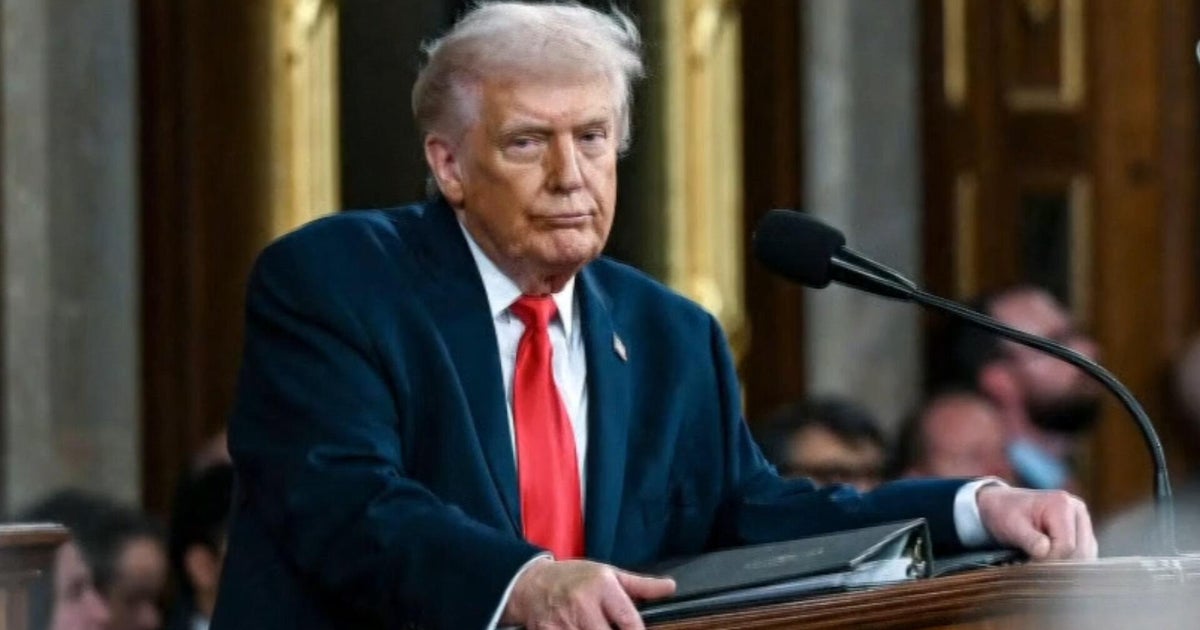
In an interview for “60 Minutes” that aired Nov. 2 on CBS Information, Trump stated, “Russia’s testing, and China’s testing, however they don’t speak about it. You realize, we’re a open society. We’re totally different. We speak about it.”
“They don’t go and let you know about it,” Trump continued. “You realize, as highly effective as they’re, it is a huge world. You don’t essentially know the place they’re testing. They — they take a look at means below — underground the place individuals don’t know precisely what’s taking place with the take a look at.”
A White Home official, requested for touch upon whether or not Trump was referring to low-yield supercritical nuclear exams performed underground, stated the president had directed exams be achieved “on an equal foundation” to different nations. The official spoke on situation of anonymity as a result of they weren’t approved to talk on the file concerning the testing plans.
Different nations have accelerated their testing packages and Trump desires to behave accordingly, the official stated with out offering additional particulars.
Russia denies testing
Solomon’s feedback in Vienna got here in response to Russia’s Everlasting Consultant to the Worldwide Organizations, Mikhail Ulyanov, at a closed-door assembly of the Preparatory Fee of the CTBTO, a global physique primarily based in Vienna that screens compliance with the nuclear take a look at ban.
“The resumption of nuclear testing might trigger vital harm to the nuclear non-proliferation regime and worldwide safety,” Ulyanov stated.
“We think about it basically necessary that the U.S. aspect present a transparent and detailed clarification of its place on the resumption of nuclear testing,” he added. “We anticipate the U.S. to reply appropriately and with out additional delay.”
Ulyanov additionally rejected the “fully unacceptable and unsubstantiated allegations” that Russia is conducting nuclear exams.
“These are false accusations. We think about such escalatory rhetoric unacceptable,” he stated.
Restricted nuclear use stays a danger
Solomon refuted Ulyanov’s feedback, saying it’s “shocking to listen to such statements coming from a state that has not adhered to the zero-yield nuclear take a look at moratorium.”
Solomon then cited further U.S. considerations, together with Russia’s “ongoing violations” of New START, the final remaining nuclear arms management treaty between Moscow and Washington, Russia’s “disproportionately massive” stockpile of non-strategic nuclear weapons and Russian nuclear doctrine.
The weapons referred to by Solomon typically have a decrease explosive energy than strategic nuclear weapons and are designed to be used on the battlefield. They’ll nonetheless trigger immense destruction.
Regardless of being bodily smaller, specialists think about nonstrategic nuclear weapons harmful as a result of the edge to be used is taken into account decrease. The weapons should not coated by arms management treaties, making improvement simpler for Russia and different states with out oversight or limits.
The Nuclear Pocket book, a famend annual report printed by the Federation of American Scientists within the Bulletin of the Atomic Scientists, highlighted this level on this yr’s version.
“Of explicit concern is the function that nonstrategic nuclear weapons play as a result of it might be this class of nuclear weapon that may be used first in a possible navy escalation with NATO,” the report stated.
Russia has between 1,000 and a couple of,000 nonstrategic nuclear warheads as of the most recent unclassified evaluation in 2023, in response to the U.S. State Division, excess of the roughly 200 such weapons the U.S. maintains.
Nuclear arms management is on the ropes
In contrast, strategic nuclear weapons are much more highly effective and are designed for use deep inside an enemy’s territory, far-off from the precise battlefield the place pleasant forces could also be positioned and danger being killed.
The U.S. and Russia have a comparable complete variety of deployed strategic nuclear weapons, with 1,718 for Moscow and 1,770 for Washington, in response to the Stockholm Worldwide Peace Analysis Institute.
These weapons are capped by New START, formally often called the Treaty between the US of America and the Russian Federation on Measures for the Additional Discount and Limitation of Strategic Offensive Arms. It was signed by the Obama administration in 2010 and took impact in February 2011 as a 10-year settlement.
Russia suspended its participation in New START in 2023 however didn’t withdraw from the treaty. Russian President Vladimir Putin in September declared Moscow’s readiness to stick to the treaty’s limits for yet another yr.
Trump stated in October it sounded “like a good suggestion.”
With out the treaty, which can expire Feb. 5, the U.S. and Russian strategic nuclear arsenals could be unconstrained for the primary time in a long time.
The Related Press receives help for nuclear safety protection from the Carnegie Company of New York and Outrider Basis. The AP is solely answerable for all content material.
Extra AP protection of the nuclear panorama: https://apnews.com/tasks/the-new-nuclear-landscape/
[ad_2]