[ad_1]
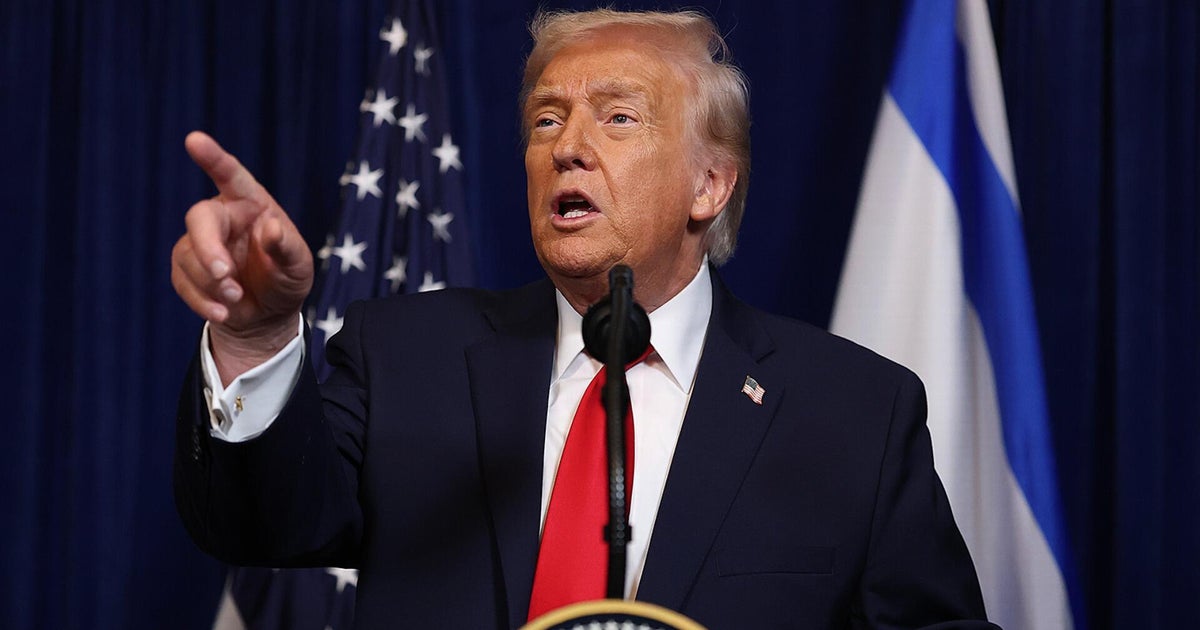
When President Trump introduced the seize of former Venezuelan President Nicolás Maduro and his spouse on Saturday, he justified the army operation partly by framing it as a transfer to get better belongings that he claims had been stolen from U.S. corporations.
“Venezuela unilaterally seized and offered American oil, American belongings and American platforms, costing us billions and billions of {dollars},” Mr. Trump stated. “This constituted one of many largest thefts of American property within the historical past of our nation.”
Who owns Venezuela’s oil?
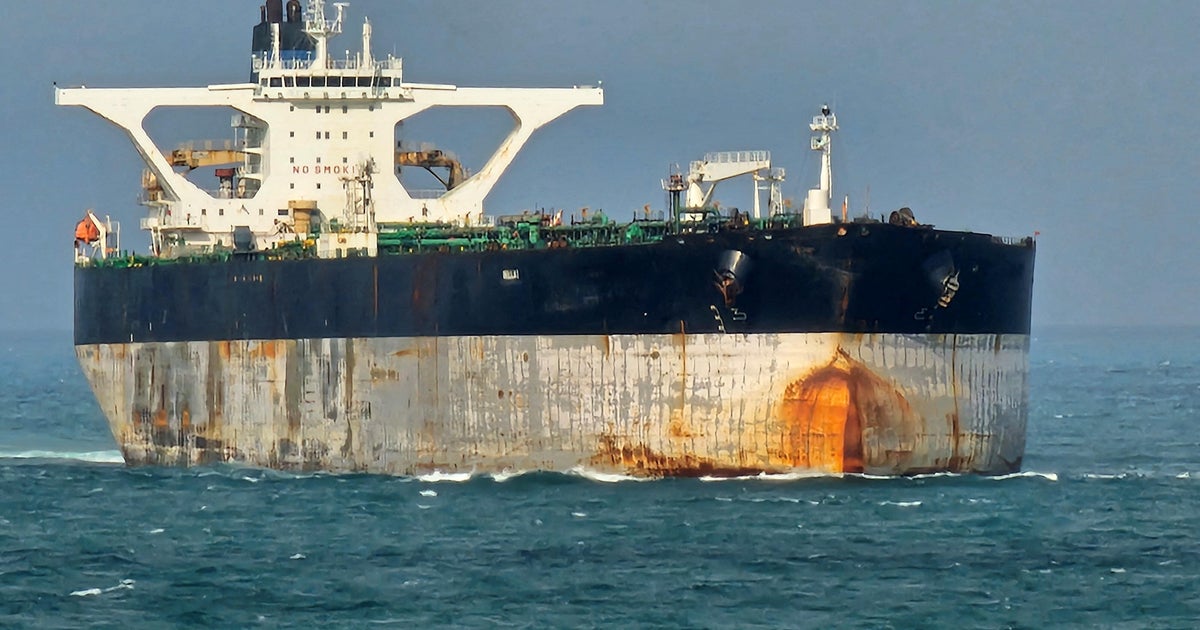
The president’s deal with Venezuela’s oil is now elevating questions on American power corporations’ actions within the nation, in addition to whether or not U.S. oil giants would possibly now work to revive its floundering petroleum business. Venezuela’s structure states that the nation owns all mineral and hydrocarbon deposits — its oil and pure gasoline reserves — inside its personal territory, together with those who lie beneath the nation’s seabed.
Mr. Trump “talks about them taking our oil — the oil itself was by no means ‘our oil’,” Samantha Gross, director of the power safety and local weather initiative on the nonpartisan Brookings Establishment, instructed CBS Information, including that the nation’s huge crude reserves “belong to the federal government of Venezuela.”
What’s additionally true, nevertheless, is that U.S. oil corporations had contractual agreements with Venezuela to extract, course of and transport its oil, in addition to to share within the income from oil gross sales.
Mr. Trump’s claims of theft replicate actions by then-Venezuela chief Hugo Chávez to nationalize the nation’s power sector in 2007 and to confiscate the manufacturing belongings of Exxon Mobil and ConocoPhillips after they left the nation, Gross stated.
These seizures have led to years of lawsuits and efforts by the businesses to recoup their losses. Whereas a World Financial institution arbitration panel has dominated in favor of the oil corporations, the cash has but to be recovered.
“It’s past query that there are a variety of U.S. corporations and others on the market who’ve claims in opposition to Venezuela which were attempting to get these claims happy for a few years,” Ted Posner, a companion at regulation agency Baker Botts and a former assistant common counsel for worldwide affairs on the U.S. Division of the Treasury, instructed CBS Information.
The White Home did not reply to a request for remark.
Oil business executives met on Friday afternoon on the White Home with Mr. Trump, Treasury Secretary Scott Bessent, Inside Secretary Doug Burgum and Vitality Secretary Chris Wright to debate Venezuela. Representatives from Exxon, Chevron and ConocoPhillips attended, together with ConocoPhillips CEO Ryan Lance.
“ConocoPhillips continues to watch developments in Venezuela and their potential implications for international power provide and stability,” the corporate stated in an announcement previous to the assembly.
Stated a Chevron spokesperson after the assembly on Friday: “For greater than a century, Chevron has been part of Venezuela’s previous. We stay dedicated to its current. And we stand prepared to assist it construct a greater future whereas strengthening U.S. power and regional safety.”
Exxon did not reply to requests for remark.
Chávez’s energy play — and corruption
Venezuela’s authorities has a protracted historical past of nationalizing its oil sector, with state oil firm Petróleos de Venezuela S.A., or PDVSA, taking up the business within the Nineteen Seventies. Exxon and different overseas oil corporations continued to function within the nation by signing contracts to offer technical help and different experience to PDVSA.
Within the Nineteen Nineties, Exxon and different giant petroleum corporations have been invited by then-Venezuelan President Carlos Andrés Pérez to return in an effort to develop the oil reserves within the Orinoco River Basin, in accordance to “Vitality within the Americas,” a ebook printed by the College of Calgary Press.
However in 2003, Chávez fired 1000’s of PDVSA staff after they went on strike. 4 years later, he expanded the nationalization push by requiring overseas corporations to offer majority possession of their ventures to PDVSA. Exxon and ConocoPhillips didn’t strike a cope with Venezuela, whereas BP, Houston-based Chevron, Norway’s Statoil and France’s Whole signed pacts giving majority stakes to PDVSA, permitting them to stay, Reuters reported in 2007.
“Some agreed, and a few didn’t, and belongings have been expropriated,” Gross stated.
Amid widespread corruption underneath Chávez, as journalist Anne Appelbaum famous in a 2024 ebook, tons of of billions of {dollars} have been siphoned off from PDVSA and different Venezuelan corporations and subsequently disappeared into non-public financial institution accounts around the globe.
A 2017 investigation by U.S. and Portuguese authorities discovered that PDVSA executives had funneled thousands and thousands of {dollars} into Portugal’s Banco Espirito Santo.
Venezuela owes billions to Huge Oil
Chávez’s strong-arm techniques led to efforts by Exxon and ConocoPhillips to hunt compensation for his or her belongings, with Exxon claiming it had misplaced $16.6 billion because of the nationalization marketing campaign. A World Financial institution arbitration panel in 2014 awarded the corporate one-tenth of what it had sought, however that very same physique later annulled most of that award.
In a separate case, a global tribunal dominated that Venezuela owed $8.7 billion to ConocoPhillips in compensation for the 2007 seizure of its belongings.
Different industries additionally had their belongings taken away underneath Chávez’s 14-year reign, and firms have filed not less than 60 arbitration claims in opposition to Venezuela for the reason that 2000s, in accordance with Luisa Palacios, an adjunct senior analysis scholar at Columbia College’s Middle on International Vitality Coverage.
“The worth of those liabilities is estimated at $20 to $30 billion or about 10% to fifteen% of the just about $200 billion in worldwide debt obligations Venezuela owes,” she stated in an article this week printed by Columbia.
“Venezuela may repay these claims by inviting traders again to the nation,” she famous. “That may very well be finished by means of debt-for-equity swaps or by linking future oil manufacturing to compensation of present money owed. Nevertheless, restructuring the nation’s overseas obligations will probably be wanted for Venezuela to totally understand its oil potential.”
U.S. losing no time
Venezuela’s oil reserves are estimated to be the world’s largest, with greater than 303 billion barrels. That represents about 17% of the world’s whole oil provide, in accordance with OPEC knowledge.
However Venezuela’s crude oil manufacturing has plunged, with the business in the present day pumping 800,000 to 1 million barrels per day, down from greater than 3 million per day within the early 2000s. That output has nosedived as a result of continual underinvestment, authorities mismanagement, and the influence of U.S. and worldwide sanctions.
On Wednesday, Secretary of State Marco Rubio introduced the U.S. will export between 30 million and 50 million barrels of oil from Venezuela, which shall be offered at “market charges,” with income used “in a approach that advantages the Venezuelan folks.”
White Home press secretary Karoline Leavitt instructed reporters that Venezuela’s interim authorities had agreed to launch the oil.
Though Mr. Trump is pushing U.S. oil corporations to put money into Venezuela following Maduro’s seize, they could want assurances earlier than committing to new ventures, Gross stated.
“The political scenario in Venezuela is admittedly unsure proper now. Earlier than an organization goes to realistically make investments some huge cash, they’ll desire a secure political scenario,” she added.
[ad_2]