[ad_1]
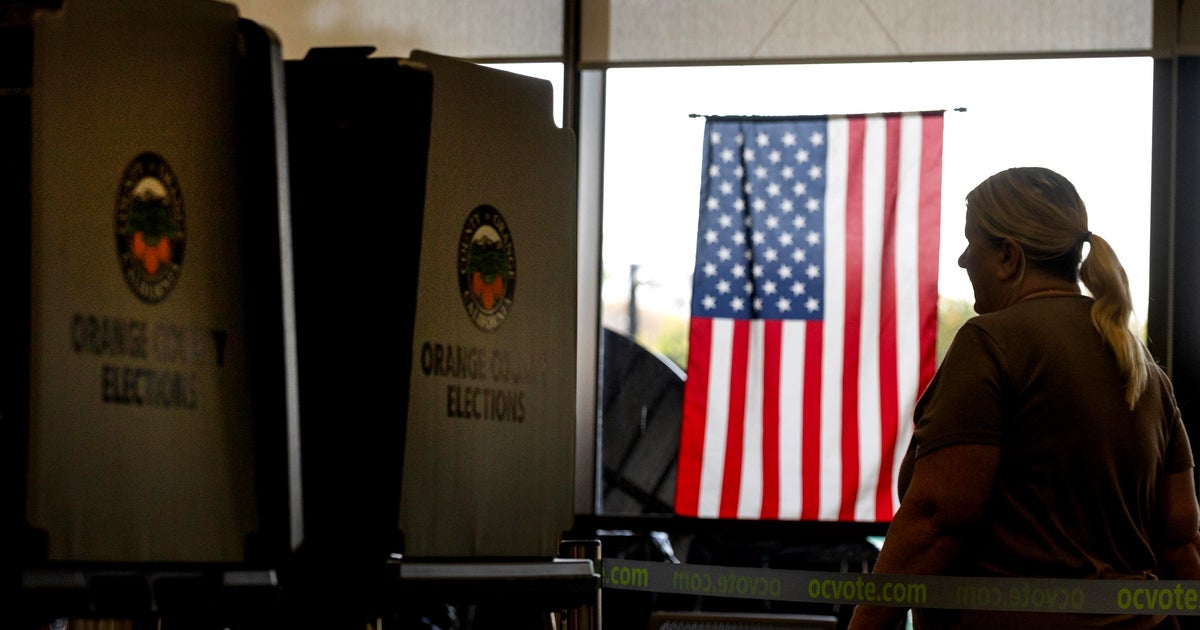
A federal decide in California this week struck down the Justice Division’s demand for the state at hand over delicate voter roll information, ruling that it could trample on residents’ privateness rights and probably disenfranchise voters.
“The taking of democracy doesn’t happen in a single fell swoop; it’s chipped away piece-by-piece till there may be nothing left,” mentioned David Carter, a U.S. District Decide for the Southern District of California, in a ruling on Thursday.
“The case earlier than the Court docket is considered one of these cuts that imperils all People. The erosion of privateness and rolling again of voting rights is a choice for open and public debate throughout the Legislative Department, not the Govt. The Structure calls for such respect, and the Govt might not unilaterally usurp the authority over elections it seeks to take action right here.”
The choice is the primary formal courtroom resolution of what’s anticipated to be many, after the Justice Division filed almost two dozen lawsuits across the nation ordering states to hand over voter roll information containing delicate data, similar to Social Safety numbers, addresses and driver’s license numbers.
One other federal decide in Oregon, in the meantime, individually signaled earlier this week he tentatively plans to dismiss the Justice Division’s voter roll lawsuit in opposition to the state.
A Justice Division spokesperson declined to remark.
The Justice Division’s Civil Rights Division has despatched calls for to a minimum of 43 states to this point asking them at hand over voter roll information, in line with a tally stored by the Brennan Heart for Justice.
The Civil Rights Division has claimed it wants the info to make sure compliance with two federal legal guidelines — the Assist America Vote Act and the Nationwide Voter Registration Act — which require states to determine packages for sustaining clear voting lists so individuals ineligible to vote, similar to convicted felons.
However authorities paperwork beforehand reviewed by CBS Information present that the Justice Division is definitely working with the Division of Homeland Safety at hand over the info in order that it may be utilized in pursuit of prison and immigration investigations.
Justice Division officers haven’t communicated their plans to share the info with DHS with the states.
In an Aug. 28 digital assembly with secretaries of state, a former Civil Rights Division official instructed them the info would solely be used to make sure that they had clear voter lists and pledged to research the knowledge “securely and discreetly,” in line with notes on the assembly shared with CBS Information by a participant.
Authorized specialists have mentioned the Justice Division’s calls for for voter roll information are unprecedented and lift privateness considerations. The federal Privateness Act requires the federal government to offer public discover and remark earlier than it collects data on people.
The Justice Division has argued it additionally has a proper to entry the info underneath the Civil Rights Act, which requires states to retain voter registration data for as much as 22 months after an election.
The regulation states that the Justice Division can problem a written demand to examine the data, but it surely should present “a press release of the premise and the aim” for the request.
In his ruling on Thursday, Carter mentioned the Justice Division has not supplied an satisfactory foundation for its must entry such delicate, nonpublic voter roll information.
He additionally cited prior media studies exhibiting that the true objective behind the info request is to make use of it for immigration and prison enforcement.
“The Court docket doesn’t take evenly DOJ’s obfuscation of its true motives within the current matter,” Carter wrote. “Congress handed the NVRA, Civil Rights Act, and HAVA to guard voting rights. If the DOJ desires to as an alternative use these statutes for greater than their said objective, circumventing the authority granted to them by Congress, it can not achieve this underneath the guise of a pretextual investigative objective.”
Dax Goldstein, the Election Safety Program Director on the States United Democracy Heart, hailed the choice from the courtroom on Thursday.
“At the moment the courtroom despatched a transparent message: states run elections, not the administration,” Goldstein mentioned in a press release to CBS.
“This resolution serves as a vindication of what states have been arguing for months: There isn’t any authorized foundation for the federal authorities’s sweeping calls for for voters’ most delicate data.”
[ad_2]