[ad_1]
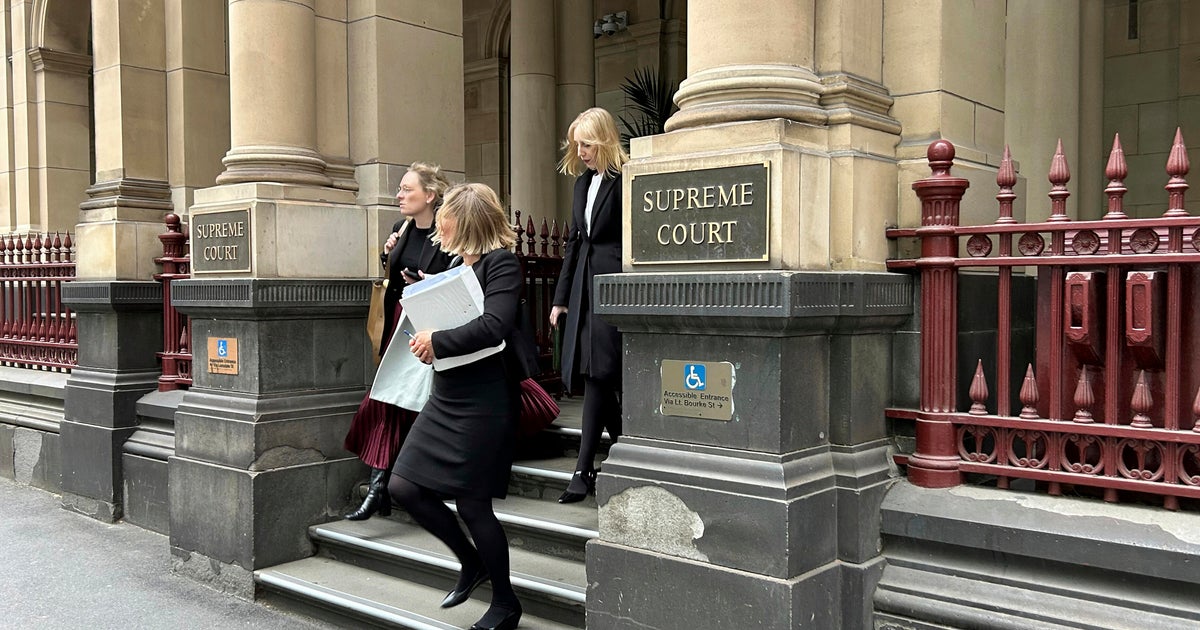
A senior lawyer in Australia has apologized to a decide for submitting submissions in a homicide case that included pretend quotes and nonexistent case judgments generated by synthetic intelligence.
The blunder within the Supreme Courtroom of Victoria state is one other in a litany of mishaps AI has brought about in justice methods around the globe.
Protection lawyer Rishi Nathwani, who holds the celebrated authorized title of King’s Counsel, took “full duty” for submitting incorrect info in submissions within the case of a youngster charged with homicide, in response to courtroom paperwork seen by The Related Press on Friday.
“We’re deeply sorry and embarrassed for what occurred,” Nathwani informed Justice James Elliott on Wednesday, on behalf of the protection group.
The errors brought about a 24-hour delay in resolving a case that Elliott had hoped to conclude on Wednesday. Elliott dominated on Thursday that Nathwani’s shopper, who can’t be recognized as a result of he’s a minor, was not responsible of homicide due to psychological impairment.
“On the threat of understatement, the style by which these occasions have unfolded is unsatisfactory,” Elliott informed attorneys on Thursday.
“The flexibility of the courtroom to rely on the accuracy of submissions made by counsel is key to the due administration of justice,” Elliott added.
The pretend submissions included fabricated quotes from a speech to the state legislature and nonexistent case citations purportedly from the Supreme Courtroom.
The AI-generated errors have been found by the Elliot’s associates, who could not discover the instances cited and requested that protection attorneys present copies, the Australian Broadcasting Company beforehand reported.
The attorneys admitted the citations “don’t exist” and that the submission contained “fictitious quotes,” courtroom paperwork say.
The attorneys defined they checked that the preliminary citations have been correct and wrongly assumed the others would even be right.
The submissions have been additionally despatched to prosecutor Daniel Porceddu, who did not verify their accuracy.
The decide famous that the Supreme Courtroom launched pointers final 12 months for a way attorneys use AI.
“It isn’t acceptable for synthetic intelligence for use except the product of that use is independently and totally verified,” Elliott stated.
The courtroom paperwork don’t establish the generative synthetic intelligence system utilized by the attorneys.
In a comparable case in the USA in 2023, a federal decide imposed $5,000 fines on two attorneys and a regulation agency after ChatGPT was blamed for his or her submission of fictitious authorized analysis in an aviation harm declare.
Choose P. Kevin Castel stated they acted in dangerous religion. However he credited their apologies and remedial steps taken in explaining why harsher sanctions weren’t crucial to make sure they or others will not once more let synthetic intelligence instruments immediate them to supply pretend authorized historical past of their arguments.
Later that 12 months, extra fictitious courtroom rulings invented by AI have been cited in authorized papers filed by attorneys for Michael Cohen, a former private lawyer for U.S. President Donald Trump. Cohen took the blame, saying he did not understand that the Google device he was utilizing for authorized analysis was additionally able to so-called AI hallucinations.
British Excessive Courtroom Justice Victoria Sharp warned in June that offering false materials as if it have been real may very well be thought of contempt of courtroom or, within the “most egregious instances,” perverting the course of justice, which carries a most sentence of life in jail.
The usage of synthetic intelligence has made its manner into U.S. courtrooms in different methods. In April 2025, a person named Jerome Dewald appeared earlier than a New York courtroom and submitted a video that featured an AI-generated avatar to ship an argument on his behalf.
A month after that, a person who was killed in a street rage incident in Arizona “spoke” throughout his killer’s sentencing listening to after his household used synthetic intelligence to create a video of him studying a sufferer influence assertion.
[ad_2]