Researchers searching for extraterrestrial life argue that focusing solely on water-rich planets misses the mark. They recommend prioritizing worlds abundant in phosphorus and nitrogen, essential elements for life as we know it.
Key Elements for Life Beyond Water
Phosphorus forms the backbone of DNA and RNA, storing and transmitting genetic information. Nitrogen builds proteins, the fundamental components of cells. Without these, life cannot emerge, regardless of abundant water.
Dr. Craig Walton, lead researcher from ETH Zurich, explains: “You could feasibly have a planet that looks great with oceans and even dry land, but there is no life and never will be because the other elements you need are simply all but absent.”
The Chemical Goldilocks Zone
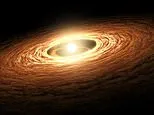
Planets form from molten rock, where heavy elements like iron sink to the core and lighter ones rise to form the mantle and crust. The planet’s initial oxygen balance determines phosphorus and nitrogen availability.
Excess oxygen locks phosphorus in the mantle and expels nitrogen to space. Insufficient oxygen drags phosphorus to the core. Only a narrow ‘chemical Goldilocks zone’ ensures both elements remain accessible in the mantle.
Numerical models confirm this tight range, where precise oxygen levels allow phosphorus and nitrogen to enrich the surface rocks.
Essential Ingredients for Life
- Liquid water: Enables life’s chemistry.
- Oxygen: Fuels energy production.
- Phosphorus: Builds DNA and RNA.
- Nitrogen: Forms proteins.
Rarity of Habitable Worlds
Earth lies squarely in this zone by chance, but habitable planets may number just 1 to 10 percent of prior estimates. Abundant atmospheric oxygen, often seen as a habitability sign, could indicate nutrient scarcity.
Dr. Walton warns: “It would be very disappointing to travel all the way to such a planet to colonise it and find there is no phosphorus for growing food.” He advises checking formation conditions first.
Mars Falls Short
Mars resides outside the zone, with ample phosphorus but scarce surface nitrogen and toxic salts that poison the soil. Dr. Walton notes: “Mars is fairly similar to Earth… This means growing food there might be relatively easy,” but nitrogen deficits and harsh chemicals demand major terraforming efforts.
Refining the Search
Astronomers should analyze exoplanet host stars, as planets inherit their chemical makeup. Systems resembling our Sun offer the best prospects for life-supporting worlds.