[ad_1]
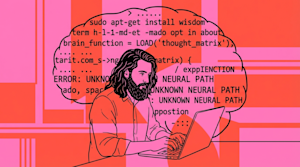
As AI-powered coding instruments flood the market, a essential weak spot has emerged: by default, as with most LLM chat classes, they’re momentary — as quickly as you shut a session and begin a brand new one, the instrument forgets the whole lot you had been simply engaged on.
Builders have labored round this by having coding instruments and brokers save their state to markdown and textual content recordsdata, however this resolution is hacky at finest.
Qodo, the AI code assessment startup, believes it has an answer with the launch of what it calls the trade's first clever Guidelines System for AI governance — a framework that offers AI code reviewers persistent, organizational reminiscence.
The brand new system, introduced as we speak as a part of Qodo 2.1, replaces static, manually maintained rule recordsdata with an clever governance layer. It routinely generates guidelines from precise code patterns and previous assessment choices, constantly maintains rule well being, enforces requirements in each code assessment, and measures real-world affect.
For Itamar Friedman, CEO and co-founder of Qodo, the discharge represents a pivotal second not only for his firm however for the whole AI improvement instruments house.
"I strongly imagine that this announcement of ours is most vital we ever performed," Friedman stated in an interview with VentureBeat.
The 'Memento' drawback
To clarify the limitation of present AI coding instruments, Friedman invokes the 2000 Christopher Nolan movie Memento, during which the protagonist suffers from short-term reminiscence loss and should tattoo notes on his physique to recollect essential info.
"Each time you name them, it's a machine that wakes up from scratch," Friedman stated of as we speak's AI coding assistants. "So all it might probably do is, earlier than it goes to sleep and restart, it may write no matter it did in a file."
This method—saving context to markdown recordsdata like brokers.md or serviette.md—has turn out to be a typical workaround amongst builders utilizing instruments like Claude Code and Cursor. However Friedman argues this technique breaks down at enterprise scale.
"Take into consideration heavy responsibility software program the place you now have, let's say, 100,000 of these sticky notes," he stated. "A few of them are sticky notes. A few of them are enormous explanations. A few of them are tales. You get up and also you get a process. The very first thing that [the AI] is doing is statistically beginning to search for the suitable memos… It's significantly better than not having it. However it's very random."
From stateless to stateful
The evolution of AI improvement instruments has adopted a transparent trajectory, in response to Friedman: from autocomplete (GitHub Copilot) to question-and-answer (ChatGPT) to agentic coding throughout the IDE (Cursor) to agentic capabilities all over the place (Claude Code). However he contends all of those stay basically stateless.
"To ensure that software program improvement to essentially revolutionize how we do software program improvement for actual world software program, it must be a stateful machine," Friedman stated.
The core problem, he defined, is that code high quality is inherently subjective. Completely different organizations have completely different requirements, and even groups throughout the identical enterprise could method issues in another way.
"With a view to actually attain excessive degree of automation, you want to have the ability to customise for the particular necessities of the enterprise," Friedman stated. "You want to have the ability to present code in top quality. However high quality is subjective."
Qodo's reply is what Friedman describes as "reminiscence that’s constructed over a very long time and is accessible to the coding brokers, after which they will poke and examine and confirm that what they're truly doing is in response to the subjective wants of the enterprise."
How Qodo's Guidelines System works
Qodo's Guidelines System establishes what the corporate calls a unified supply of reality for organizational coding requirements. The system consists of a number of key elements:
Computerized Rule Discovery: A Guidelines Discovery Agent generates requirements from codebases and pull request suggestions, eliminating handbook authoring of rule recordsdata.
Clever Upkeep: A Guidelines Professional Agent constantly identifies conflicts, duplicates, and outdated requirements to stop what the corporate calls "rule decay."
Scalable Enforcement: Guidelines are routinely enforced throughout pull request code assessment, with really useful fixes supplied to builders.
Actual-World Analytics: Organizations can monitor adoption charges, violation developments, and enchancment metrics to show requirements are being adopted.
Friedman emphasised that this represents a elementary shift in how AI code assessment instruments function. "It's the primary time that AI code assessment instrument is shifting from reactive to proactive," he stated.
The system surfaces guidelines based mostly on code patterns, finest practices, and its personal library, then presents them to technical leads for approval. As soon as accepted, organizations obtain statistics on rule adoption and violations throughout their whole codebase.
A tighter connection between reminiscence and brokers
What distinguishes Qodo's method, in response to Friedman, is how tightly the principles system integrates with the AI brokers themselves—versus treating reminiscence as an exterior useful resource the AI should search via.
"At Qodo, this reminiscence and brokers are rather more linked, like we’ve got in our mind," Friedman stated. "There's rather more construction to it… the place completely different components are nicely linked and never separated."
Friedman famous that Qodo applies fine-tuning and reinforcement studying methods to this built-in system, which he credit for the corporate reaching an 11% enchancment in precision and recall over different platforms, efficiently figuring out 580 defects throughout 100 real-world manufacturing PRs.
Friedman supplied a prediction for the trade: "While you look one yr forward, will probably be very clear that after we began 2026, we had been in stateless machines which can be making an attempt to hack how they work together with reminiscence. And we can have a really coupled method by the tip of 2026, and Qodo 2.1 is the primary blueprint of how to try this."
Enterprise deployment and pricing
Qodo positions itself as an enterprise-first firm, providing a number of deployment choices. Organizations can deploy the system fully inside their very own infrastructure through cloud premise or VPN, use a single-tenant SaaS possibility the place Qodo hosts an remoted occasion, or go for conventional self-serve SaaS.
The foundations and reminiscence recordsdata can reside wherever the enterprise requires—on their very own cloud infrastructure or hosted by Qodo—addressing knowledge governance considerations that enterprise prospects usually elevate.
On pricing, Qodo is sustaining its present seat-based mannequin with utilization quotas. At current, the corporate gives three pricing tiers: a free Developer plan for people with 30 PR opinions per 30 days, a Groups plan at $38 per consumer per 30 days (with 21% financial savings accessible for annual billing) that features 20 PRs per consumer month-to-month and a pair of,500 IDE/CLI credit, and a custom-priced Enterprise plan with contact-us pricing that provides options like multi-repo context consciousness, on-prem deployment choices, SSO, and precedence assist.
Friedman acknowledged the continuing trade debate about whether or not seat-based pricing is sensible in an age of AI brokers however stated the corporate plans to handle this subject extra comprehensively later this yr.
"In the event you get extra worth, you pay extra," Friedman stated. "In the event you don't, then we're all good."
Early buyer response
Ofer Morag Brin of HR expertise firm Hibob, an early consumer of the Guidelines System, reported optimistic leads to a press assertion Qodo shared with VentureBeat forward of the launch.
"Qodo's Guidelines System didn't simply floor the requirements we had scattered throughout completely different locations; it operationalized them," Brin stated. "The system constantly reinforces how our groups truly assessment and write code, and we’re seeing stronger consistency, sooner onboarding, and measurable enhancements in assessment high quality throughout groups."
Based in 2018, Qodo has raised $50 million from traders together with TLV Companions, Vine Ventures, Susa Ventures, and Sq. Peg, with angel traders from OpenAI, Shopify, and Snyk.
[ad_2]