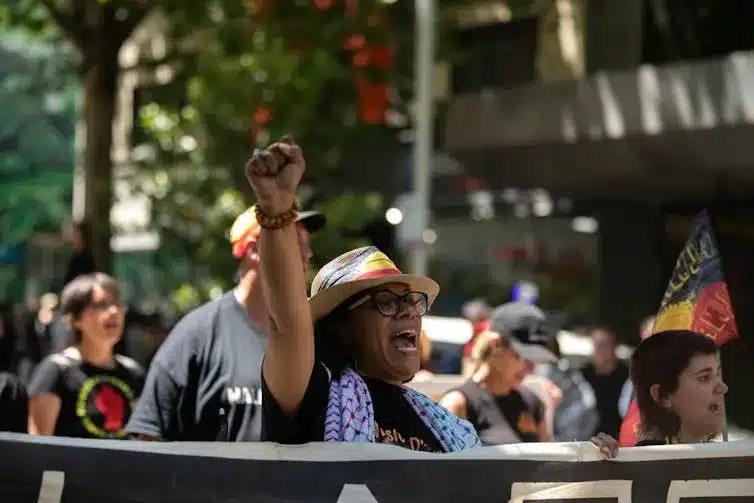
Following the Bondi terror attack, state governments across Australia have introduced measures to limit mass protests. New South Wales stands out with legislation empowering police to ban public assemblies in specific areas for up to 90 days after a terrorist incident. Authorities tested this during widespread demonstrations against Israeli President Isaac Herzog’s visit, which prompted numerous claims of excessive police force. The state’s police watchdog is probing these allegations, while protest leaders contest the laws’ constitutionality in the NSW Court of Appeal.
Ongoing worries highlight threats to Australia’s protest freedoms. Two years ago, the Human Rights Law Centre warned that “protest is in peril,” and conditions remain largely unchanged.
States Ramp Up Anti-Protest Measures
Recent years have seen heightened penalties and sentences for disruptions like blocking traffic in various states and territories. These restrictions intensified over the past year.
In New South Wales, December 2025 legislation enables a “Public Assembly Restriction Declaration” after terror events. This designates zones off-limits for protests, allowing police to disperse crowds, shut down sites, conduct searches, and issue orders to avert disruptions or safety risks. NSW Police issued several such declarations during the Herzog visit protests; they have since expired, but the enabling law persists.
Queensland’s proposed bill, now before parliament, would prohibit specific protest slogans if they reasonably cause public fear, harassment, or offense, with penalties up to two years imprisonment. Officials plan to target phrases like “from the river to the sea” and “globalise the intifada.”
Western Australia’s new bill lets police deny permits for events likely to incite hate based on religion, race, disability, gender, sexuality, or ethnicity.
These developments raise alarms over potential excessive force, biased enforcement, and selective curbs on pro-Palestinian messaging.
Protesters Fight Back in Court
Recent legal battles against restrictions have yielded mixed results. In Victoria, demonstrators successfully challenged a “designated area” order ahead of the 2026 Invasion Day events. The Federal Court ruled it unlawful, citing the assistant police commissioner’s failure to follow proper criteria, legal errors, and neglect of privacy rights under the Victorian Charter of Human Rights. The order had allowed warrantless searches and demands to remove face coverings.
In New South Wales, the Palestine Action Group urgently sought to revoke a declaration classifying Herzog’s visit as a “major event,” which expanded police powers. The court rejected the challenge.
Balancing Rights and Public Safety
While addressing hate speech and security threats is essential, current laws tilt heavily toward limiting protests. Lawmakers could achieve equilibrium through human rights charters that mandate assessments of protest rights. Such frameworks would require police to weigh these freedoms in decisions, as in Victoria.
Advocates push for a federal human rights act alongside state and territory charters where absent. These steps would legally safeguard the right to protest, vital for a vibrant democracy.