A Young Musher’s Passion in Rankin Inlet
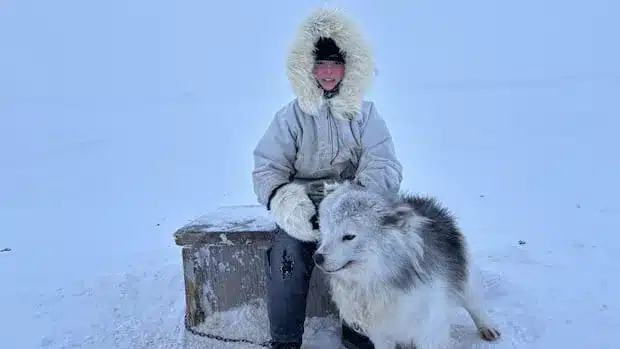
In Rankin Inlet, Nunavut, 15-year-old Sophia Johnston approaches her team of nine Siberian-mix sled dogs on her snowmobile. A kilometer away, the dogs bark excitedly, jumping against their tethers. Spread out to prevent tangling, they eagerly await her attention. Johnston has cared for them for a couple of years, feeding them even on frigid days like the –24 C Saturday in February when she planned a run.
Before harnessing a few for the outing, she checks a new litter of three pups sheltered in a tent. Nestled with their mother, lead dog Siti, the newborns stay protected from wind and other dogs. Without Siti nursing, the team listens less, as she normally keeps order.
Knowing Her Dogs
Johnston knows each dog’s personality well. Energetic Buddy, named by her nine-year-old brother Myles, belongs to him. Affectionate Bullum—’chubby’ in Inuktitut—loves hugs. Shy Kangutaq, friendly Pujuq, and strong Aklak who runs tirelessly complete the lively group.
Preserving Inuit Tradition
Maintaining the team goes beyond hobby for Johnston; it honors Inuit culture. “I think it’s a really good tradition. It represents a lot of the hardships of Inuit, you know, and how they had to use their dogs and go hunting and stuff,” she said.
Historically, Inuit relied on dog teams, or qimmiiq, for travel, hunting, fishing, and protection from predators like polar bears and wolves before snowmobiles arrived. In the 1950s, ’60s, and ’70s, authorities slaughtered over 1,000 sled dogs across Nunavut and Nunavik. A 2010 inquiry by a retired Quebec Superior Court judge determined Quebec police killed them without regard for Inuit families’ dependence. The Qikiqtani Truth Commission confirmed similar factors, including police actions, caused a sharp decline in Nunavut’s Baffin region. In November 2025, the Canadian government apologized for its role in the Nunavik killings. Rankin Inlet Mayor Harry Towtongie, a sled dog racer for over 30 years, recalls unverified stories of slaughters in the Kivalliq region, where travelers returned to find dogs killed.
Reviving the Sport
In the 1980s, Towtongie organized early dog team races in Rankin Inlet, drawing 32 teams from across the Arctic. “We did it! People from Arviat, Chesterfield Inlet, Whale Cove, Rankin, Yellowknife. They all came,” he said, his face lighting up. He competed in hundreds of races but no longer owns a team due to the full-time demands. He misses the friendships most, especially with Cree racers.
As original racers passed and interests shifted to hockey, the sport waned. Community member John McLeod sparked Johnston’s passion, gifting her first six dogs. Learned from Inuit elders, McLeod taught her using traditional materials like bearded seal skin for whips and harnesses, and caribou for clothing. “I kept telling her … get your own dogs,” he said.
Family Support Sustains the Team
Costs run high, so Johnston’s father, Kyle, fishes year-round for fish, supplemented by caribou, muskox, or kibble. A high school shop teacher since 2009, he nets every two to three days after work. “Every two to three days I’m out doing netting, and I also work full time,” Kyle said. “So you finish a full day of work, suit up, drive out. If everything goes well, you’re back by 10 p.m.”
“Sophia is pretty remarkable,” Kyle added. “She’ll go one minute from being out there shoveling up all the dog stuff, to cleaning out houses, to do herself right up and go and see some friends. She’s a very well-rounded young lady.”
On that cold day, they harnessed three dogs to a kicksled, with Kyle leading on snowmobile toward Hudson Bay’s frozen coast. Johnston also uses the traditional qamutik, lying prone. “I get really happy when they’re working together and following directions — but I love the scenery and how peaceful it is,” she said. The team surged forward, carrying the tradition alive.