[ad_1]
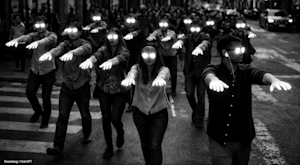
Most individuals don’t respect the profound menace that AI will quickly pose to human company. A standard chorus is that “AI is only a software,” and like all software, its advantages and risks depend upon how folks use it. That is old-school pondering. AI is transitioning from instruments we use to prosthetics we put on. This will create vital new threats we’re simply not ready for.
No, I’m not speaking about creepy mind implants. These AI-powered prosthetics shall be mainstream merchandise we purchase from Amazon or the Apple Retailer and marketed with pleasant names like “assistants,” “coaches,” “co-pilots” and “tutors.” They’ll present actual worth in our lives — a lot so that we’ll really feel deprived if others are carrying them and we aren’t. This can create speedy stress for mass adoption.
The prosthetic units I’m referring to are “AI-powered wearables” like good glasses, pendants, pins and earbuds. Your wearable AI will see what you see and listen to what you hear, all whereas monitoring the place you’re, what you’re doing, who you’re with and what you are attempting to attain. Then, with out you needing to say a phrase, these psychological aids will whisper recommendation into your ears or flash steering earlier than your eyes.
The distinction between a software and a prosthetic could appear refined, however the implications for human company are profound. That is greatest understood by means of a easy evaluation of enter and output. A software takes in human enter and generates amplified output. A software could make us stronger, quicker or enable us to fly. A psychological prosthetic, however, varieties a suggestions loop across the human, accepting enter from the person (by monitoring their actions and interesting them in dialog) and producing output that may instantly affect the person’s pondering.
This suggestions loop modifications all the things. That’s as a result of body-worn AI units will be capable of monitor our behaviors and feelings and will use this information to discuss us into believing issues which can be unfaithful, shopping for issues we don’t want or adopting views we’d in any other case notice will not be in our greatest curiosity. That is known as the AI Manipulation Drawback, and we aren’t prepared for the dangers. That is an pressing challenge as a result of massive tech is racing to carry these merchandise to market.
Why are suggestions loops so harmful?
In at this time’s world, all computing units are used to deploy focused affect on behalf of paying sponsors. Wearable AI merchandise will doubtless proceed this pattern. The issue is, these units might simply be given an “affect goal” and be tasked with optimizing their impression on the person, adapting their conversational ways to beat any resistance they detect. This transforms the idea of focused affect from social media buckshot into heat-seeking missiles that skillfully navigate previous your defenses. And but, policymakers don’t respect this danger.
Sadly, most regulators nonetheless view the hazard of AI when it comes to its capacity to quickly generate conventional types of affect (deepfakes, faux information, propaganda). In fact, these are vital threats, however they’re not practically as harmful because the interactive and adaptive affect that might quickly be broadly deployed by means of conversational brokers, particularly when these AI brokers journey with us by means of our lives inside wearable units.
That is coming quickly
Meta, Google and Apple are racing to launch wearable AI merchandise as rapidly as they will. To guard the general public, policymakers have to abandon their “tool-use” framing when regulating AI units. That is troublesome as a result of the tool-use metaphor goes again 35 years to when Steve Jobs colorfully described the PC as a “bicycle of the thoughts.” A bicycle is a strong software that retains the rider firmly in management. Wearable AI will flip this metaphor on its head, making us surprise who’s steering the bicycle — the human, the AI brokers whispering within the human’s ears, or the firms that deployed the brokers? I imagine will probably be a harmful mixture of all three.
As well as, customers will doubtless belief the AI-voices of their heads greater than they need to. That’s as a result of these AI brokers will present us with helpful recommendation and data all through our every day life — educating us, reminding us, teaching us, informing us. The issue is, we could not be capable of distinguish when the AI agent has shifted its goal from aiding us to influencing us. To understand the distinction, you may watch the award-winning brief movie Privateness Misplaced (2023) in regards to the risks of AI-powered wearable units. That is very true when units embody invasive options resembling facial recognition (which Meta is reportedly including to their glasses).
What can we do to guard the general public?
Initially, policymakers want to understand that conversational AI permits a completely new type of media that’s interactive, adaptive, individualized and more and more context-aware. This new type of media will perform as “energetic affect,” as a result of it could actually modify its ways in actual time to beat person resistance. When deployed in wearable units, these AI techniques may very well be designed to govern our actions, sway our opinions and affect our beliefs — and do all of it by means of seemingly informal dialog. Worse, these brokers will study over time what conversational ways work greatest on every of us on a private degree.
The actual fact is, conversational brokers shouldn’t be allowed to type management loops round customers. If this isn’t regulated, AI will be capable of affect us with superhuman persuasiveness. As well as, AI brokers must be required to tell customers each time they transition to expressing promotional content material on behalf of a 3rd occasion. With out such protections, AI brokers will doubtless turn out to be so persuasive that they are going to make at this time’s focused affect methods look quaint.
Louis Rosenberg is a pioneer of augmented actuality and a longtime AI researcher. He earned his PhD from Stanford, was a professor at California State College, and authored a number of books on the risks of AI, together with Arrival Thoughts and Our Subsequent Actuality.
[ad_2]