The United States positions its most substantial military footprint in the Middle East since 2003, deploying two aircraft carriers and F-22 stealth fighters amid escalating tensions with Iran.
Negotiations Collapse in Geneva
Indirect discussions in Geneva between U.S. envoys Steve Witkoff and Jared Kushner and Iranian representatives concluded on Thursday without any progress. The Trump administration issues stern warnings of “drastic consequences” should Iran fail to deliver major concessions on its nuclear program.
Israel Prepares for Potential Conflict
Israel activates bomb shelters across the country and ctions Lebanon that its infrastructure faces targeting if Hezbollah becomes involved in any U.S.-Iran confrontation.
Widespread Evacuation Orders Issued
The State Department thorizes non-emergency personnel and families to depart from the U.S. Embassy in Israel, effective February 27. Comparable directives apply to the embassy in Beirut, Lebanon, from February 23. The U.S. 5th Fleet in Bahrain scales back to under 100 essential staff.
China directs its citizens to exit Iran without delay. South Korea activates a “Level 3” alert, mandating nationals to leave the country. Several European countries, such as Finland, Sweden, and Serbia, urge their citizens to evacuate Iran. Airlines including KLM suspend regional flights. Governments worldwide recommend departure while commercial routes remain available, warning of sudden closures if hostilities erupt.
Diplomatic Efforts Persist
Despite the strain, U.S. Secretary of State Marco Rubio schedules visits to Israel on Monday and Tuesday. Omani Foreign Minister Badr Al Busaidi convenes with Vice President JD Vance and U.S. officials in Washington today for urgent talks aimed at averting war.
Oil Prices Climb on Geopolitical Risks
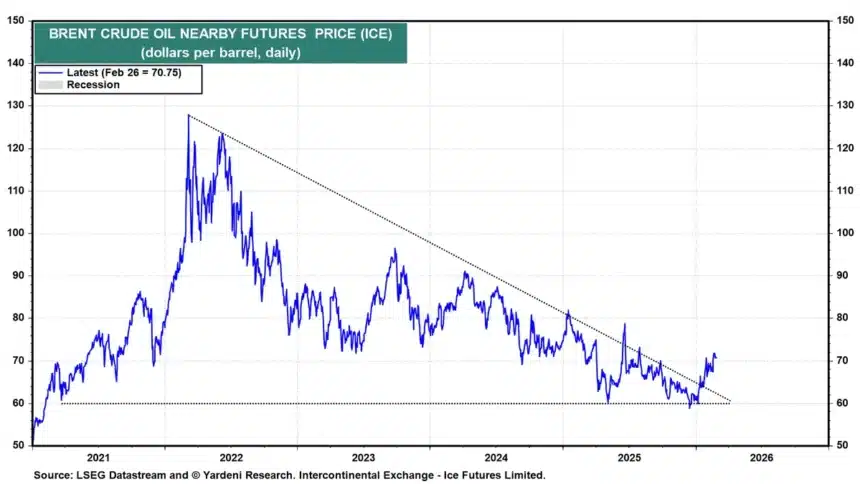
Oil prices cap February with gains, as the final trading week registers a $1-per-barrel increase fueled by U.S.-Iran frictions. President Trump’s 10- to 15-day deadline for nuclear talks nears expiration following the Geneva impasse.
A modest $1.50 rise in crude oil today signals markets either price in a swift conflict or doubt its immediacy. Attention on the upcoming OPEC+ summit remains subdued, prompting speculation that Sdi Arabia may boost April production. Such moves would navigate the Strait of Hormuz, which Iran threatens to seal.
The oil rebound propels U.S. energy exchange-traded funds higher, alongside global equity rebalancing. From 2023 to 2025, Brent crude prices closely tracked 10-year U.S. Treasury yields. Lately, yields decline despite surging oil, drawing safe-haven inflows amid fears of broader Middle East turmoil.
The 10-year yield dips below 4% today, even after hotter-than-expected producer price index data. Nominal and real yields stay largely stable since 2023, a pattern expected to hold through year-end.