[ad_1]
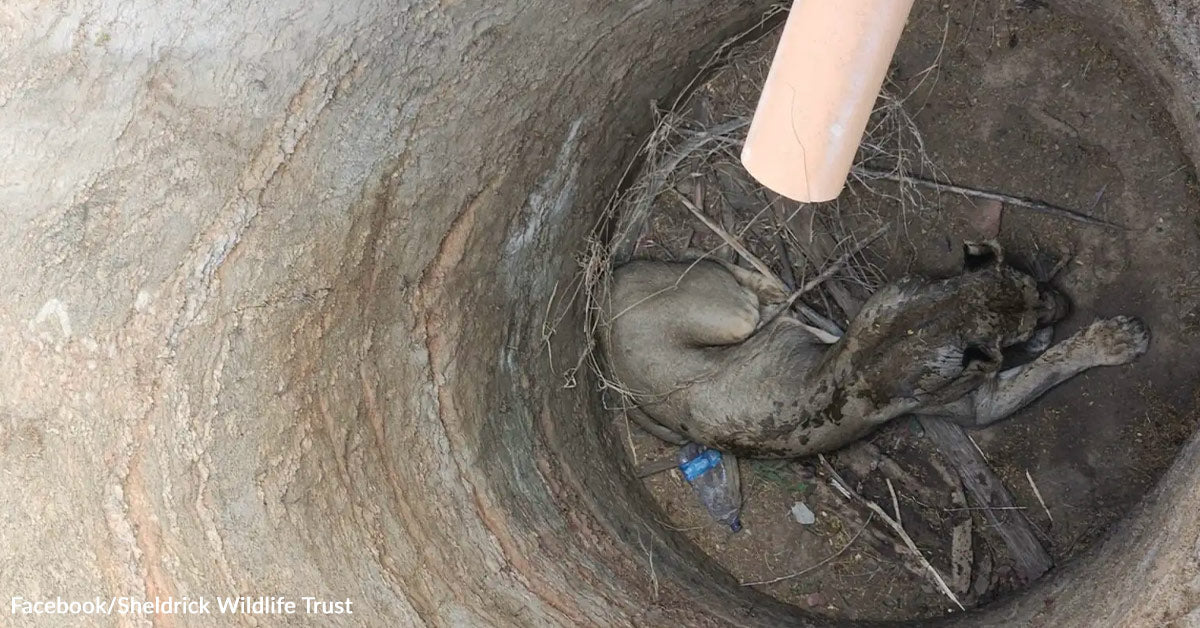
The quiet fringe of a Kenyan village turned the backdrop for a strong rescue story when a bunch of passersby peered into an empty septic pit and noticed one thing they by no means anticipated. Fifteen toes under floor, on the backside of the concrete gap, a totally grown lioness lay trapped, exhausted and alone. In that on the spot, a easy stroll turned a life-or-death second for one in all Africa’s most majestic animals, and an unforgettable instance of human and wildlife rescue collaboration.
In accordance with reporting shared by Sheldrick Wildlife Belief, the group initially noticed solely a big form within the shadows. After they realized it was a lioness, the shock was fast. The pit was far too deep and sheer-sided for any animal to climb, particularly a giant cat already weakened by stress and dehydration. The observers understood that with out assist the lioness wouldn’t have the ability to escape. They shortly contacted Kenya Wildlife Service and Sheldrick Wildlife Belief, two organizations that usually work collectively on wildlife emergencies within the area.

Fb/Sheldrick Wildlife Belief
Sean Michael, director of communications at Sheldrick Wildlife Belief, defined that the lioness had doubtless fallen into the pit the earlier evening. That meant she had been trapped for almost 24 hours earlier than anybody even seen she was there. Throughout that point she would have been with out meals or water, uncovered to the relentless warmth and stress of confinement, with no option to defend herself or transfer freely. I discovered this element placing as a result of it highlights how simply animals could be missed when they’re caught in man-made buildings that have been by no means designed with wildlife in thoughts.
When the responders from Kenya Wildlife Service and Sheldrick Wildlife Belief arrived on scene, their first job was to evaluate the lioness from a protected distance. Michael shared that she appeared visibly frightened, careworn and dehydrated. Even from above, her physique language reportedly confirmed how drained she was by the ordeal. In conditions like this, each the security of the animal and the security of the folks concerned depend upon calm planning as a lot as on pace.

Fb/Sheldrick Wildlife Belief
The rescue itself required a coordinated effort by a skilled crew of six folks. On the coronary heart of that effort was Dr. Limo, a veterinarian with Kenya Wildlife Service. He first sedated the lioness in order that she wouldn’t panic or injure herself additional because the crew labored round her. Sedation additionally ensured the rescuers might strategy carefully sufficient to safe her with out placing anybody at fast threat. As soon as they have been assured she was absolutely sedated and steady, they started the advanced technique of lifting her out.
The crew lowered ladders into the 15-foot pit to succeed in the lioness. Working collectively within the confined house, they fastidiously maneuvered a tarp beneath her physique. This improvised sling turned her lifeline again to the floor. Ropes hooked up to the tarp allowed the rescuers on the high to haul her up whereas these under guided and stabilized her weight. The scene, as described by Sheldrick Wildlife Belief, mirrored each bodily effort and exact coordination. Each motion needed to be managed to keep away from banging her towards the partitions or inflicting extra stress.
When the lioness lastly emerged from the pit and was laid safely on the bottom above, the crew might absolutely examine her for accidents. Given the peak of the autumn and the size of time she had been trapped, the danger of damaged bones or inside trauma was a critical concern. In accordance with Michael, Dr. Limo carried out an intensive examination and was capable of affirm that the lioness had not sustained accidents from the autumn. That final result was outstanding, contemplating the depth of the pit and the hardness of the floor she had landed on.
Though she escaped critical bodily hurt, the lioness nonetheless wanted fast care. The crew offered intravenous fluids to deal with her dehydration and gave her time to relaxation as the consequences of the sedation wore off. With correct hydration and an opportunity to recuperate, her energy and application started to return. The rescue crew monitored her carefully to make sure she was steady sufficient to outlive on her personal as soon as she reentered her pure habitat.
As a result of she had come by the ordeal in such surprisingly good situation, the professionals on website decided that she might be launched again into the wild the identical night. Reasonably than leaving her close to the septic pit the place she had been discovered, Kenya Wildlife Service and Sheldrick Wildlife Belief selected a safer and extra appropriate location. They transported her to Tsavo East Nationwide Park, an expansive wildlife space the place she could be free from close by human-made hazards like open pits.
The discharge website was fastidiously chosen in order that the lioness would have the chance to reunite together with her satisfaction. Michael defined that she was let loose in an space the place her household group was prone to be discovered. That consideration issues, as a result of lions depend upon their social construction for looking, safety and elevating cubs. A profitable launch isn’t just about bodily survival but in addition about returning the animal to the social and environmental situations the place it will probably really thrive.
As soon as at Tsavo East Nationwide Park, the lioness might be monitored from a distance. This type of follow-up helps wildlife specialists monitor her restoration and be certain that she resumes a wholesome, pure life. It additionally contributes to a bigger understanding of how human-made infrastructure impacts wildlife, and what could be accomplished to forestall comparable incidents. Open septic pits and different unattended buildings can grow to be silent traps for animals that roam throughout vast territories searching for meals or water.
This story of a lioness rescued from a septic pit in Kenya highlights a number of vital themes. It exhibits how attentiveness from native folks could make a essential distinction, because it was the short motion of these first passersby that set the rescue in movement. It additionally underscores the significance of effectively skilled wildlife responders who can safely deal with giant and doubtlessly harmful animals, from sedation and examination to move and launch.
On a broader stage, the incident speaks to the continued problem of balancing human improvement with the motion and security of untamed animals. Whereas the article doesn’t dwell on coverage or options, the profitable final result illustrates how cooperation between communities and conservation organizations can save lives. The lioness’s ordeal within the 15-foot pit might simply have resulted in tragedy, but by well timed intervention it turned a narrative of resilience and restoration as an alternative.
Rescue operations like this invite reflection concerning the duty people share for the landscapes they form. As extra areas face the intersection of rising infrastructure and wildlife habitat, tales of trapped animals are prone to proceed. Nonetheless, the work of teams akin to Kenya Wildlife Service and Sheldrick Wildlife Belief exhibits that with preparation, experience and compassion, there may be actual hope for animals that discover themselves in disaster by no fault of their very own. For this lioness, a minimum of, the result was a return to open savanna, the corporate of her satisfaction and a second likelihood on the wild life she was born to steer.
[ad_2]