[ad_1]
In a quiet nook of New South Wales, a textile artist discovered herself with an sudden viewers. At Wangat Lodge, the place a lush belt of sub-tropical rainforest hugs the Chichester River, an artist named Estelle arrived for the Gumnut Artist’s Retreat anticipating time to concentrate on her craft. As an alternative, she found a delicate, day by day reference to a gaggle of untamed Australian king parrots who appeared as fascinated by her portray as she was by their presence. For anybody who loves rainforest artwork, gradual dwelling, and wildlife encounters that unfold on their very own phrases, this story provides a memorable glimpse into what can occur when people work in true concord with nature.
Wangat Lodge is called a spot the place guests can wander via 50 acres of protected forest, surrounded by tall bushes and the sounds of river and birds. Many who come are native artists on the lookout for inspiration within the quiet rhythm of the bush. The Gumnut Artist’s Retreat invitations them to step away from busy routines and discover their creativity in an setting that feels each sheltered and wild. It was on this setting that Estelle arrange her workspace, ready her materials, and commenced dyeing materials for a tapestry mission.

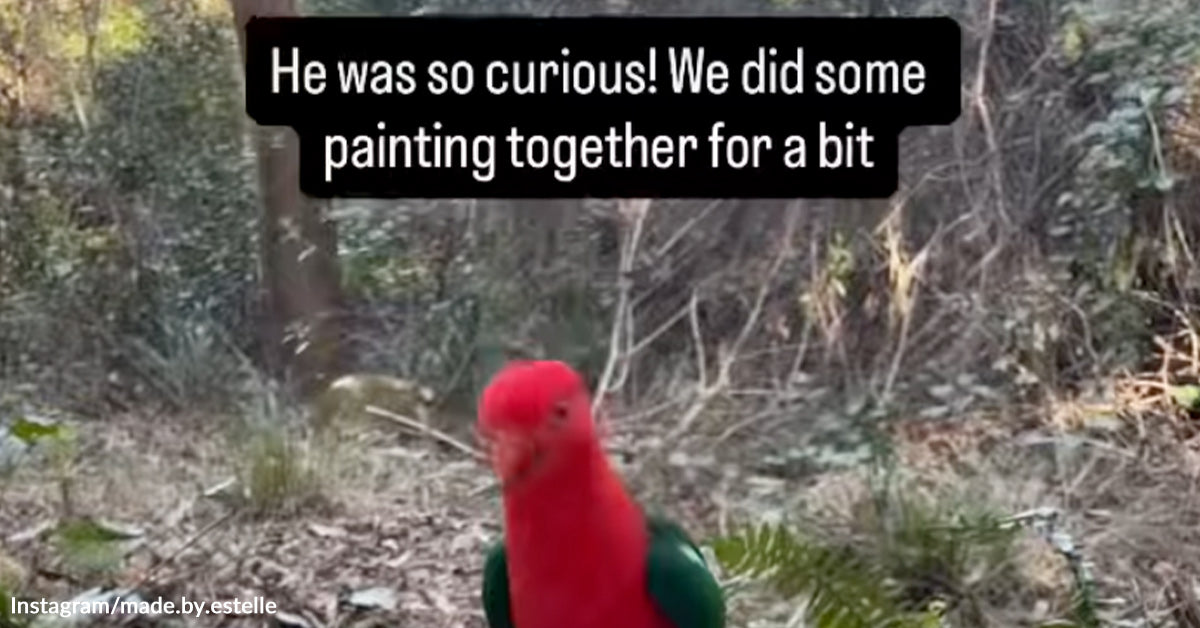
As she labored among the many bushes, concentrating on shade and texture, she turned conscious of a tiny pair of eyes observing her from above. A flash of pink adopted. A small fowl glided down from a department and landed proper in entrance of her desk as if it had been invited. In accordance with Estelle’s account, the customer didn’t appear nervous or aggressive. As an alternative, the fowl merely watched, head tilted, as she painted and dyed her cloth swatches, nearly as if it had been finding out her method.
The curious onlooker was an Australian king parrot, a species native to the area and simply acknowledged by its brilliant pink plumage and lengthy, elegant tail. These parrots are sometimes admired for his or her daring coloring, however on this case what stood out was their obvious curiosity within the quiet, repetitive motions of an artist at work. Estelle described how she tried to not startle the fowl, retaining her actions mild so she wouldn’t break the fragile belief that appeared to be forming in that shaded clearing.

Earlier than lengthy, the lone fowl was now not alone. One other king parrot swept down, then one other, after which one other nonetheless. The group grew till Estelle discovered herself surrounded by a small group of feathered observers, all watching as dye, water, and cloth got here collectively to kind the muse of her rainforest tapestry. She later joked that she should have handed “some type of vibe take a look at,” suggesting that her calm presence and gradual, deliberate actions put the birds comfy.
What might need been a short, one time assembly became a day by day ritual. For the following week, as Estelle continued her residency and her mission, the parrots returned repeatedly. They visited her workspace every day, usually gathering as she ready dyes or brushed shade onto cloth. Over time she discovered to differentiate one fowl from one other. With repeated visits got here familiarity and the sense that she was attending to know them individually slightly than as a single flock.
In accordance with Estelle, every fowl appeared to have a definite character. Some had been daring, hopping nearer to the desk and inspecting the supplies with evident curiosity. Others stored a safer distance, lingering on close by branches and watching from the sides. There have been outgoing parrots that appeared to say entrance row seats and quieter, extra reserved birds that took their time and stayed half hidden in leaves. I discovered this element placing as a result of it underlines how even animals that seem related at first look reveal their individuality once we spend time with them with out expectation.
The connection felt particularly significant given the character of Estelle’s work. Her tapestry didn’t depend on new, artificial supplies. As an alternative, she selected secondhand cloth swatches and turned to the forest itself for shade. She used foraged mushrooms, tree bark, and leaves to dye the items, bringing the palette of the panorama instantly into the fibers. This sustainable strategy to textile artwork meant that her mission was deeply rooted within the setting round her. The presence of the wild birds watching her eco-friendly dyeing course of added one other layer to that connection.
From her personal reflections, it’s clear that the mission was not simply in regards to the completed tapestry. She described the stitching as “a bit formidable” and admitted that her abilities with stitching felt lower than excellent. Even so, she expressed gratitude for having taken on the problem. The outcome was a wealthy, textured work that carried the mark of the forest in each shade and story. The marginally imperfect stitches turned a part of the narrative of studying, presence, and endurance.
By the tip of the week, Estelle left with excess of a accomplished tapestry. She carried together with her the reminiscence of these day by day visits from her feathered companions and a renewed sense of connection to the pure world. The expertise served as a delicate reminder that people and wildlife can share house in a approach that feels respectful and mutual. She described it as grounding, as if she and the birds had been on equal footing, every merely current and studying in regards to the different throughout the identical ecosystem.
This sense of shared floor is without doubt one of the strongest threads working via her story. In a world the place it may be straightforward to really feel separate from the environments we transfer via, encounters like this spotlight how interwoven our lives are with the landscapes we inhabit. An artist arrives to create rainforest artwork utilizing foraged supplies. The forest responds with shade, texture, and sudden firm. Wild parrots present up day after day, not as pets or performers, however as beings following their very own curiosity.
For individuals who observe artistic work outdoor, this account might encourage a slower, extra attentive approach of being. Somewhat than coming into a spot solely to take inspiration, there is a chance to interact with it gently, to note who else is current, and to acknowledge that each brushstroke or sew is an element of a bigger cloth of life. As Estelle’s week at Wangat Lodge suggests, once we work with supplies that respect the land and transfer at a tempo that permits statement, the boundary between artist and setting can soften in rewarding methods.
In the long run, Estelle’s expertise with the king parrots within the New South Wales rainforest is as a lot about relationship as it’s about artwork. Her tapestry holds the colours of mushrooms, bark, and leaves, however the story behind it carries the reminiscence of quiet mornings watched over by pink and inexperienced birds with brilliant eyes and distinct personalities. It’s a reminder that inspiration generally arrives on beating wings, settles close by with out fanfare, and invitations us to keep in mind that we’re a part of a dwelling, attentive world that notices us as a lot as we discover it.
[ad_2]