An American pilot, identified as Nicholas F Goselin, was fatally shot by separatists in Indonesia’s restive Papua region, with the group claiming the aircraft was being used to transport Indonesian troops. The incident, which also saw the civilian plane set ablaze, has intensified concerns over the long-standing conflict in the impoverished easternmost territory.
Separatist Group Claims Responsibility
The West Papua Liberation Army (TPNPB), a prominent separatist faction, announced on Thursday that its fighters were responsible for the death of Captain Goselin and the destruction of the aircraft, operated by Indonesian airline PT AMA. According to the TPNPB, the plane landed in Balinggama village, where the attack occurred.
The Directorate General of Civil Aviation stated that the aircraft was carrying one pilot and seven passengers. Communication with the airstrip was lost shortly after the pilot reported the plane’s arrival. While the US Embassy in Indonesia has not yet issued a statement, the incident underscores the volatile security situation in Papua.
Conflicting Accounts of the Flight’s Purpose
The Indonesian military has refuted the TPNPB’s claims that the plane was carrying troops. Military spokesman Lieutenant Colonel Wirya Artadiguna asserted that the seven individuals on board were Indigenous Papuan civilians, including three women, who were unharmed. An evacuation attempt by an Indonesian military team was reportedly thwarted by adverse weather conditions on Thursday, with plans to retry on Friday.
Papua police confirmed they are investigating the circumstances, with efforts to verify the status of the pilot and passengers being hampered by the remote and inaccessible terrain. Access to the site is solely by air, and there are no road connections.
Separatists Cite ‘Message’ and Military Support Allegations
Sebby Sambom, a spokesperson for the separatist group, described the attack as a deliberate “message” to the Indonesian and US governments. He alleged that civilian aircraft have been utilized to ferry Indonesian military personnel and supplies into Papua’s remote areas, a practice the TPNPB claims violates their ban on flights in zones they consider their operational territory.
Sambom stated that Captain Goselin was targeted because the aircraft continued to operate despite the group’s warnings. He further accused the Indonesian and US governments of failing to address the “root causes of the conflict in Papua between the Indonesian military and the West Papua National Liberation Army.”
The TPNPB has called for international negotiations to resolve the protracted conflict, urging the United Nations to mediate discussions involving the Indonesian government, the TPNPB, and Papuan representatives. The group has also warned of future actions against civilian aircraft perceived to be aiding military operations.
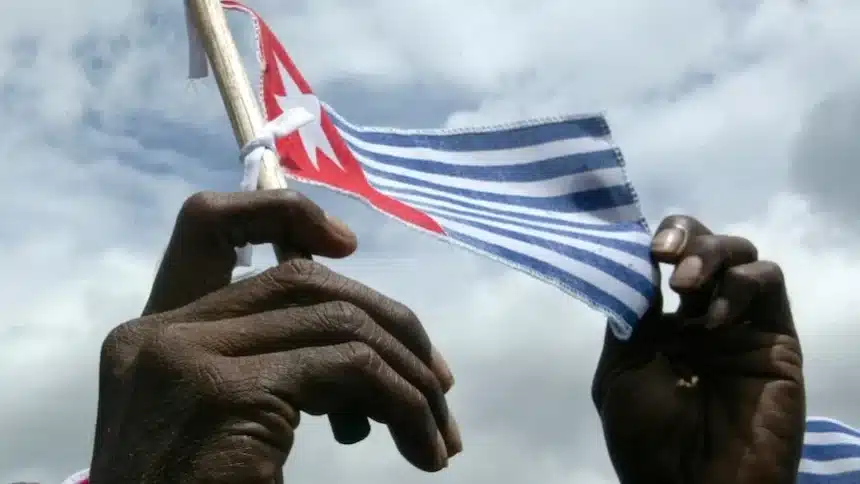
A video purportedly sent by the TPNPB showed individuals carrying firearms and axes, raising the Morning Star flag—a symbol of Papuan independence—while announcing the attack. These claims, however, could not be independently verified.
History of Violence Against Foreign Pilots
This incident is not isolated. The TPNPB has a history of targeting foreign pilots operating in Papua. In February 2023, Egianus Kogoya, a regional commander associated with the Free Papua Movement, abducted Philip Mark Mehrtens, a New Zealand pilot working for Susi Air. Mehrtens was eventually released in September 2024.
More recently, in August 2024, TPNPB gunmen reportedly stormed a helicopter and killed its New Zealand pilot, Glen Malcolm Conning, who was employed by PT Intan Angkasa Air Service. Conning was shot shortly after landing in a remote village in the Mimika district, having delivered Indigenous Papuans who were subsequently freed.
The Long-Standing Papua Conflict
Papua, a region with a distinct cultural identity, was incorporated into Indonesia in 1969 following a UN-sponsored ballot that many observers criticized as flawed. This annexation sparked a protracted and often violent insurgency by Indigenous Papuans seeking independence from Indonesian rule. In recent years, the conflict has escalated, leading to numerous casualties among rebels, security forces, and civilians.
The TPNPB’s actions highlight the deep-seated grievances and the ongoing struggle for self-determination in the region, posing significant challenges for both the Indonesian government and the international community.