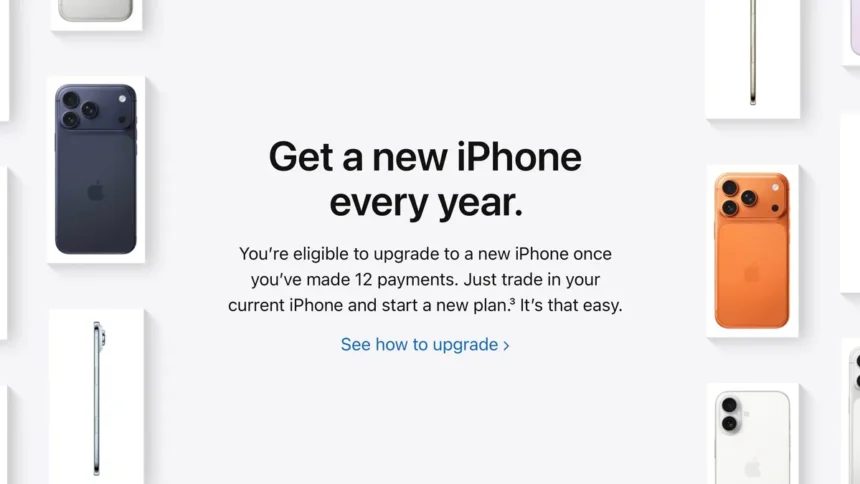
Apple is reportedly preparing to sunset its long-standing iPhone Upgrade Program, signaling a shift in its device acquisition strategy. The move is expected to coincide with the launch of a new leasing initiative, tentatively named “Apple Upgrade,” slated for release next week. This transition aims to streamline how customers obtain the latest iPhone models, moving towards a more flexible leasing structure.
End of an Era for the iPhone Upgrade Program
For years, the iPhone Upgrade Program has been marketed by Apple as the most straightforward method for consumers to acquire and regularly update their iPhones. The program allowed users to make monthly payments, with the significant benefit of being eligible to upgrade to a new iPhone model after completing 12 months of payments. This offering was facilitated through financing by Citizens One, providing 0% Annual Percentage Rate (APR) on purchases.
A key feature distinguishing the iPhone Upgrade Program was its inclusion of AppleCare coverage as part of the monthly cost. This provided users with extended warranty and accidental damage protection, adding a layer of security to their device investment. The program’s structure was designed to encourage loyalty and frequent device turnover among its user base.
Introducing the New ‘Apple Upgrade’ Leasing Program
The upcoming “Apple Upgrade” program is expected to replace the existing iPhone Upgrade Program. While details are still emerging, reports suggest this new offering will function more as a leasing service. This could mean a different approach to ownership and upgrade paths compared to the current program.
According to industry sources, the new program will partner with Klarna, a global payment and shopping service. This partnership indicates a potential expansion of payment options and financing flexibility for consumers. The official launch is anticipated around July 28, at which point more concrete details about its terms, conditions, and features are expected to be revealed.
A notable difference highlighted in early reports is the potential exclusion of AppleCare from the standard “Apple Upgrade” offering. This suggests that customers opting for the new leasing program might need to purchase AppleCare separately, impacting the overall cost and value proposition for those who rely on the bundled protection.
Impact on Existing Members and Future Strategy
The exact implications for current members of the iPhone Upgrade Program remain unclear. It is not yet specified whether existing enrollees will be transitioned to the new program, allowed to continue their current plan until completion, or face other changes. Apple’s communication regarding this transition will be crucial for its existing customer base.
This strategic shift away from the iPhone Upgrade Program signifies Apple’s evolving approach to device sales and customer engagement. The move towards a leasing model could be an attempt to make new iPhones more accessible by lowering upfront costs or monthly payments, potentially attracting a broader range of consumers or encouraging more frequent upgrades.
Broader Financing Options
Beyond the iPhone Upgrade Program, Apple also offers a service known as “Apple iPhone Payments.” This separate financing option, also backed by Citizens One, allows customers to finance the purchase of an iPhone over a 24-month period. However, unlike the iPhone Upgrade Program, it does not include an inherent option to upgrade to a new device after a set period.
The discontinuation of new enrollments for both the iPhone Upgrade Program and standard financing options is part of a broader strategy to consolidate and modernize Apple’s device acquisition pathways. The introduction of “Apple Upgrade” with Klarna suggests a move towards more adaptable financial solutions that align with current consumer trends in device purchasing.
Looking Ahead
The transition from the iPhone Upgrade Program to the new “Apple Upgrade” leasing initiative represents a significant change for consumers accustomed to Apple’s established upgrade cycles. As the launch date approaches, the industry will be closely watching for further details that clarify the benefits, costs, and structural differences of the new program. This evolution in financing is likely aimed at enhancing customer accessibility and maintaining Apple’s competitive edge in the smartphone market.