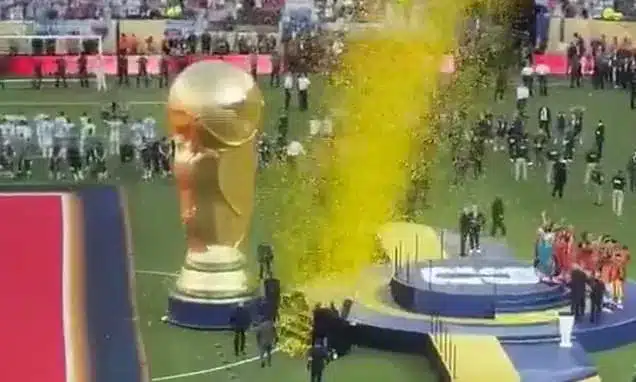
Tensions ran high at the conclusion of the World Cup final as Argentina’s players deliberately turned their backs on Spain’s trophy presentation, a stark visual protest following a dramatic and ill-tempered match. The Argentinian squad, having just received their silver medals, opted not to witness their rivals’ victory celebration at MetLife Stadium.
Post-Final Discord Mars Spain’s Victory
The controversial decision by the Argentinian team came in the wake of a fiercely contested final, which Spain ultimately won 1-0 in extra time. As Spanish players hoisted the coveted World Cup trophy amidst a shower of gold confetti, the Argentinian contingent stood with their backs turned, facing their own supporters in a clear display of dissatisfaction.
This somber moment followed a chaotic end to the game, which was marred by several altercations between players from both nations. The tension escalated significantly after Ferran Torres netted the decisive goal in the 106th minute, shortly after Argentina’s Enzo Fernandez received a red card in the 93rd minute.
On-Field Confrontations Erupt
The final whistle did not bring an end to the hostilities. Reports indicate that widespread fights broke out on the pitch as Spanish substitutes and staff members rushed to join their teammates in celebration. During these melees, several Argentinian players were involved in physical confrontations.
Eyewitness accounts and video footage suggest that Argentina’s Leandro Paredes was sent off for striking Eric Garcia and pushing Gavi to the ground. Furthermore, Nahuel Molina of Argentina was seen punching Rodri, and Thiago Almada was also reportedly involved in the scuffles. These incidents contributed to a widely perceived aggressive demeanor from the Argentinian side throughout the latter stages of the match.
Key Incidents and Disciplinary Actions
The match itself was punctuated by several contentious moments leading up to the final confrontations. Enzo Fernandez’s dismissal for a second yellow card, resulting from a mistimed tackle on Pau Cubarsi, was a significant blow to Argentina’s chances. Prior to this, Leandro Paredes had a potentially bookable offense in regular time that went unpunished, offering Spain a dangerous free-kick opportunity on the edge of the box.
The Argentinian team’s offensive play was notably limited during the final. Statistics indicate they managed only two shots throughout the entire match, with their first attempt on goal not occurring until the 117th minute, deep into extra time.
Broader Context of the Tournament
The final’s conclusion cast a shadow over what had been a closely watched tournament. While Spain celebrated their hard-fought victory, the unsportsmanlike conduct displayed by some Argentinian players drew criticism. The events underscored the intense emotions and high stakes involved in a World Cup final, where the pressure to perform and the disappointment of defeat can lead to volatile reactions.
Looking Ahead
Spain’s triumph marks a significant achievement for their national team, capping off a tournament defined by skill and determination. However, the lingering images of discord from the final whistle serve as a somber reminder of the challenges in maintaining sportsmanship amidst intense competition. The focus now shifts to how both teams will move forward, with Spain savoring their victory and Argentina reflecting on a final marred by controversy.
The incident highlights the fine line between passionate competition and unsportsmanlike conduct, particularly on the global stage of the World Cup. While the celebrations for Spain’s victory proceeded, the actions of the Argentinian players provided a stark counterpoint, leaving a complex legacy on the tournament’s conclusion.