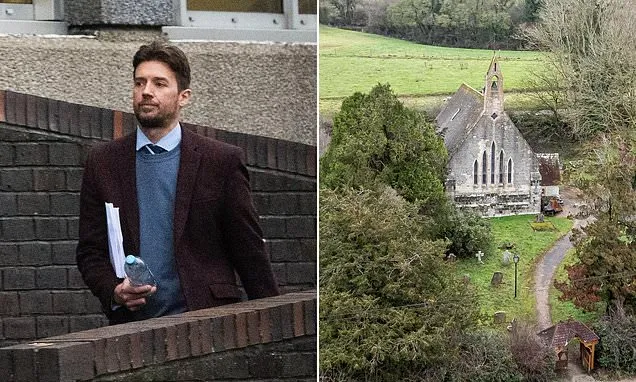
A children’s author has been prosecuted for destroying bat roosts during the renovation of a historic church in Dorset, with his own social media posts leading to his downfall. Jonathan Wedge, 45, admitted to four charges of damaging or destroying bat roosts, affecting multiple bat species, after documenting his renovation project on Instagram.
Author’s Renovation Project Leads to Prosecution
Jonathan Wedge, a father of four and author of children’s mystery books, purchased the Grade II-listed Church of St Thomas in the village of East Orchard, Dorset, in 2022. The Victorian Gothic building, originally constructed in 1859, had fallen into disrepair after services ceased in 2018. Mr. Wedge and his partner, Natasha Deeley, acquired the property with plans to convert it into a family home, aiming for an eco-friendly lifestyle that included features like an air source heat pump, potential solar panels, a smallholding, and sustainable practices such as composting and rainwater collection.
Their conversion proposals were approved by local authorities, but with specific conditions designed to protect the local wildlife, particularly bats. Key requirements included the installation of a substantial bat loft (at least 21 feet long, 18 feet wide, and 10 feet high) and the fitting of two ‘bat access tiles’ before occupancy. Crucially, the plan mandated a bat exclusion process to ensure all bats were safely removed from the church before any conversion work began. This exclusion method could only be legally undertaken between April and October to avoid disturbing bats during their hibernation period.
Social Media Posts Uncover Illegal Activity
Despite the approved conditions, Mr. Wedge began renovation work in December 2023, according to Bournemouth Crown Court. He maintained an Instagram account, “churchofwedge,” where he shared regular updates about the extensive renovation project with his nearly 16,000 followers. It was within these public posts that evidence of his non-compliance emerged.
One or more of his social media updates inadvertently revealed that work had proceeded without the necessary precautions to safeguard the roosting bats. This led to his prosecution for four counts of damaging or destroying bat roosts, with each charge corresponding to a different species of bat affected by the unauthorized work. The court heard that the species impacted included the soprano pipistrelle, common pipistrelle, serotine, and brown long-eared bats.
Legal Protections for Bats and Sentencing
All 18 bat species found in the UK are afforded the highest level of legal protection under the Wildlife and Countryside Act 1981. This legislation makes it illegal to capture, injure, or kill bats, and strictly prohibits the damage, destruction, or obstruction of access to their roosts. Offences under this act can carry severe penalties, including unlimited fines and potential prison sentences of up to six months.
Following his guilty plea, Jonathan Wedge was ordered by the court to pay a fine of £1,200 and an additional £500 in compensation to the Bat Conservation Trust. The court noted that while Mr. Wedge had introduced bat lofts in 2024, and a recent ecological survey confirmed the presence of all four affected bat species within these new lofts, the initial destruction of their roosts had already occurred. It was acknowledged that penalties could have been significantly more severe had the bats not returned to the newly provided habitats.
Background of the Author and the Church
Prior to his career as a children’s author, Mr. Wedge worked as an investment manager in the City of London, transitioning to writing full-time in 2015. He is known for a series of children’s mystery novels set in a fictional boarding school called Winkton Abbey. The Church of St Thomas, a historic landmark in East Orchard, had been on the market for commercial use without success before Mr. Wedge and Ms. Deeley purchased it for conversion into their family residence.
Conclusion: A Cautionary Tale for Renovators
The case serves as a stark reminder of the stringent legal protections in place for wildlife, particularly protected species like bats. It underscores the importance of adhering to planning conditions and environmental regulations, especially when undertaking renovations on listed buildings. The use of social media, while often intended for sharing progress, can inadvertently provide evidence of non-compliance, leading to significant legal and financial consequences. Mr. Wedge’s prosecution highlights the need for thorough ecological surveys and strict adherence to conservation guidelines throughout any renovation project involving sensitive habitats.