Berlin — An arson assault claimed by a left-wing extremist group has left tens of 1000’s of residents in Germany’s capital with out electrical energy within the lifeless of winter for a number of days. The Saturday morning arson assault on important electrical energy infrastructure in southwest Berlin lower energy to just about 50,000 properties and companies, and renewed scrutiny of a long-running sabotage marketing campaign by the left-wing “Vulkangruppe.”
The group claimed duty for the hearth, which destroyed a number of high-voltage cables close to the Lichterfelde warmth and energy station and triggered one of the extreme blackouts the capital has skilled in years.
In keeping with Stromnetz Berlin, the operator of Berlin’s electrical energy community, energy was lower to as many as 45,000 households and greater than 2,000 companies throughout 4 districts in south Berlin.
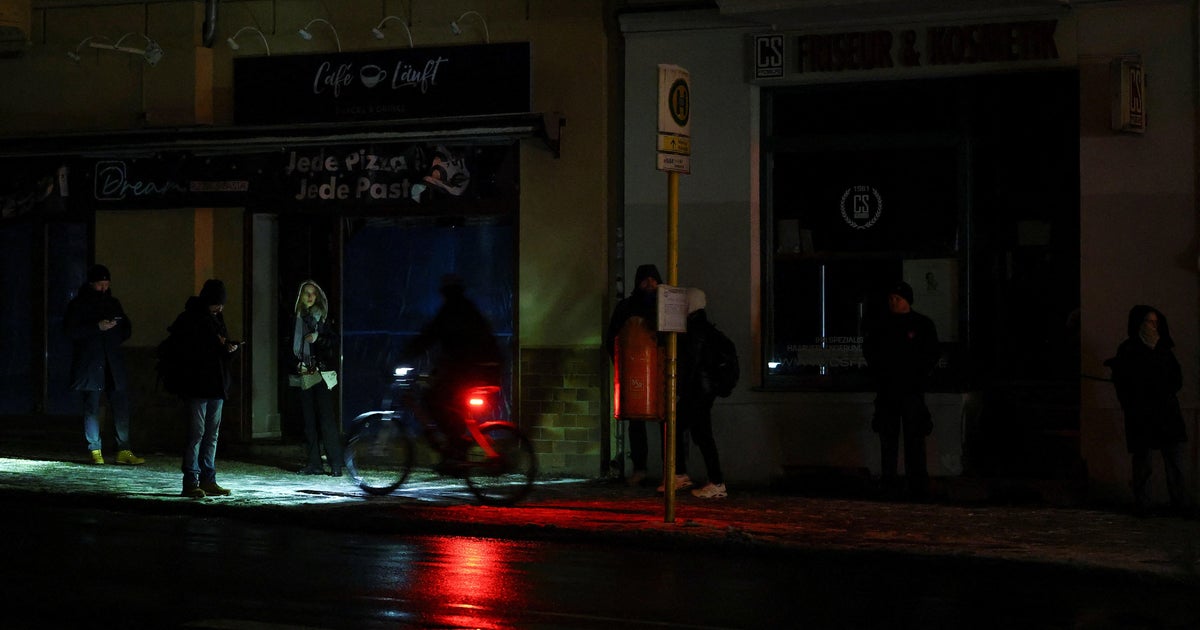
The ability outage additionally meant many properties misplaced heating and scorching water as temperatures dropped properly under freezing in Berlin.
Lisi Niesner/REUTERS
Whereas engineers restored energy to components of the community by Monday, about 30,000 households had been nonetheless offline as technicians struggled to exchange broken underground cables buried within the frozen soil. The ability operator mentioned it did not anticipate to have electrical energy totally restored till Thursday.
In a prolonged assertion circulated on-line and known as credible by police, the Vulkangruppe mentioned it had intentionally focused prosperous neighborhoods, to “lower the juice to the ruling class.”
The group framed the assault as an act of protest towards fossil gasoline vitality use and the rising energy demand created by AI knowledge facilities, which it mentioned had accelerated local weather change and expanded mass surveillance. The assertion included an apology to much less rich residents caught up within the blackout but it surely expressed no sympathy for rich householders left with out electrical energy.
The influence of the assault rapidly unfold past the areas the group mentioned it had meant to focus on. Hospitals, care properties for the aged and high-rise constructing residents who depend on elevators had been impacted. Mobile phone networks failed in some districts and commuter rail providers had been disrupted. Police used loudspeakers mounted on patrol automobiles to tell residents, and a few faculties delayed reopening after the Christmas and New Yr’s vacation break.
Berlin Mayor Kai Wegner condemned the arson assault as an “completely unacceptable” act of terrorism. He warned that assaults on vitality infrastructure endangered lives and positioned huge pressure on the town’s emergency providers.
Christophe Gateau/image alliance/Getty 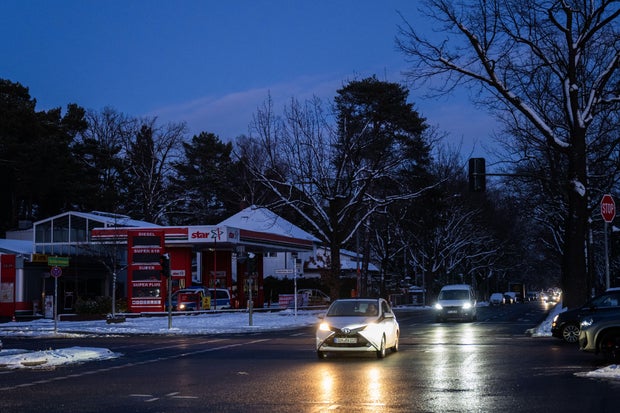
“These usually are not infantile pranks, however quite skilled criminals who attacked these energy grids,” Wegner mentioned in an interview Monday with German public broadcaster RBB. “This isn’t simply arson or sabotage. That is already terrorism. It was a left-wing extremist group that after once more attacked our infrastructure and, in doing so, additionally endangered the lives of individuals, of aged individuals who may have ventilators, of households with young children, and we now must catch these perpetrators.”
Franziska Giffey, the Berlin state’s Senator for Financial Affairs, Power, and Public Enterprises, requested the federal authorities to assist with the felony investigation into the extremist group’s actions, which she known as an assault on “our free society.”
“It should be about federal help within the investigations,” she mentioned. “The query is whether or not these are merely left-wing activist teams performing out of ideological motives, or whether or not there may be extra behind it.”
Safety officers mentioned the arson match a sample that is been creating for greater than a decade. In keeping with assessments by Berlin authorities and Germany’s home intelligence providers, teams utilizing the title Vulkangruppe or intently associated labels have been chargeable for a sequence of assaults on energy, rail and communications infrastructure since about 2011.
Christophe Gateau/image alliance/Getty 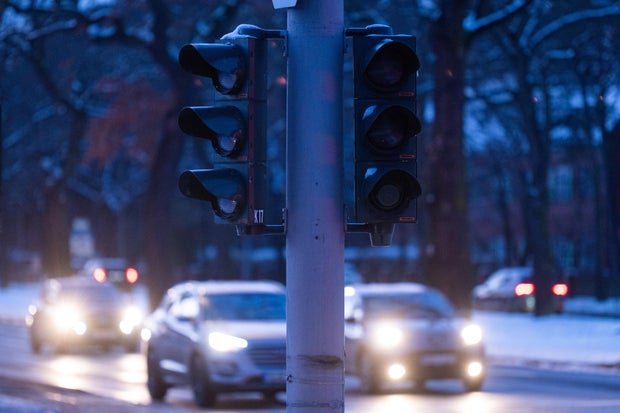
Early incidents included arson assaults on rail and electrical energy cables in Berlin that disrupted commuter site visitors and prompted pricey harm. In 2018, a fireplace set on energy strains lower electrical energy to 1000’s of households and companies within the capital, whereas later assaults focused analysis and communications services linked to digital infrastructure.
The group has gained extra consideration lately via more and more high-profile actions. In March 2024, it claimed duty for an arson assault on a high-voltage pylon supplying electrical energy to the Tesla Gigafactory Berlin-Brandenburg, quickly halting manufacturing on the plant.
In September, one other arson assault on energy cables in southeast Berlin prompted a 60-hour blackout affecting tens of 1000’s of residents, reportedly the longest energy lower within the metropolis since World Conflict II. It was extensively attributed to the identical extremist collective, although not claimed explicitly by the Vulkangruppe.
Authorities warn that such assaults require little specialist data however can have dramatic and far-reaching penalties, exposing vulnerabilities in densely interconnected city infrastructure.
The most recent blackout has intensified requires stronger safety of energy grids and plans for quicker emergency responses to such incidents.