Premium Mineral Findings Accelerate Domestic Production Plans
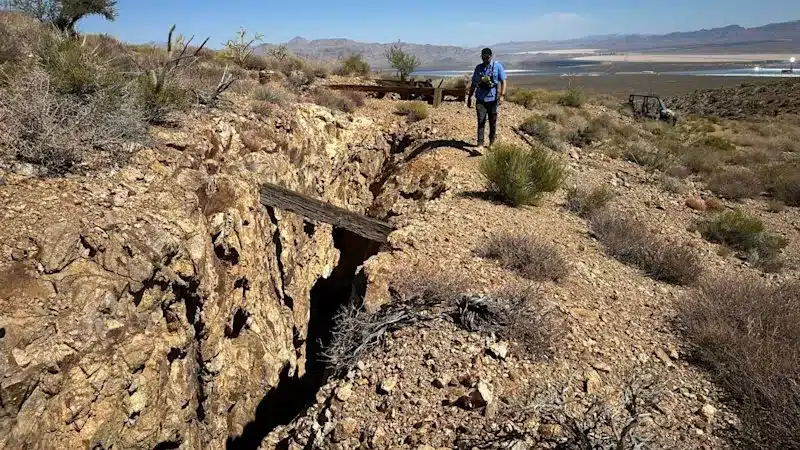
New sampling results reveal exceptional antimony concentrations at a historic mining site in California’s Mojave Desert, with recent tests showing grades reaching 26.1% in select specimens. The findings come from a strategic sampling initiative targeting historical underground workings at the Desert Antimony Mine prospect within San Bernardino County.
Striking Sample Results
Of 287 kilograms collected across three batches, eleven samples demonstrated remarkable purity levels. The first batch of stibnite-rich material yielded a weighted average grade of 25.7% antimony, while the second batch maintained a 21.3% average across 130kg of high-grade material. Even lower-grade samples in the third batch averaged 11.4%, producing an overall weighted average of 18.7% across all material tested.
These results significantly outperform previous bulk sampling that showed 7.6-7.8% antimony content, suggesting the site could become a primary source rather than by-product producer of this critical mineral.
Strategic Advantages
Company executives emphasize that the high concentrations allow for simpler processing methods with lower energy requirements and faster metal recovery. “Consistently achieving double-digit percentages above 25% demonstrates this isn’t just about by-product antimony,” stated Locksley Resources CEO Kerrie Matthews. “We’re looking at a rich primary source for materials urgently needed in defense systems and energy infrastructure.”
Geological Context and Expansion Potential
The Desert Antimony Mine sits within a geological district showing promising rare earth element indicators, including a notable thorium anomaly detected during recent aerial surveys. Situated just three kilometers from North America’s sole operating rare earths mine, the project’s location enhances its strategic value.
Historical mapping efforts have expanded the target corridor to 1.2 kilometers in length, supporting initial estimates of 19,400-67,000 tonnes of contained antimony. Recent LiDAR surveys have further validated these projections.
Next Development Phase
Engineers are preparing advanced flotation and crushing tests using the 287kg sample to refine processing techniques for a planned pilot plant. Concurrently, the company is advancing mine permitting and extraction planning with U.S.-based consultants.
With global antimony supplies tightening and domestic demand escalating, these high-grade results position the Mojave Desert project as a potential cornerstone in America’s critical minerals strategy. The coming months will see crucial developments in processing optimization and extraction planning as the operation moves toward production readiness.