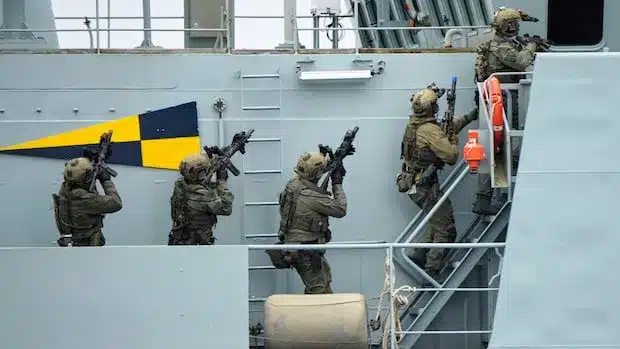
Canada’s Foreign Minister Anita Anand calls for NATO’s new Arctic Sentry initiative to become a permanent part of the alliance’s operations. She delivered the keynote address at the Arctic 360 conference in Toronto, spanning two days.
Launch of Arctic Sentry
NATO’s Supreme Allied Commander Europe, U.S. Air Force Gen. Alexus G. Grynkewich, announced the launch of Arctic Sentry. This initiative coordinates allied activities in the Far North, including Denmark’s military exercises in Greenland and Norway’s annual Cold Response drill.
“Arctic Sentry underscores the alliance’s commitment to safeguard its members and maintain stability in one of the world’s most strategically significant and environmentally challenging areas,” Grynkewich stated. The plans incorporate input from Canada and leverage NATO’s strengths to protect territory and secure the Arctic and High North.
Anand Advocates for Permanence
Anand emphasized Canada’s long-standing efforts to draw NATO’s attention to Arctic defense amid rising geopolitical tensions. “We would like to see that initiative be permanent,” she said. “I am pushing NATO allies and the secretary-general to see this as a collective effort, not only an individual effort.”
She urged NATO to monitor threats from the north, beyond the eastern focus on Ukraine’s ongoing conflict with Russia. Details remain unclear on Canada’s specific military contributions, as Arctic Sentry is not a standalone operation. Routine Canadian exercises like Operation Nanook may align with these NATO efforts.
Broader NATO Strategy
NATO Secretary General Mark Rutte highlighted the need for enhanced Arctic focus ahead of defence ministers’ talks. “For the first time now, we will bring everything we do in the Arctic together under one command,” Rutte stated. “By doing that, we will not only leverage what we are doing much more effectively and have a bigger impact, we will also be able to assess which gaps there are, which we have to fill — and of course we will fill them.”
The initiative addresses concerns over Russian and Chinese influence, partly stemming from past U.S. calls for stronger Greenland defenses. A framework agreement now grants the U.S. greater access for defence purposes, including upgrades to North American missile defence systems known as the Golden Dome. Military analysis indicates Russian missiles would likely traverse Greenland en route to North America.
A 1951 defence treaty already provides U.S. access to key Greenland sites. Arctic Sentry headquarters will operate from NATO’s command in Norfolk, Virginia, developed in coordination with Arctic stakeholders like the United States and Canada.